

Politics
CEOs Skip Senate Hearing About Automated Surveillance
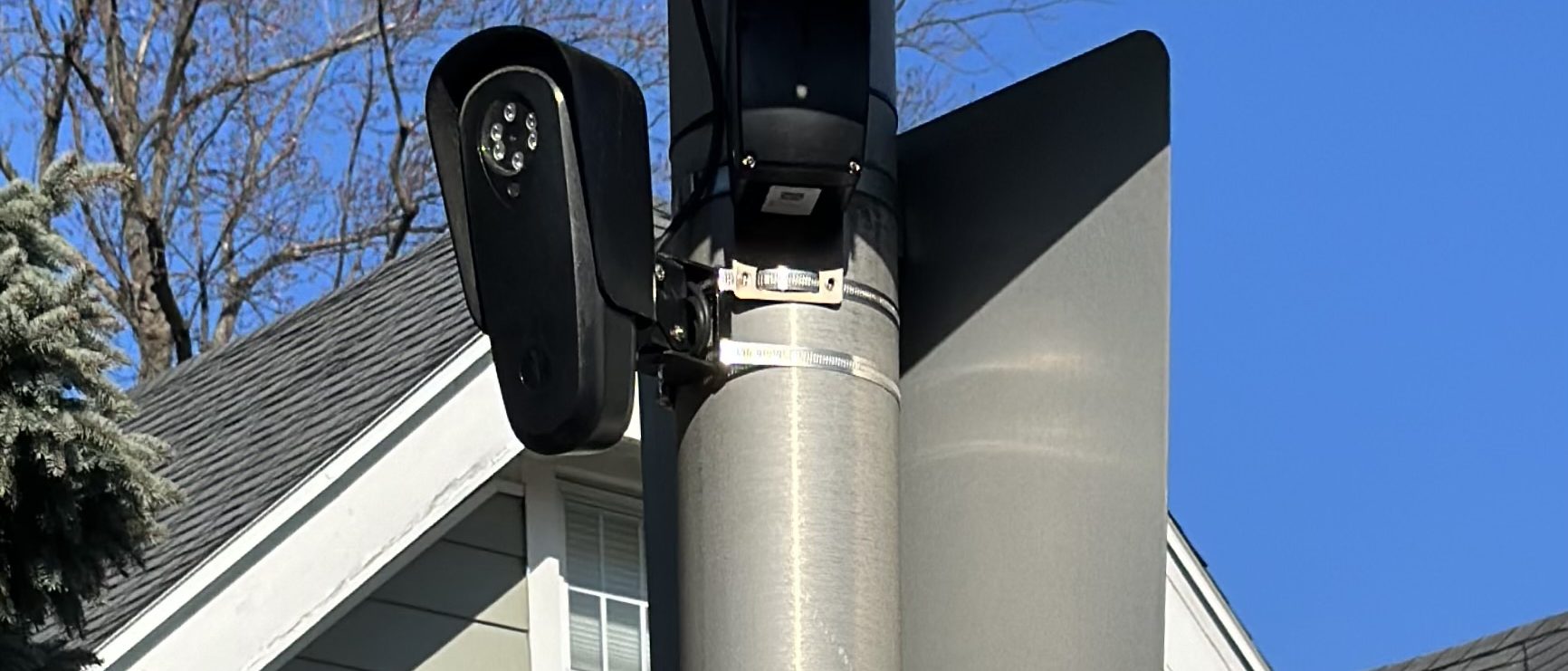
https://upload.wikimedia.org/wikipedia/commons/1/1a/Flock_Safety_camera_with_solar_panel.jpg
Technology CEOs did not show up to testify before a Senate Judiciary subcommittee hearing Wednesday about mass surveillance concerns related to Automated License Plate Readers (ALPRs).
Republican Missouri Sen. Josh Hawley, who chairs the Subcommittee on Crime and Counterterrorism, invited CEOs Garrett Langley of Flock Safety, Rick Smith of Axon Enterprise, Greg Brown of Motorola Solutions and Filip Kaliszan of Verkada to testify about their products’ access to Americans’ data. Five witnesses, including alleged victims of automated surveillance and a cybersecurity engineer, testified before the committee.
“The CEOs of Flock Safety, Axon, Motorola Solutions, and Verkada declined to testify today,” Hawley said on X.
Hawley announced Friday that he invited the CEOs to testify after the subcommittee opened an investigation into automated surveillance technologies. A Verkada spokesperson told the Daily Caller News Foundation Friday they would be “unable” to attend the hearing.
“Unfortunately, our CEO is unable to attend next week’s hearing. We are in communication with the Subcommittee and are providing information to assist Chairman Hawley and Ranking Member Durbin as they prepare for the hearing. As we’ve explained to the Subcommittee, none of our customers can search a national Verkada network – because none exists. Our customers can only access the data in their own systems,” the spokesperson said.
Flock Safety, Axon and Motorola Solutions did not respond to the DCNF’s question on why they did not appear.
Among those who testified were Lindsey Isaacs, a driver from Florida who was wrongfully accused of fleeing a fatal car accident due to data collected from Flock cameras. She spent 13 days in jail and faced eight felony counts, according to Hawley’s letter to Langley in August.
In Milwaukee, Wisconsin, prosecutors charged a police officer who allegedly searched his girlfriend’s license plate 124 times and her former boyfriend’s plate 55 times, and was later caught by a private citizen instead of Flock’s audit system, according to Hawley’s letter.
An innocent driver in Wisconsin was held at gunpoint in August after a camera made a mistake.
Motorola Solutions and its subsidiary, Vigilant Solutions, were slapped with a massive class-action lawsuit that accused the companies of violating California’s strict privacy laws related to vehicle-tracking data. The suit alleged that the data collected by its automated surveillance technologies was illegally shared with out-of-state law enforcement and federal immigration agencies without proper consent or oversight safeguards.
An international hacker bypassed Verkada’s security by finding “super admin” credentials left exposed online, allowing hackers to gain access to over 150,000 Verkada cameras worldwide in March 2021. The hackers viewed real-time footage inside psychiatric hospitals, women’s health clinics, prisons and elementary schools.
Hawley asked Langley in a letter to answer a series of questions, which included stating the parameters by which customers can conduct statewide or nationwide searches of vehicles or driver data, according to the letter. The letter asked Langley to state the total number of confirmed instances of misuse since Jan. 1, 2021, describe what a user must enter to justify a search and name every restriction Flock imposes on the purposes for which its systems can be searched.
Not a single bill in Congress has yet been introduced to ban Flock cameras or other automated license plate readers (ALPRs) outright. Republican Florida Rep. Anna Paulina Luna said on July 22 that she was working on a bill to ban them completely, though that bill has yet to be introduced.
Republican Tennessee Rep. Tim Burchett introduced the “Protection Against Mass Surveillance Act” in July to ban federal agencies from purchasing or operating Flock cameras or any form of automated surveillance that “identify, track, or record individuals.” Republican Kentucky Rep. Thomas Massie said he planned to introduce a bill aiming to withhold federal funds from local municipalities and police departments using Flock and ALPRs.
A Flock spokesperson previously told the DCNF that Congress should consider “strong, clear safeguards” rather than outright banning automated surveillance.
All content created by the Daily Caller News Foundation, an independent and nonpartisan newswire service, is available without charge to any legitimate news publisher that can provide a large audience. All republished articles must include our logo, our reporter’s byline and their DCNF affiliation. For any questions about our guidelines or partnering with us, please contact [email protected].