

Energy
Democrats Sue Over Wind Checks After The Breeze Stopped Blowing Money Into Unfinished Turbines
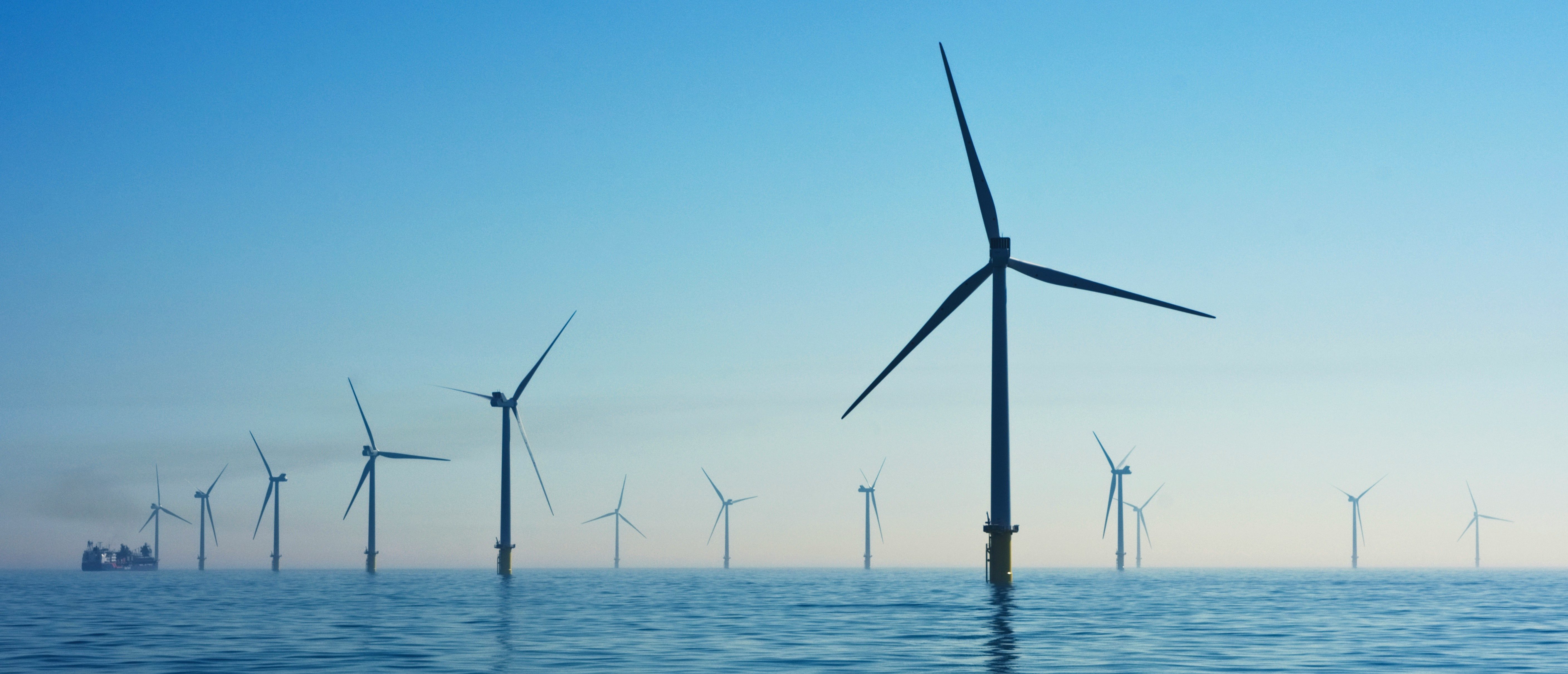
Nicholas Doherty/Unsplash
Democratic-led states sued the Trump administration over offshore wind lease agreements Tuesday — but a new report warns the legal fight highlights a broader problem: whether companies can rely on federal permits even once administrations change.
The Joseph Rainey Center for Public Policy released its report, “When Permits Aren’t Permanent,” Monday, arguing that the permitting debate has focused on getting infrastructure projects approved while paying less attention to whether those approvals remain secure after investors commit billions of dollars.
“Critics of the offshore wind buyouts should offer an alternative solution. Stranding capital in projects that face stop-work orders and permitting delays fails the taxpayers, tollpayers, and retirees whose pensions and 401(k)s fund them,” Sarah Hunt, president and CEO of the Joseph Rainey Center — the report’s author — told the Daily Caller News Foundation.
The offshore wind fight illustrates what the report describes as a problem at the “back door” of the permitting process. Even after companies secure federal permits, leases and licenses, projects can face stop-work orders or changes in federal policy before construction is complete.
“Whatever one thinks of a particular technology or administration, the precedent is now both technology-neutral and administration-neutral: one administration’s authorization can be undone by the next,” the report reads.
New York Attorney General Letitia James led Connecticut, Delaware, Maine, Massachusetts, New Jersey, Rhode Island and Vermont in the lawsuits challenging agreements involving Invenergy — North America’s largest private and independent power producer — and Bluepoint Wind, according to the Massachusetts Attorney General’s Office.
Allowing investors to recover their capital and redirect it toward other American energy projects is preferable to leaving money stranded in projects that may no longer move forward, Hunt argued.
“The buyouts aren’t the problem. The problem is that the government can pull a permit after investors spend the money,” she told the DCNF.
“Without durability, faster approval only reduces the time between approval and reversal,” her report states.
The Department of the Interior has negotiated several agreements allowing offshore wind developers to surrender federal leases and recover some or all of their lease payments while redirecting equivalent investments toward other domestic energy projects.
“Only Congress can make an authorization durable,” the Joseph Rainey Center’s report continues. “The framework below rests on six statutory pillars aimed at one result: a validly issued federal infrastructure authorization should function as a property-like commitment, revocable only for cause, through a defined process, or at an honest public price.”
Under one such agreement, Invenergy agreed to voluntarily terminate four offshore wind leases in the New York Bight, off California’s Central Coast and in the Gulf of Maine. The company agreed to redirect $765 million toward natural gas-fired power plants in Indiana, Wisconsin, Iowa, Kansas and Missouri and geothermal projects in the western United States.
The report argues the uncertainty exposed by the offshore wind fight could extend beyond wind if companies begin to doubt whether federal approvals will survive changes in presidential administrations.
“A future administration that decides offshore drilling no longer fits its climate agenda could run the same playbook, with consequences that extend well beyond energy companies to the ports, manufacturers, service firms and workers whose livelihoods depend on those projects,” Guy Caruso, former administrator of the U.S. Energy Information Administration, told the DCNF.
Congress needs to clarify whether federal energy approvals can change between administrations, Caruso argued, warning the precedent could affect industries beyond offshore wind.
The report comes as Democratic-led states filed two lawsuits challenging Department of the Interior agreements that allow offshore wind developers to surrender federal leases and recover some or all of their lease payments after investing equivalent amounts in other U.S. energy projects.
All content created by the Daily Caller News Foundation, an independent and nonpartisan newswire service, is available without charge to any legitimate news publisher that can provide a large audience. All republished articles must include our logo, our reporter’s byline and their DCNF affiliation. For any questions about our guidelines or partnering with us, please contact [email protected].