

Commentary: Big Tent Ideas
Short Selling And Information Warfare: A Bet Against America
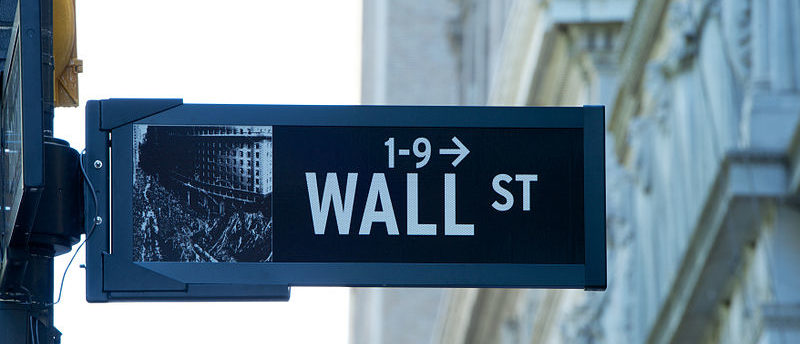
[Wikimedia Commons/Public/Vlad Lazarenko, CC BY 3.0, <https://creativecommons.org/licenses/by-sa/3.0/deed.en>]
There’s something of a contradiction at the heart of American capital markets.
The system we built to reward the builders also hands out fortunes to those betting on their collapse. Short sellers borrow shares, sell them, and depend on said company failing, faltering, or merely looking bad for long enough in order to make a profit.
The most memorable, recent short selling incident came back in 2021, when a group of hedge funds took massive short positions in GameStop, a brick and mortar videogame retailer. These hedge funds were simultaneously betting on and precipitating GameStop’s downfall.
They came close to succeeding before a group of social media users on the subreddit r/WallStreetBets noticed the gambit. Hundreds of thousands of retail investors bought GameStop stock for cheap, which juiced the stock price, saved the company, and set the multiple firms who had bet against GameStop on a path to certain financial ruin.
Ultimately, these firms survived, but only after GameStop’s stock price dropped dramatically after Reddit moderators temporarily shut down r/WallStreetBets, Discord banned the WallStreetBets server, and Robinhood, the popular trading platform frequently used by WallStreetBets enthusiasts, banned its customers from buying (but not selling) GameStop stock — all “coincidentally” occurring on the same day.
The episode illustrates why short sellers are often loathed by the public. When Main Street builds a company, Wall Street short sellers can swoop in and profit from tearing it down. And that teardown is often based purely on reports made to move the stock rather than inform the public. Firms like Muddy Waters and Hindenburg Research built reputations (and fortunes) on this model, and even when their targets were legitimately troubled, the incentive structure is unaffected. The worse the outcome for employees and shareholders, the better the payday for the short seller.
Since the GameStop saga, nowhere has this tension been clearer than in the newer hybrid of “activist journalism” hedge funds. As in, firms that have fused investigative reporting with proprietary trading.
Hunterbrook Capital and its media arm, Hunterbrook Media, are the clearest example. By the firm’s own account, its journalists investigate companies so that its traders can act on what they find before publication. That is to say, before the public has access to the same information, which is a structure that completely flips journalism’s traditional purpose on its head.
This is a firm whose modus operandi is scrutiny until story. For them, reporting has become a proprietary trading signal, produced by a newsroom that is financially better off if their story moves markets in the fund’s favor.
Hunterbrook’s short campaign against Plug Power flipped to a long position within weeks. They attributed the complete reversal to changing information, but it also meant the fund was positioned to profit on both sides of the same stock’s volatility.
More than that, Hunterbrook has disclosed seed investment from David Fialkow, a co-founder of the venture firm General Catalyst, which holds stakes in direct competitors of some of the very companies Hunterbrook has targeted with short reports.
Hunterbrook has acknowledged this only in scattered footnotes rather than prominently alongside the reports themselves.
None of this requires assuming bad faith to be troubling; it only requires recognizing that a firm structured to profit from a company’s decline, funded in part by the investors with financial interests in that company’s rivals, is not positioned the way an unbiased newsroom is. When the entity breaking the story and the entity betting on its market impact are the same entity, the public has no way to know whether it is reading journalism or a trading strategy wearing “journalism” like a skin suit.
This same rot shows up in a separate but equally corrosive form in Hunterbrook as well, in the form of the dreaded nepo baby. American markets are supposed to run on merit. You build something, you earn something. Handing cushy jobs, board seats, and executive suites to the sons and daughters of the already connected is the opposite of that promise.
Hunterbrook founders Sam Koppleman and Nathaniel Horwitz are the opposite of that promise.
It is fundamentally against traditional, idyllic and meritocratic values to be given or to accept handouts, and handouts received because of a last name instead of work ethic is the opposite of the promise this country was built on.
Any look into Koppleman’s and Horwitz’s lackluster resumes yet dazzling family connections will quickly show that their positions are not about earned success, self-reliance or a level playing field. Instead, that peek will uncover summers in Martha’s Vineyard with top executives in Hollywood and powerful figureheads, setting up their secure futures.
Every position handed to a nepo baby based on connections over qualifications is a position taken away from a hard-working American who spent years building the skills to earn it. Rewarding disingenuous firms like Hunterbrook rewards a closed-loop system rewarding birthright and an unethical short-selling trading desk that profits from watching companies fall.
America’s markets were built on the idea that capital flows toward builders. Towards innovators who dared to dream. Short selling, especially when merged with a “fake news” operation, inverts that premise by rewarding decline over creation and blurs the line between reporting the news and manufacturing it for profit. America was built on earning a future.
Whether it’s a trading desk jeopardizing a company’s future or a nepo baby cashing in on someone else’s, both are just theft dressed up as opportunity.
Jon Schweppe is the founder of Populist Solutions and a senior advisor at American Principles Project. Follow him on X @JonSchweppe.
The views and opinions expressed in this commentary are those of the author and do not reflect the official position of the Daily Caller News Foundation.
All content created by the Daily Caller News Foundation, an independent and nonpartisan newswire service, is available without charge to any legitimate news publisher that can provide a large audience. All republished articles must include our logo, our reporter’s byline and their DCNF affiliation. For any questions about our guidelines or partnering with us, please contact [email protected].