

Business
Beware The Beware-ers: Tech Lords Sounding Alarm On Their Own Tech Have Lots To Gain From Latest 180
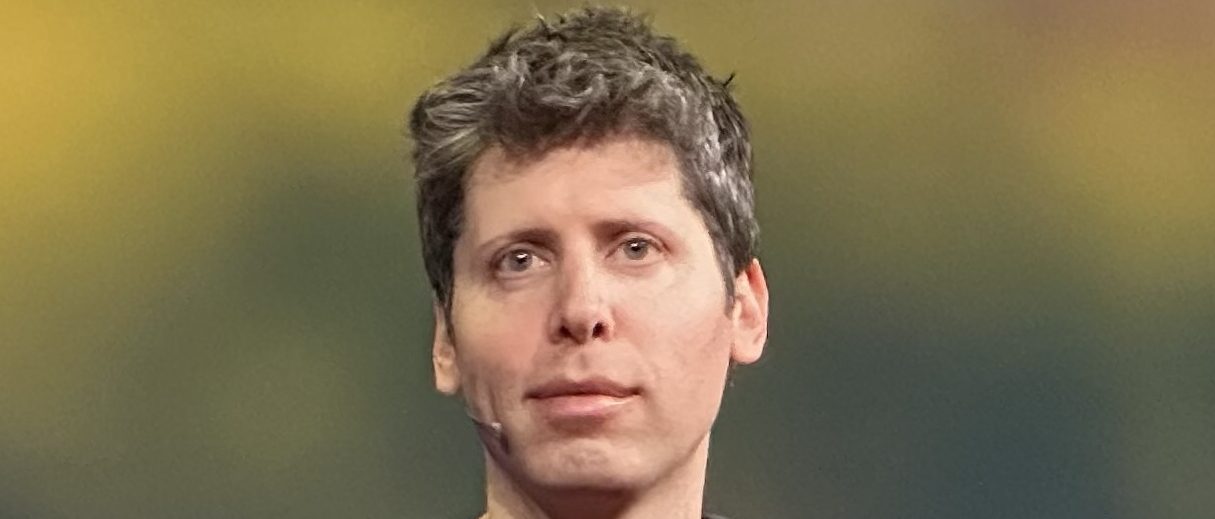
OpenAI CEO Sam Altman (Steve Jurvetson, CC BY 2.0 <https://creativecommons.org/licenses/by/2.0>, via Wikimedia Commons)
A Greek proverb states, “Beware of Greeks bearing gifts.” In modern politics, perhaps one should beware of artificial intelligence companies begging to be regulated.
Anthropic co-founder and CEO Dario Amodei enflamed controversy on Saturday as he called to pace AI development, citing potential safety risks to all of humanity, according to his post on his personal website. OpenAI CEO Sam Altman, SpaceX CEO Elon Musk and Dennis Hassabis, the chair of Google Deepmind — Google’s AI lab — quickly backed the idea of a slowdown, according to the Wall Street Journal. Amodei also called on governments to exempt the AI industry from antitrust rules barring industry-wide coordination, although the other AI labs did not jump on the call for an antitrust waiver.
Anthropic’s call for regulation has many crying foul, suggesting the largest AI labs want to cement their status and prevent competitors from catching up to their predominant status as AI leaders.
An Anthropic spokesperson did not respond to the Daily Caller News Foundation’s request for comment about why the government needs to enact an antitrust exemption to enable AI labs to slow down.
OpenAI asked lawmakers in the last few weeks if implementing an AI industry-wide slowdown would be legal, according to Wired.
An OpenAI spokesperson did not respond to DCNF’s request comment. SpaceX did not respond to a DCNF’s request for comment regarding whether it supports an antitrust exemption for the industry.
Other AI labs sounded skeptical of the call for regulating the industry.
Nvidia CEO Jensen Huang and Meta CEO Mark Zuckerberg rejected calls for coordinating on an AI slowdown, believing there is no need to regulate AI safety, per CNBC.
“The fact that we need new laws, new antitrust laws, or new regulations, so that these companies could do their fundamental engineering and do it properly before they release products, that is just completely unnecessary,” Huang said on Tuesday of the calls for more regulation or antitrust exemptions in the name of AI safety, according to CNBC.
Nvidia serves as the world’s largest chipmaker and most valuable company, according to CNBC. It also develops its own open-source family of AI models.
“We have plenty of laws. We have plenty of regulations that govern the reliability and the functionality of products,” he added.
“Safety is an engineering problem. Testing is an engineering problem,” the Nvidia CEO said.
Zuckerberg believes they already have enough incentive to ensure AI safety. A Meta spokesperson pointed to the Meta CEO’s recent comments on the topic.
“Every lab has the responsibility and incentive to move at the pace required to train its models safely, and the ability to take its own actions to ensure that happens,” Zuckerberg wrote on Tuesday.
“Labs face significant liability if their models cause harm, so they have a strong incentive to prevent this as well,” he added.
Chief antitrust regulators poured cold water on the idea of an antitrust waiver for the biggest AI labs.
“I will say generally, though, that if companies are simultaneously coming to Washington and asking for a host of regulations and an antitrust exemption, all of my alarm bells go off,” Federal Trade Commission (FTC) Andrew Ferguson said on Tuesday at an event at Georgetown University, according to Reuters.
“They’re asking for barriers to entry that will insulate their incumbency from challenge. And I think if you combine that with the requested antitrust exemption, everyone should be deeply suspicious about this,” the FTC chairman said.
An FTC spokesman referred the DCNF to the chairman’s comments at Georgetown.
Meta, similarly to other leading frontier AI labs, has delayed releasing frontier models such as it Muse AI agent for many months to ensure safety and security, per the Associated Press.
President Donald Trump and former advisors strongly condemned the idea of pacing AI development and attacked Amodei.
“The only control or ‘guardrails’ that AI needs is a STRONG AND SMART (High IQ!) PRESIDENT, and the U.S.A. has that, in spades! The Trump Administration has stopped AI ‘people’ from doing bad, or potentially bad, ‘things,’ like Dario (Anthropic!), who is now pretending to be a ‘perfect little angel’ – and we will continue to do so,” Trump wrote on Truth Social on Monday. “We already have tremendous CRIMINAL and REGULATORY power over these companies! There is a SICK conspiracy going on against AI and Data Centers, and the only one that is happy about it is China.”
Trump also said the notion that AI will “destroy the world” and that “data centers are bad for your neighborhoods amount to a ‘HOAX'” in another post on Truth Social.
A White House spokesperson referred the DCNF to the president’s comments this week on the issue.
“Stop pretending antitrust law has to be suspended so you can form a cartel. Stop pretending you need a regulatory approval process that supersedes product liability,” David Sacks, a former Trump White House AI advisor, said on X on Saturday.
“Anthropic and OpenAI would love nothing more than to secure a government-backed duopoly. They want to shift liability for their own products from themselves to the government, use regulations to box out competition, and secure an antitrust exemption so they can act like a cartel. Anyone pretending that’s a good idea is treating the American people like suckers,” an Innovation Council spokesman told the DCNF in a statement.
“Nobody takes the A.I. issue more seriously than President Trump. He wants serious people making sure we win the A.I. race, safely, while procuring the continuation of America’s Golden Age,” an anonymous source close to the White House told the DCNF.
“This is all a power play by Altman and Amodei to dictate policy to their competitors and shift blame to the government if Skynet becomes self-aware. Pace and regulate yourselves, ‘broligarchs.’ You aren’t getting immunity if you produce defective, dangerous products and this administration won’t be intimidated into submission,” the source added.
With such strong pushback, one expert believes an antitrust exemption for AI companies may already be a nonstarter.
“I do think it’s DOA [dead on arrival]. You’ve seen fierce pushback from Republicans who arguably represent different lanes and factions within the right — Sacks, Hawley, and Cruz, to name a few. And, I don’t think enough people are convinced that these companies need an exemption to behave responsibly,” Evan Swarztrauber, a principal at CorePoint Strategies, senior fellow at the Digital Progress Institute and a former senior FCC official, told the DCNF.
“Critics are right to be skeptical and wonder whether it’s an attempt to engage in regulatory capture, absolve firms from liability for the behavior of rogue agents, assuage AI-bubble related concerns on Wall Street, or a combination of those factors,” he added.
All content created by the Daily Caller News Foundation, an independent and nonpartisan newswire service, is available without charge to any legitimate news publisher that can provide a large audience. All republished articles must include our logo, our reporter’s byline and their DCNF affiliation. For any questions about our guidelines or partnering with us, please contact [email protected].