

Exclusives
EXCLUSIVE: Mikie Sherrill’s Team Blindsided By Dem AG Joining Lawsuit Against Paramount
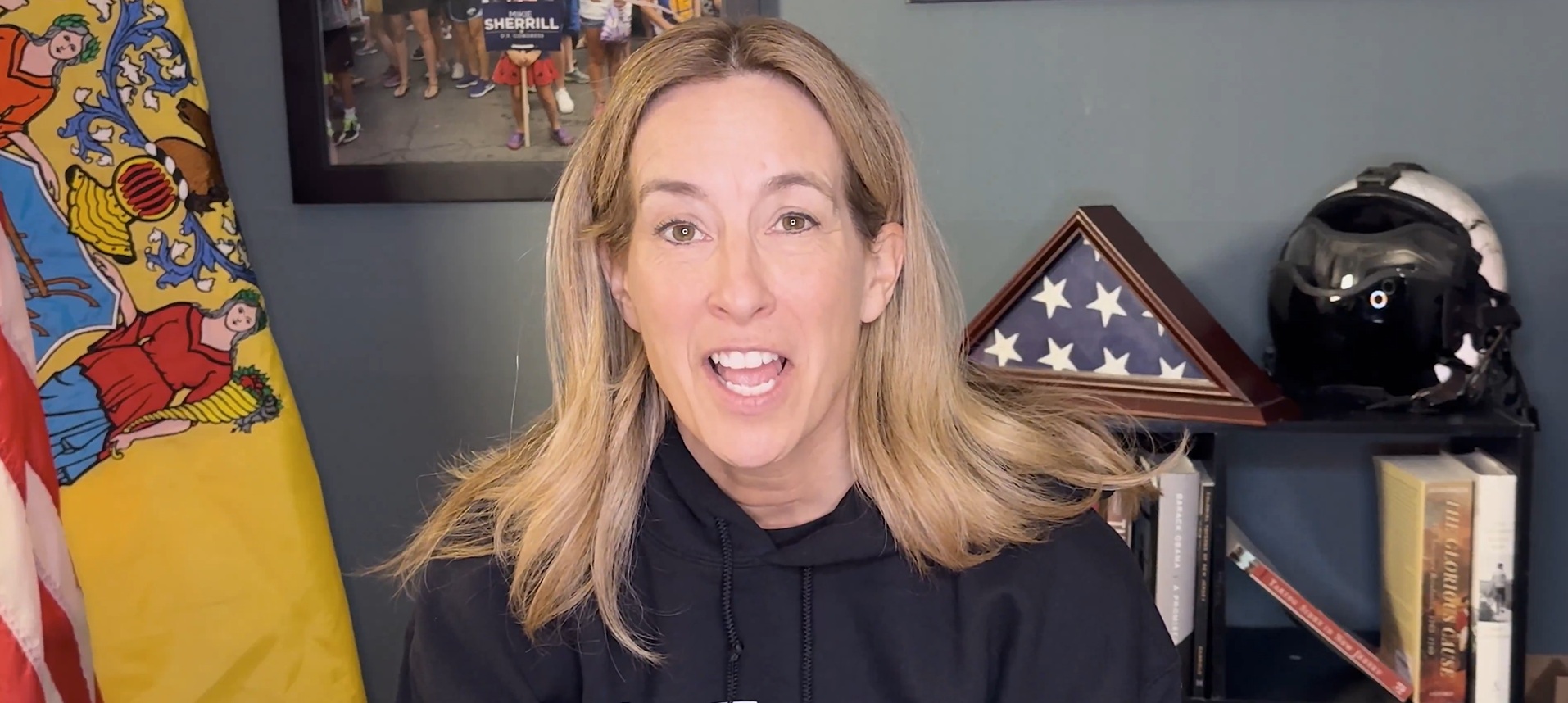
Screenshot/X/@MikieSherrill
A source close to Democratic New Jersey Gov. Mikie Sherrill criticized the state’s Democratic attorney general’s decision to join a lawsuit seeking to block Paramount Skydance’s $110 billion acquisition of Warner Bros. Discovery, telling the Daily Caller News Foundation the governor’s team was not given advance notice of the move.
“We didn’t have a heads up” that Democratic New Jersey Attorney General Jennifer Davenport would join the multistate lawsuit, the person told the DCNF. The source questioned the strength of the case and described New Jersey’s involvement as “a baffling move” as the state seeks investment and jobs from the two entertainment companies.
“Did we really need to get involved when we’re negotiating such great things for our taxpayers with Paramount and Warner Brothers?” the source told the DCNF.
The New Jersey Economic Development Authority reported that 556 productions filmed in the state in 2024, spending a record $833 million and hiring more than 30,000 crew members. The state has also extended its Film and Digital Media Tax Credit Program through 2049 as it seeks to attract studios and long-term entertainment investment.
“If every single regulator has approved this … it doesn’t look like the most compelling case,” the source close to the governor told the DCNF.
Democratic New Jersey state Sens. Raj Mukherji, Brian Stack and Angela McKnight, Hudson County Executive Craig Guy and several other Democratic officials urged Davenport to withdraw New Jersey from the litigation, arguing the state should have an “exceptionally compelling reason” to spend taxpayer money on litigation that could jeopardize investment in New Jersey.
Davenport joined Democratic California Attorney General Rob Bonta and attorneys general from ten other states in July in suing to stop the merger. The coalition argued the transaction would reduce competition by combining two major movie studios and basic cable companies, potentially resulting in higher prices and fewer choices for consumers.
Davenport’s office declined to comment to the DCNF, citing ongoing litigation.
The source close to the governor said people involved in the dispute are increasingly expecting the litigation to end in a settlement.
“Joining that California charade,” the source said, “doesn’t speak for anybody else in the state.”
The Justice Department (DOJ), however, cleared the merger following an eight-month investigation in which officials reviewed more than 2 million documents from over 80 custodians. State attorneys general participated in that investigation, including in depositions, after the companies waived confidentiality restrictions allowing federal and state investigators to share information.
The DOJ ultimately concluded the transaction was “not likely to result in harm to competition or American consumers” in streaming, linear television or theatrical film production and distribution.
Ashley Baker, executive director of the Committee for Justice, told the DCNF that the federal review created a problem for the states’ case because state officials had access to much of the same evidence as federal antitrust officials.
“The states were not outsiders to the federal review,” Baker told the DCNF. “The parties waived confidentiality, and the state attorneys general participated in the Antitrust Division’s investigation — they attended and participated in the depositions.”
“They had access to the same two million documents from more than eighty custodians,” Baker continued. “The Division spent eight months on that record and concluded the deal was not likely to harm competition in streaming, linear television, or theatrical release, and closed without conditions.”
The states argued the combined company would control roughly 27% of wide-release theatrical distribution and a similar share of basic cable, according to their complaint. Baker argued those market shares alone do not establish that consumers would suffer harm.
“The strongest thing the states have is arithmetic, not evidence,” Baker told the DCNF. “But a share is not a harm.”
The DOJ similarly questioned relying strictly on historical market shares, citing Supreme Court precedent in its decision to close the investigation.
Baker also argued that the litigation itself could impose costs on workers and the entertainment industry regardless of whether the states ultimately prevail.
“The process has become the penalty,” Baker said. “The state doesn’t need to win at trial to impose consequences. It only needs to wait.”
Paramount asked a federal judge to require the 12 states challenging the merger and the Writers Guild of America to post a $1.88 billion bond to cover potential losses from delaying the transaction. The company said it would begin paying roughly $7 million per day in “ticking fees” if the deal did not close by Sept. 30 and could incur about $1.3 billion in such fees by the conclusion of the trial. A hearing on the bond request was scheduled for Sept. 24, Reuters reported.
All content created by the Daily Caller News Foundation, an independent and nonpartisan newswire service, is available without charge to any legitimate news publisher that can provide a large audience. All republished articles must include our logo, our reporter’s byline and their DCNF affiliation. For any questions about our guidelines or partnering with us, please contact [email protected].