

Energy
Diesel Price Now So High In One State Gas Pumps Don’t Have Enough Space To Show It
[Wikimedia Commons/Public/David Wilson from Oak Park, Illinois, USA, CC BY 2.0, <https://creativecommons.org/licenses/by/2.0/deed.en>]
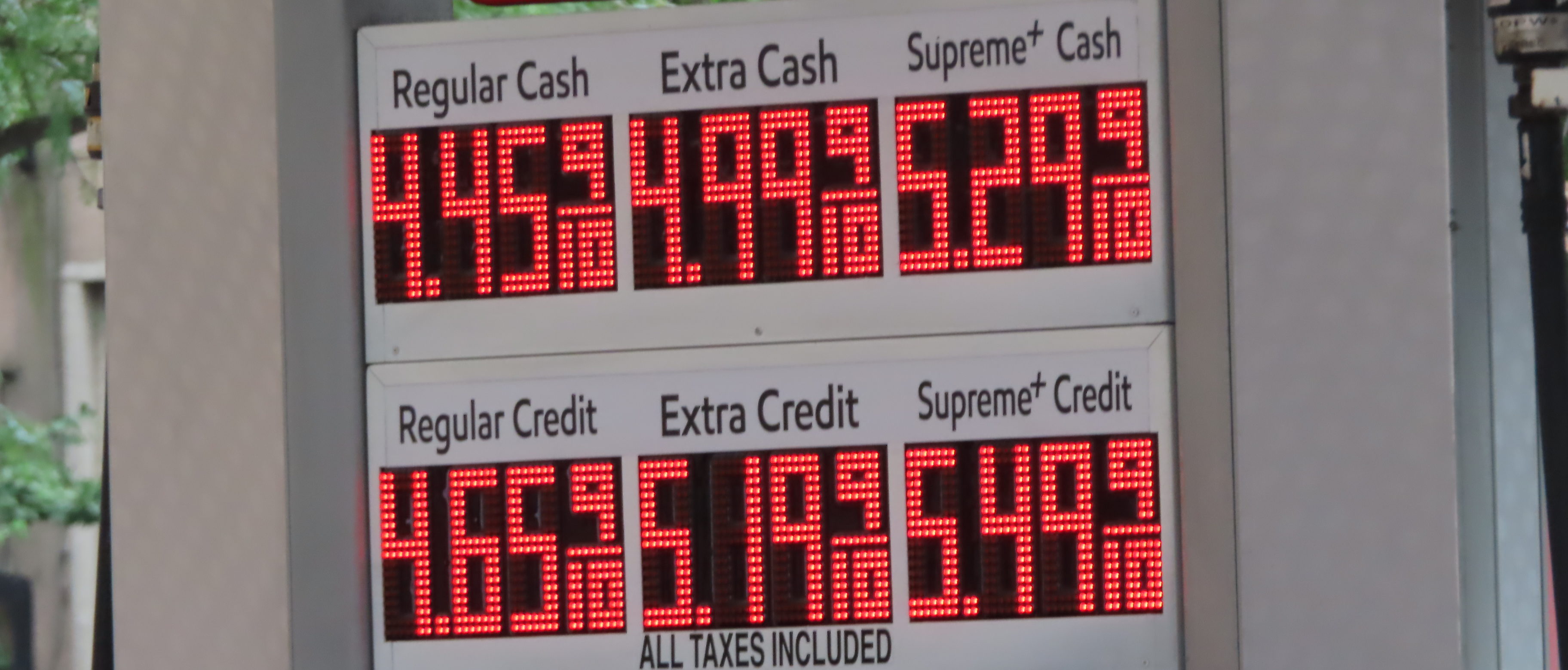
Diesel prices have climbed so high at some California gas stations that their pumps have hit the highest price they can display.
Several stations owned by Arco and Shell listed diesel at $9.99 per gallon across multiple California cities including Serra Mesa and San Jose on Thursday, according to GasBuddy. Patrick De Haan, the head of petroleum analysis at GasBuddy, told the Daily Caller News Foundation that 3 total locations in the Golden State were showing this price, a figure down from earlier reports.
“MAXXED OUT at $9.999!!” wrote in a Thursday morning X post. “GasBuddy data showing 5 stations in California that have hit the limit and are selling diesel at the dispensers’ highest possible price: $9.999/gal.”
He posted an image showing five GasBuddy price reports at $9.99 per gallon and followed up with a one-word reaction: “yuck.”
“I will note that in this odd environment we previously reported up to 6 stations, but on further investigation some reports of 9.99 were due to the station running out of fuel, which is a common way of alerting GasBuddy users to a station out of diesel,” De Haan told the DCNF.
The reported prices come as California motorists face some of the highest diesel costs in the country. California’s statewide average reached a record $7.81 per gallon over Labor Day weekend, while San Francisco and Oakland averaged $8.23 and $8.02, respectively, according to the San Francisco Chronicle.
Diesel prices have also broken records nationally, with the national average reaching $5.85 per gallon last Friday, surpassing the previous record set during the 2022 energy crunch following Russia’s invasion of Ukraine.
Acro and Shell did not each immediately respond to the Daily Caller News Foundation’s requests for comment.
“I think these prices will continue to be rare, but are possible. Many pumps only have 4 digits for their individual grade price display which could be problematic for displaying a true and accurate price unless a software update of sorts could be made,” De Haan told the DCNF.
The analyst warned Wednesday that some California stations might soon face the technical challenge of displaying double-digit diesel prices.
“We’re talking about some stations that may have to figure out software updates for potentially double-digit diesel prices,” he told Yahoo Finance on Wednesday.
California’s tax structure adds another layer to the state’s already elevated diesel prices. The state imposes a 48.2-cent-per-gallon diesel excise tax on top of the federal government’s 24.4-cent levy, while retail diesel is also subject to a 13% state sales tax plus applicable local district taxes, according to the California Department of Tax and Fee Administration (CDTFA).
Unlike the fixed excise taxes charged by the gallon, California’s sales tax on diesel rises with the price of the fuel. California imposes a 13% sales tax on diesel before applicable local district taxes are added, according to the California Department of Tax and Fee Administration (CDTFA.). At a 13% rate, for example, $5 of taxable diesel would carry roughly 65 cents in sales tax, while $9 would generate roughly $1.17 before additional local district taxes are factored in.
Local taxes can push that burden even higher. San Jose’s general sales tax rate rose to 10% in April after Santa Clara County voters approved an additional 0.625% countywide tax, according to the CDTFA.
The state’s fuel market is largely isolated from other major U.S. refining centers because California lacks pipelines connecting its market with those regions, making the state more dependent on its own refineries and fuel delivered by ship when supplies tighten, according to the California Energy Commission.
The record prices come as wars in Iran and Ukraine have strained the global supply of diesel and other refined fuels. Roughly 20% of global petroleum liquids consumption passed through the Strait of Hormuz during the first half of 2025, while existing alternative routes could accommodate only a portion of those flows if traffic through the waterway were disrupted, according to the U.S. Energy Information Administration (EIA).
The Iran war has also hit the infrastructure needed to turn crude oil into diesel and other fuels. A major Saudi refinery shut down following a drone strike early in the conflict, contributing to pressure on supplies of refined petroleum products.
The war in Ukraine has squeezed refined-fuel supplies from another direction. Ukrainian attacks have damaged Russian refining infrastructure, while Russia moved to restrict refined-fuel exports through the end of September.
American refiners have increased production as overseas supplies remain constrained, but the difference between crude oil prices and the prices of petroleum products produced from it known as the “crack spread” has widened as refined-fuel prices climbed, according to the EIA.
All content created by the Daily Caller News Foundation, an independent and nonpartisan newswire service, is available without charge to any legitimate news publisher that can provide a large audience. All republished articles must include our logo, our reporter’s byline and their DCNF affiliation. For any questions about our guidelines or partnering with us, please contact [email protected].