

Legal/Law/Criminal Justice and Reform
Here’s How Loaded Supreme Court’s Second Amendment Caseload Could Get
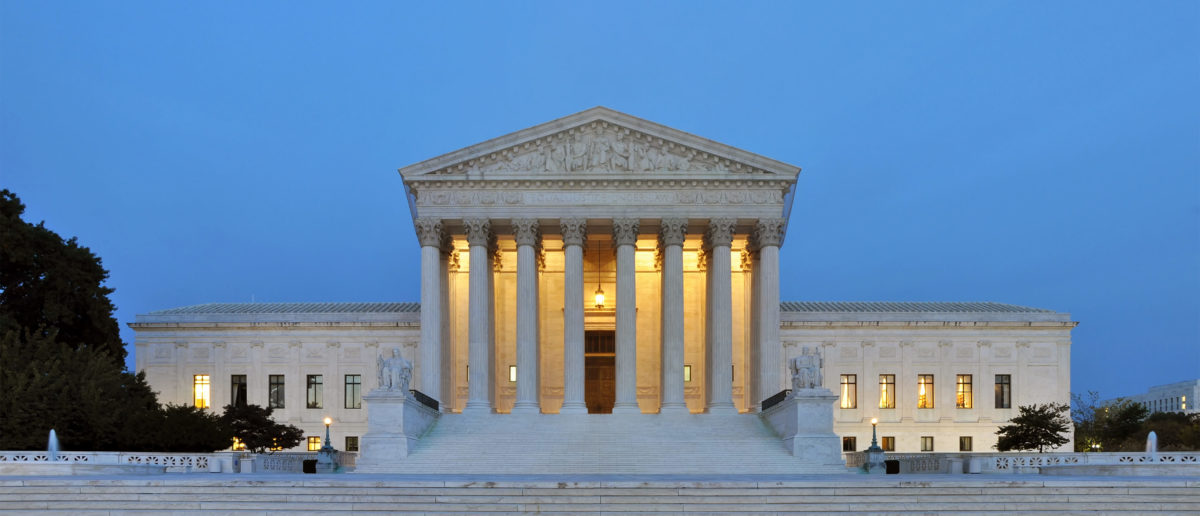
Joe Ravi/Wikimedia Commons
The Supreme Court could decide multiple Second Amendment cases as appeals accelerated since it decided two cases about gun rights in June.
The Supreme Court agreed to hear Viramontes v. Cook County on June 30, and announced Friday the hearing would occur on Dec.2, taking up a Second Amendment challenge to a ban on modern semiautomatic firearms passed by the Illinois locality days after issuing rulings on two Second Amendment cases. The high court, though, received four petitions asking it to hear cases since the end of July, while it has considered taking up one case for a record number of conferences.
The Supreme Court considered taking up Duncan v. Bonta, a challenge to California’s ban on magazines holding more than ten rounds, for 23 conferences, a record, and will likely be debated when the justices have their first conference of the upcoming term on Sept. 28. The United States Court of Appeals for the Third Circuit ruled New Jersey’s similar magazine ban unconstitutional in an “en banc” (heard by all judges on the court) decision in Association of New Jersey Rifle & Pistol Clubs, Inc. v. Attorney General of New Jersey that struck down the state’s ban on modern semiautomatic firearms.
“It has been a very dynamic time for the Second Amendment, and we are excited that the Supreme Court is showing a willingness to step into the fray and settle the major disputes that remain in the space,” Second Amendment Foundation (SAF) Senior Director of Legal Operations William Sack told the DCNF. “With assault weapons bans now being heard, there are numerous other major issues that the Court still has to choose from, as highlighted by the flurry of new cert petitions coming this term.”
The justices were petitioned to hear a case challenging New York City’s ban on stun guns, when SAF petitioned the Supreme Court in July, accusing a federal appeals court of flouting a decade-old ruling by the high court.
The Supreme Court ruled in Caetano v. Massachusetts that a ban on stun guns was unconstitutional on Second Amendment grounds in a unanimous per curiam (unsigned) ruling released on March 21, 2016.
The decision from all 15 judges on the Third Circuit’s bench created a “circuit split,” which occurs when federal appellate courts differ on how to handle similar cases, and often will be heard by the Supreme Court.
“We’re identifying places where we can help make new law or create a circuit split for purposes of ultimate Supreme Court determination,” Associate Attorney General for Civil Rights Harmeet Dhillon told the Daily Caller News Foundation in June.
Second Amendment-related cases are not just about bans on firearms and accessories like magazines, though. Over a dozen companies tied to the firearms industry asked the Supreme Court to take a case centered around a lawsuit targeting the companies over a 2022 shooting in Washington, D.C.
While a federal district judge in Virginia tossed the lawsuit, the United States Court of Appeals for the Fourth Circuit sided with Lowy, prompting the companies to appeal, citing a conflict with three other federal appellate courts.
Maine’s waiting period was the subject of another petition to the high court, where a “circuit split” was cited. After United States District Judge Lance E. Walker of the District of New Mexico, a Trump appointee, ruled in favor of the plaintiffs, the United States Court of Appeals for the First Circuit overturned the decision, prompting the petition to the Supreme Court.
However, the United States Court of Appeals for the Tenth Circuit struck down a waiting period on firearms purchases while overruling a decision in favor of New Mexico by Senior United States District Judge James O. Browning, a George W. Bush appointee.
Recognition of concealed carry permits was driving another potential case for the Supreme Court, with the Liberty Justice Center arguing in its petition filed Aug. 24 that the state’s refusal to recognize out-of-state permits held by truck driver Jeffrey A. Johnson Sr. was a violation of his Second Amendment rights.
All content created by the Daily Caller News Foundation, an independent and nonpartisan newswire service, is available without charge to any legitimate news publisher that can provide a large audience. All republished articles must include our logo, our reporter’s byline and their DCNF affiliation. For any questions about our guidelines or partnering with us, please contact [email protected].