

Technology
The Data Center Boom Is Coming For Small-Town Water
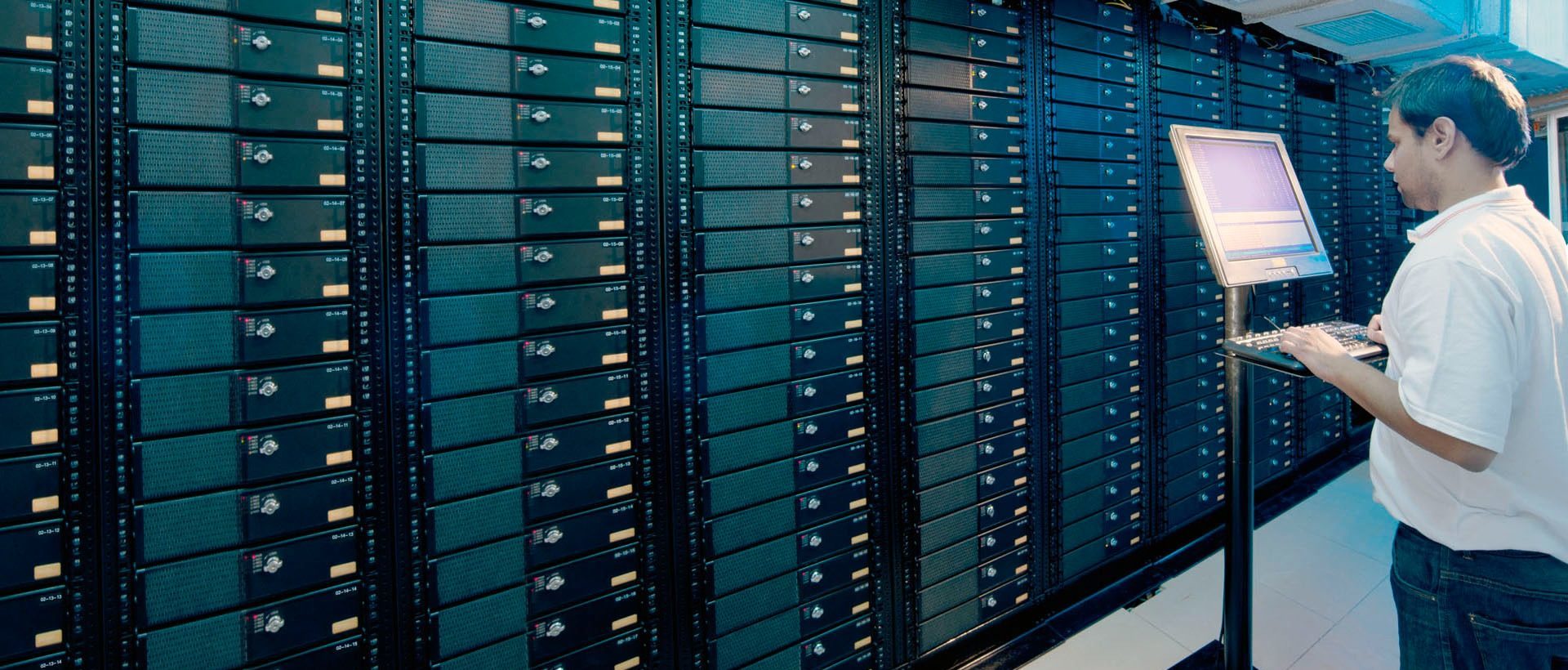
Data center (Azraelito/Wikimedia Commons)
The artificial intelligence data center boom is thirsty for small-town American water.
Data center projects have run into water problems in several towns that host them: a fire hydrant leak that wasted millions of gallons of water in Oklahoma, a bacterial contamination dispute in Wyoming and well water in Georgia that residents said turned muddy. The number of these data center projects has doubled in the last year, even as local construction becomes increasingly unpopular.
El Reno’s Pipe Leak
In El Reno, Oklahoma, the city traced a leak that wasted more than three million gallons of water and closed schools and businesses to a Bitcoin mining site, which was built and run without proper permits, according to KOCO 5 in Oklahoma City.
The mining facility, owned by Athlon Blockchain Technology, houses mobile data center servers in shipping containers and uses air and water cooling for AI storage and Bitcoin mining, the company’s website said, KOCO reported.
El Reno officials said they believe the property owner kept building and operating the facility without obtaining a certificate of occupancy, KOCO reported. The city noted however, that this had not yet been confirmed.
After the leak was discovered, the city staff condemned the site over multiple fire and life-safety code violations that, together with the leak, endangered the surrounding community.
El Reno issued a Stop Work Order for Athlon BT in 2023, KOCO reported. City officials set a hearing on the Athlon property for late September, according to earlier KOCO reporting.
“With data centers, you’re often seeing really large numbers that are hard to put in context,”American Energy Leadership Institute president Chris Johnson told the Daily Caller News Foundation. “In Oklahoma, for example, that amount of water accounts for about .002% of the total water usage in the state, or about 9 minutes of usage.” Johnson said incidents like this call for accountability, but he cautioned against a disproportionate overreaction to them.
Athlon BT, El Reno Mayor Steve Jensen and City Manager Matt Sandidge each did not respond to the Daily Caller News Foundation’s request for comment.
“I think almost everyone’s mistaken in thinking that data centers pollute water,” Andy Masley, a writer who covers AI and data-center water use, told the DCNF. “Every story we have about them polluting water is the result of construction runoff, which is bad but the normal result of building any large building.”
Cheyenne’s Wastewater Bacteria
A similar dispute washed over Cheyenne, Wyoming, where Cupriavidus gilardii, a metal-consuming bacterium, was reportedly found in wastewater during the construction of Meta’s local data center facility, according to Cheyenne Board of Public Utilities (BOPU) records released in July.
In total, more than 800,000 gallons of wastewater was released into Cheyenne’s sewer system between January and March, according to BOPU’s FAQ.
“BOPU’s wastewater treatment facility was unable to treat and remove the bacteria from the wastewater stream. As a result, the presence of the bacteria adversely affected BOPU’s ability to produce reuse water for irrigation purposes,” the FAQ stated.
BOPU fined Goat Systems, the LLC that owns Meta’s Cheyenne campus, $10,000 and banned data centers in the city from dumping startup cooling water into the sewer, according to the July FAQ.
“Meta is committed to being a good neighbor in Cheyenne, which includes helping protect local water resources,” a Meta spokesperson told the DCNF.
Meta argued that the city of Cheyenne’s Board of Public Utilities’ public documents on the water contamination did not support the enforcement action against it.
“[T]he Board found no impact to the public or environment. The Board’s investigation also demonstrated false positives due to cross-contamination in its own laboratory, raising questions about the validity of the tests that led to this enforcement action in the first place,” the Meta spokesperson added.
Fortis Construction, Meta’s general contractor at the Cheyenne site, told the DCNF it found no traces of the bacterium in Cheyenne’s water during its own tests.
“When initially alerted by the BOPU to a positive test, we began conducting a thorough investigation, which included repeated testing by independent environmental specialists, and have never found any trace of Cupriavidus gilardii,” Sarah Hamaker, a Fortis Construction spokeswoman, told the DCNF. “We have been in regular communication with the BOPU throughout this process and take our environmental obligations seriously.”
BOPU declined to comment due to the ongoing litigation over the violation, the group told the DCNF.
Neither Fortis nor BOPU shared testing results for the DCNF to independently verify.
Morgan County’s Muddy Water
In Morgan County, Georgia, residents near Stanton Springs said well water turned muddy after heavy site work back in 2022 when Rivian was grading an EV plant, 11 Alive reported in May. Meta’s local data center, which began construction in March 2018, recently became the focus of the water complaints.
“Every time it rains with a decent amount of rainfall, we get mud that’s coming through in the groundwater and coming up here through the pump,” Alan Jenkins, a local resident, told 11Alive News in November 2022.
“Seven million cubic yards of dirt got moved on the groundwater recharge area. I can’t say it was from Rivian,” Blake McCormack, chair of the Morgan County Board of Commissioners, told 11Alive News. “I just know we never got complaints before that happened. After that, we started having complaints.”
McCormack did not immediately respond to the DCNF’s request for comment.
Democratic Rep. Alexandria Ocasio-Cortez of New York brought a glass of brown water into the U.S. Capitol on May 20, and she told Environmental Protection Agency water chief Jessica Kramer,”I have a jar right here. This is the current drinking water in Morgan county Georgia.”
Meta disputed the residents’ claims.
“When Stanton Springs residents raised concerns, we commissioned an expert study of the local topography, which showed that groundwater flows away from their properties, not toward them,” a Meta spokesperson told the DCNF. “And all construction and operations water came from the local utility, not groundwater.”
“While we are committed to being a good community partner, we will still defend ourselves from baseless lawsuits,” the spokesperson added.
‘Vulnerable Water Infrastructure’
The disputes have surfaced as data centers arrive in communities whose water systems were built decades ago.
Shaolei Ren, a professor of electrical and computer engineering at the University of California, Riverside, told the DCNF that data centers draw on various cooling methods for their water use. Some of these projects use dry coolers which require virtually no water but more power, while others evaporate water to help cool the equipment, easing the electricity load when air is not effective in hot seasons.
“Many public water systems are aging, so this leak is another reminder of how vulnerable water infrastructure can be,” Ren told the DCNF. “Even without data centers, these systems need continued investment and upgrades to reliably serve new industrial-scale demands and deliver clean water to homes, particularly as extreme weather places additional stress on water infrastructure.”
American drinking water infrastructure earned a C-minus in the American Society of Civil Engineers’ 2025 report card, which found that nearly 20 percent of the nation’s water mains have outlived their useful lives. The report estimated roughly 240,000 water main breaks each year.
Some communities have tried to get ahead of the strain on local water systems.
Johnson told the DCNF that tech companies can also contribute to solutions to the problem. He pointed to Meta’s $100 million investment in water infrastructure in Kuna, Idaho.
“Kuna is in a desert, so investments like these are huge for communities like theirs,” Johnson told the DCNF.
At a data center hub in Quincy, Washington, Microsoft coordinated with the city to build a dedicated plant to treat and reuse the cooling water, which offsets about 138 million gallons of annual groundwater demand, according to the EPA.
All content created by the Daily Caller News Foundation, an independent and nonpartisan newswire service, is available without charge to any legitimate news publisher that can provide a large audience. All republished articles must include our logo, our reporter’s byline and their DCNF affiliation. For any questions about our guidelines or partnering with us, please contact [email protected].