

Business
Trump Taking Stake In Corporations Opens Door For Dems To Exploit When They Regain Power
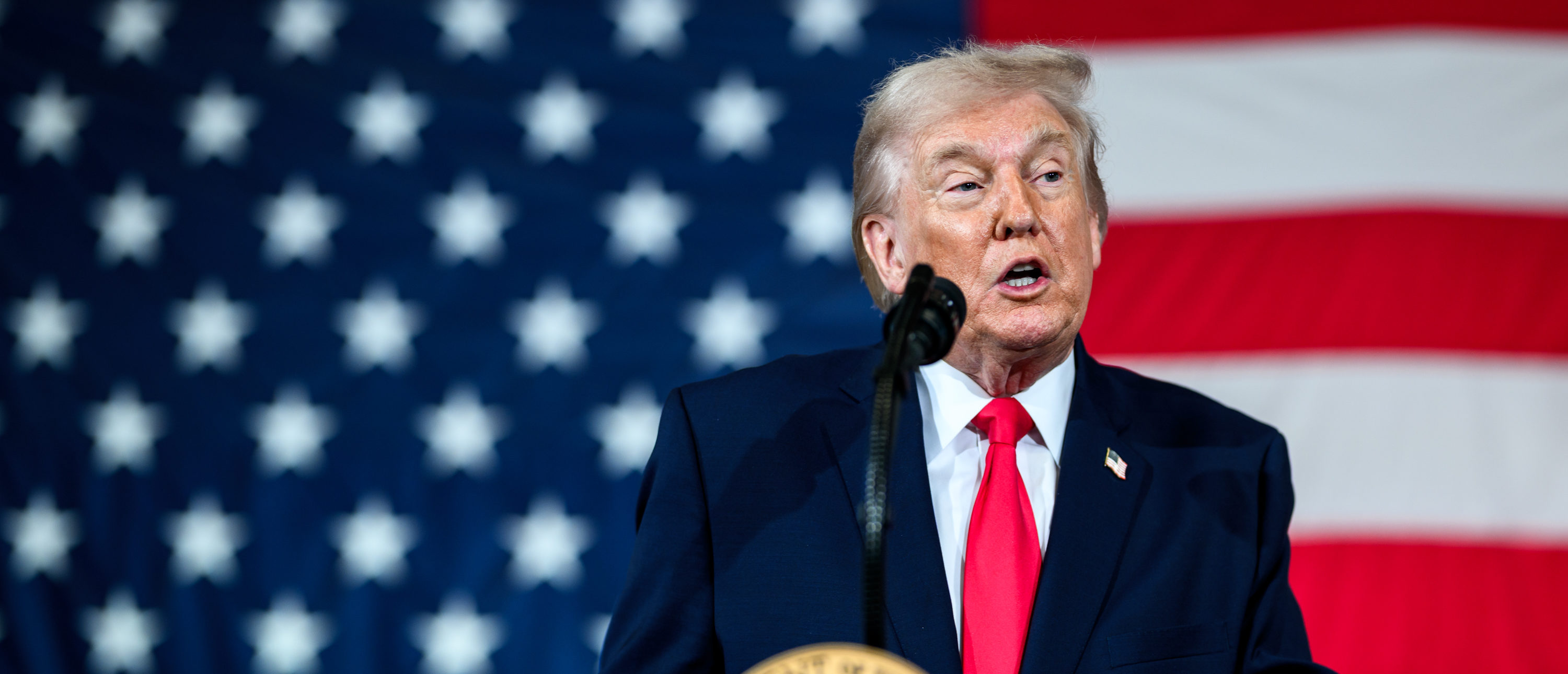
(Official White House Photo by Daniel Torok)
President Donald Trump’s growing push to take government stakes in private companies could hand Democrats a powerful precedent to expand federal involvement in corporate America when they return to power.
The Trump administration has announced 39 stakes or other ownership rights in private companies totaling roughly $27.7 billion since January 2025, spanning the mining, technology, energy and defense industries, according to Politico. The left is already considering how a future Democratic administration could build on Trump’s approach to advance climate, energy and labor priorities, while free-market advocates warned the president has made it more difficult for Republicans to oppose such interventions in the future.
The administration’s approach marked a significant departure from previous federal interventions in private companies, which largely occurred during wars or financial emergencies. The federal government took large stakes in banks and automakers during the 2008 financial crisis, but Trump’s investments have instead been aimed at longer-term efforts to secure critical mineral supply chains and expand domestic semiconductor and technology production.
Scott Lincicome, vice president of general economics at the Cato Institute, told the Daily Caller News Foundation that Trump’s acquisition of a 10% stake in Intel represented a significant escalation from earlier government investments.
Lincicome said previous government stakes generally involved national security needs or emergencies, received legislative backing and included plans for the government to eventually divest. The Intel deal, by contrast, involved a company that was not facing bankruptcy, lacked an explicit exit strategy and relied on the CHIPS Act, which Lincicome said did not expressly authorize the government to take an equity stake.
“Because the Trump administration has opened these floodgates, it’s going to be difficult, if not impossible, for Republicans to fight this when Trump is gone,” Lincicome told the DCNF. “Because it was their party that started it all.”
Former President Joe Biden signed the CHIPS and Science Act into law in 2022 to boost domestic semiconductor manufacturing and reduce U.S. reliance on foreign chip production. The law included roughly $52 billion in subsidies for semiconductor manufacturers, along with additional funding for scientific and technology research.
The White House rejected concerns that Democrats would build on Trump’s approach, arguing the administration’s investments were voluntary partnerships intended to strengthen American industry.
“The Trump administration has taken voluntary equity investments in willing companies,” White House spokesman Kush Desai told the DCNF. “After spending decades hollowing America out with broken trade deals and DEI [diversity, equity and inclusion] red tape, it’s unlikely Democrats will want to build on the President’s legacy of partnering with the private sector to reindustrialize the United States.”
Left-wing policy groups, however, have already begun considering how a future administration could use government ownership for its own priorities. A July Roosevelt Institute report laid out a potential 2029 climate agenda that explicitly called for adapting Trump’s methods to advance the left’s goals and identified government stakes in private companies as one tool future policymakers could use. The report argued government ownership could be used to push companies toward faster decarbonization, union recognition, domestic production and restrictions on stock buybacks.
Former Biden administration National Economic Council deputy director Bharat Ramamurti also predicted a future Democratic president would inherit the stakes.
“Inevitably a Democratic president is going to get handed these equity stakes at some point,” Ramamurti told Politico, adding that the next administration would have to determine what to do with them.
The concept has already attracted prominent figures on the left. California Democratic Gov. Gavin Newsom proposed a national public equity fund that would give Americans a stake in wealth generated by major artificial intelligence companies, while independent Vermont Sen. Bernie Sanders introduced legislation in June that would give the public a 50% ownership stake in the country’s largest AI companies.
Lincicome warned that the political precedent was only one risk created by expanding government ownership, arguing the investments could distort capital markets by encouraging investors to bet on which companies might receive government support rather than which businesses have the strongest commercial prospects.
“The U.S. economy dominates in large part because capital flows to the best ideas and the best companies, not to the ones that are coziest with the government,” Lincicome told the DCNF.
All content created by the Daily Caller News Foundation, an independent and nonpartisan newswire service, is available without charge to any legitimate news publisher that can provide a large audience. All republished articles must include our logo, our reporter’s byline and their DCNF affiliation. For any questions about our guidelines or partnering with us, please contact [email protected].