

Business
Turns Out Tariff Refunds Giving Temporary Jolt To Economic Growth
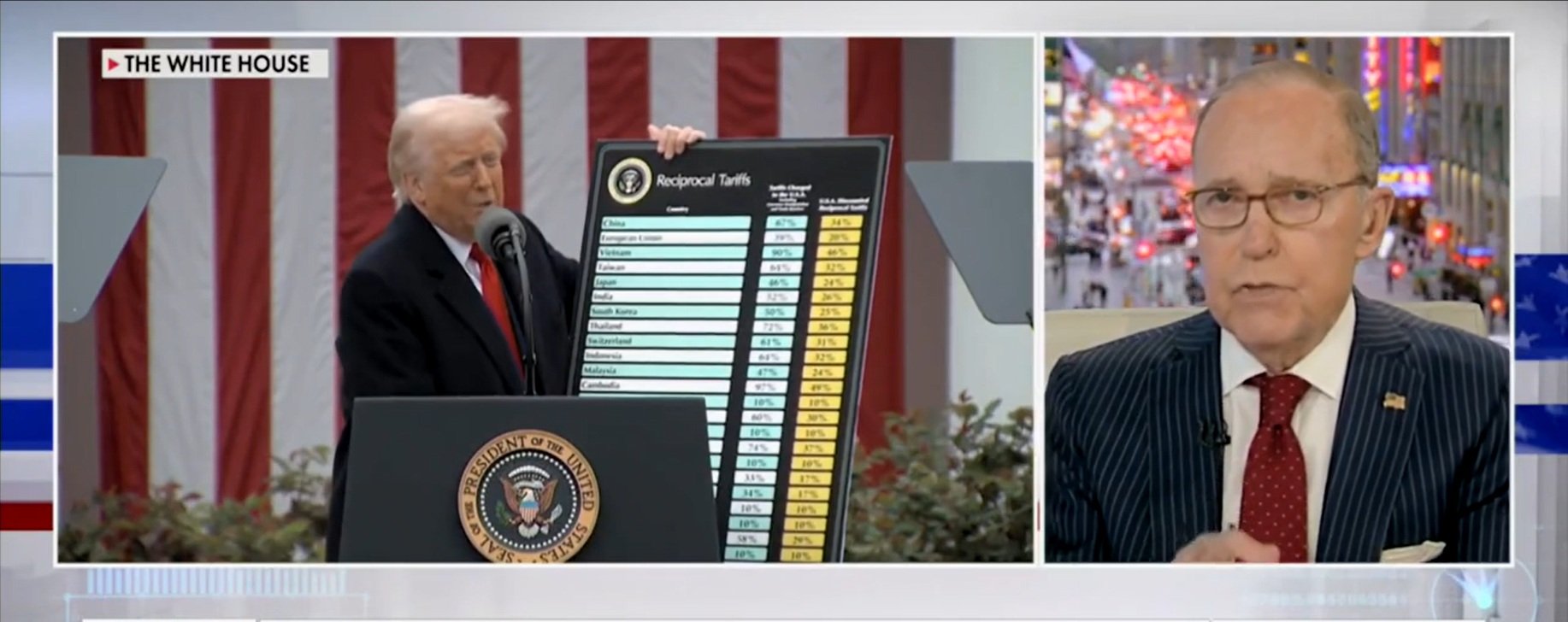
Larry Kudlow
Tariff refunds provided a temporary boost to the U.S. economy and could account for a small portion of the 4% projected third-quarter GDP growth, according to an analysis from Apollo Global Management chief economist Torsten Slok.
The refunds followed the Supreme Court’s February decision striking down tariffs imposed by President Donald Trump under the International Emergency Economic Powers Act (IEEPA), with roughly $166 billion expected to be returned to affected importers and businesses, according to the Federal Reserve Bank of Atlanta. Slok’s estimate raised questions about how strong economic growth would be without tariff refunds as consumers and businesses continued to face rising costs largely driven by the Iran war.
Slok estimated the refunds would add about 0.2 percentage points to third-quarter growth, which was tracking at over a 4% annualized rate in the Atlanta Fed’s GDPNow model when he published his analysis on Aug. 15. That would mark a sharp acceleration from the first half of the year, when the economy contracted at a 0.5% annualized rate in the first quarter before rebounding to a 3.0% growth rate in the second quarter.
The economy continued to expand even as businesses and consumers contended with elevated prices. Consumer prices increased 0.1% in July after rising 0.3% in June, while the annual inflation rate held at 2.7%, according to the Bureau of Labor Statistics. Core prices, which exclude food and energy, rose 0.3% in July and were up 3.1% from a year earlier, underscoring the continued pressure on businesses and households even as overall economic growth accelerated.
The author described the development as a “fiscal expansion,” arguing that the refunds were not only boosting corporate earnings but also contributing to economic growth.
The refunds were effectively a reversal of money businesses previously paid to the government, rather than a new source of recurring economic activity.
The Atlanta Fed cautioned that the economic impact of the refunds could be considerably smaller than the headline $166 billion figure suggested. Its researchers estimated that roughly one-third of the refunds would go to financially constrained firms that were more likely to use the money for investment, hiring or price reductions, while other companies could save the money, repay debt or return it to shareholders.
Still, the refunds were already showing up in corporate financial results. Dozens of major U.S. companies received or claimed billions of dollars in IEEPA tariff refunds, according to their SEC filings and earnings reports. Among the largest was Walmart (approximately $2.9 billion), Apple (nearly $2.2 billion), Ford (about $1.3 billion in IEEPA-related reimbursements) and Nike (roughly $986 million), The Wall Street Journal reported.
All content created by the Daily Caller News Foundation, an independent and nonpartisan newswire service, is available without charge to any legitimate news publisher that can provide a large audience. All republished articles must include our logo, our reporter’s byline and their DCNF affiliation. For any questions about our guidelines or partnering with us, please contact [email protected].