

Energy
Flash Flooding At Grand Canyon Knocks Out Only Water Line, Leaves 1 Dead And 15 Missing
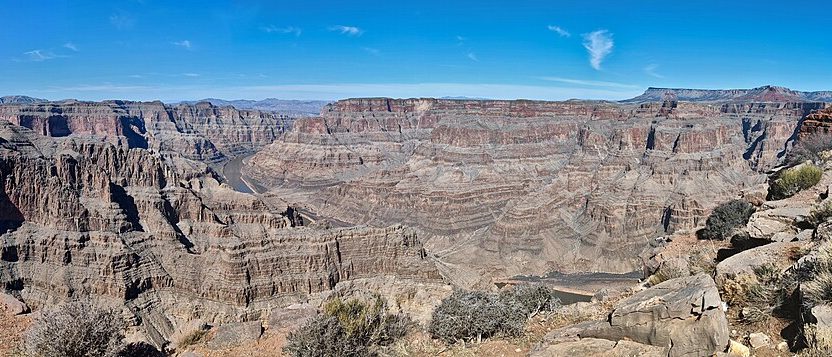
Krigore, CC BY-SA 4.0 <https://creativecommons.org/licenses/by-sa/4.0>, via Wikimedia Commons
A massive flash flood ripped through the Grand Canyon over the weekend, killing at least two people, leaving roughly 15 people missing or unaccounted for and knocking out the park’s water pipeline, according to news coverage.
The flooding struck Bright Angel Canyon on Saturday, forcing more than 60 people to be evacuated from Phantom Ranch and the lower North Kaibab Trail as rushing water destroyed footbridges and sent debris into the Colorado River, according to the National Park Service.
Officials recovered the body of a 46-year-old man Sunday evening near Crystal Rapids along the Colorado River, according to the Associated Press. Authorities did not immediately release additional details about his death. A second death was later confirmed.
The National Park Service did not immediately respond to the Daily Caller News Foundation’s request for comment.
The flood also damaged the Transcanyon Waterline, leaving the pipeline inoperable and the park with limited water reserves, the NPS reported. Officials suspended overnight hotel stays beginning Monday and imposed heightened water restrictions on the South Rim.
The shutdown comes as the National Park Service is already undertaking a $208 million rehabilitation of the aging water system. The contract was awarded in 2023 and is expected to be completed in 2027.
The Transcanyon Waterline has suffered more than 85 major breaks since 2010 and has long outlived its projected lifespan, per the NPS. The flooding also destroyed nearly all footbridges spanning Bright Angel Creek, eliminating hiker access across the creek as officials continued assessing damage to trails, bridges, utilities and other infrastructure.
Popular destinations including Phantom Ranch, Bright Angel Campground and the entire North Kaibab Trail remained closed following the flooding, according to the NPS.
The Transcanyon Waterline was already faced problems weeks before the most recent disaster. The pipeline broke on Aug. 3 roughly one mile below Cottonwood Campground, leaving the National Park Service unable to pump water to the South Rim and prompting officials to impose conservation measures.
The National Park Service announced that it tightened restrictions effective Aug. 13 as water reserves continued to decline, asking residents and visitors to reduce their water consumption while crews worked to address the aging system.
Conditions had begun to improve by Aug. 20, when the National Park Service announced it was reopening water spigots and expanding services on the South Rim, though conservation measures remained in effect.
Nine days later, significant flash flooding struck Bright Angel Canyon and the Phantom Ranch area, ultimately forcing officials to evacuate 62 people from Phantom Ranch and the lower North Kaibab Trail, per the NPS. The flooding destroyed nearly all footbridges spanning Bright Angel Creek and damaged other infrastructure throughout the canyon.
The disaster dealt another blow to the Transcanyon Waterline, leaving it nonoperational and the park with limited potable water reserves, according to the NPS. Stage 4 water restrictions and suspended overnight hotel accommodations inside the park beginning Aug. 31 was also announced in the release.
The latest flooding comes after the Dragon Bravo Fire burned portions of the Bright Angel Creek watershed in 2025. The National Park Service has warned that burned watersheds face an increased risk of flash flooding and debris flows during monsoon storms and periods of heavy rainfall.
Editor’s note: This story has been updated to reflect the fact that a second death had been confirmed after publication.
All content created by the Daily Caller News Foundation, an independent and nonpartisan newswire service, is available without charge to any legitimate news publisher that can provide a large audience. All republished articles must include our logo, our reporter’s byline and their DCNF affiliation. For any questions about our guidelines or partnering with us, please contact [email protected].