

Legal/Law/Criminal Justice and Reform
Firearms Companies Ask Supreme Court To Toss Suit Over Shooting
Wikimedia Commons
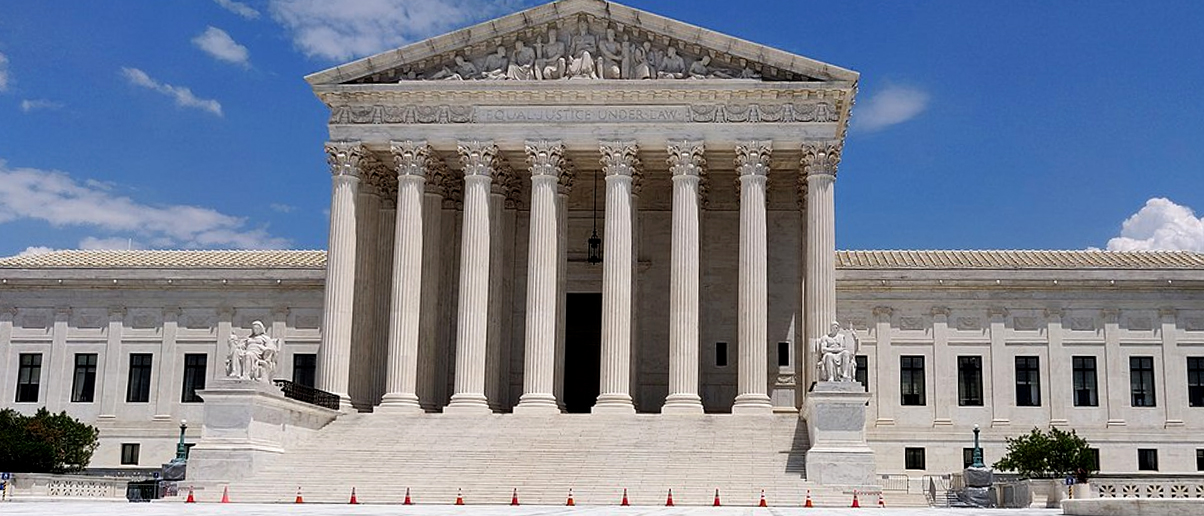
Over a dozen companies in the firearms industry asked the Supreme Court Wednesday to throw out a lawsuit over a 2022 shooting.
The Metropolitan Police Department of Washington D.C. said in an April 2022 release that Raymond Spencer fired over 200 rounds from an apartment in the direction of a school, wounding four people before he committed suicide. One of the victims, Karen Lowy, who was wounded while picking up her 13-year-old daughter from school, sued firearms industry establishments over the incident.
“Lowy and her daughter filed a lawsuit seeking compensation for the physical and emotional injuries Spencer visited upon them,” the companies argued in their petition to the Supreme Court filed by noted Second Amendment attorney Erin Murphy. “But they sought that recompense from parties that had no involvement in Spencer’s shooting spree: They named as defendants more than a dozen manufacturers of legal and widely owned firearms and related products, covering anyone who manufactures a firearm or related product that Spencer purchased.”
While a federal district judge tossed the lawsuit, the United States Court of Appeals for the Fourth Circuit sided with Lowy, prompting the companies to appeal, citing a conflict with three other federal appellate courts.
“The Fifth, Sixth, and Eleventh Circuits all hold that when a third party not before the court directly caused the plaintiff’s injuries, Article III requires the plaintiff to show that the defendant’s challenged conduct had a determinative or coercive effect on that third party,” the companies’ petition said. “The Fourth Circuit expressly rejected that standard here, joining the Second Circuit in holding that traceability is satisfied in such cases so long as a plaintiff plausibly alleges that the defendants’ conduct had some kind of ‘predictable effect’ on the individual who actually injured them. And since the decision below came down, the Ninth Circuit has cast its lot with the latter group.”
“There is thus now a 3-3 split on the appropriate standard for determining whether traceability is satisfied in cases where someone other than the defendant bears direct responsibility for the plaintiff’s injuries,” the petition continues.
Murphy did not immediately respond to a request for comment from the DCNF.
All content created by the Daily Caller News Foundation, an independent and nonpartisan newswire service, is available without charge to any legitimate news publisher that can provide a large audience. All republished articles must include our logo, our reporter’s byline and their DCNF affiliation. For any questions about our guidelines or partnering with us, please contact [email protected].