

Healthcare
Biden-Era Law That Created Medicare Drug Price Controls Could Hike Up Prices, Analysts Warn
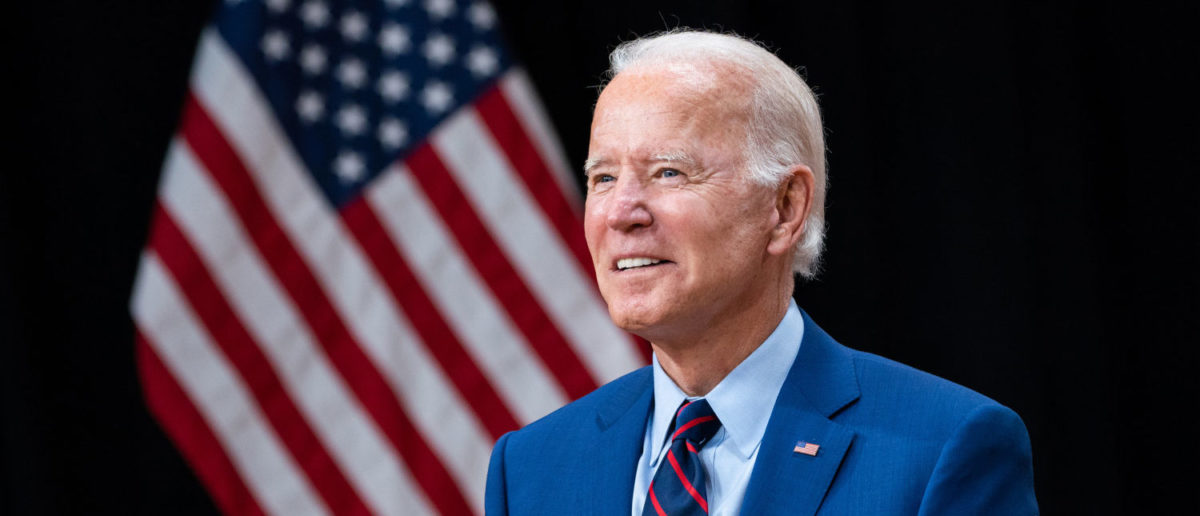
The White House/Wikimedia Commons
Medicare’s drug price controls could restrict Americans’ ability to access care and potentially drive up costs in the long term, according to analysts.
The Inflation Reduction Act (IRA), signed into law by then-President Joe Biden in August 2022, authorized the U.S. federal government to negotiate prices for certain high-cost prescription drugs covered by Medicare through the Medicare Drug Price Negotiation Program. While congressional Democrats previously claimed the IRA would help bring down healthcare prices, analysts warned the Daily Caller News Foundation that such price controls might limit some patients’ access to certain prescription medicines and impose cost burdens on Americans.
“Despite the IRA’s drug price controls being sold as a boon to consumers, the policy doesn’t actually solve any of the health-policy problems people consider most important to them,” Director of Health Policy at Americans for Tax Reform Isabelle Marchese told the DCNF. “Price controls don’t eliminate cost or risk; they simply reallocate them in less efficient, less transparent ways. To protect their income, insurers and PBMs have, naturally, responded by tightening their utilization-management tools — prior authorization, quantity limits, formulary exclusions, and/or preferred-status restrictions — on the drugs whose list or net prices have been artificially suppressed.”
“These results are inevitable consequences of price controls,” Marchese continued. “They never make the underlying costs or risks disappear, they only force someone else (often, patients) to absorb them through more red tape, delayed care, and restricted access.”
Traditionally, a price control refers to a mandate that requires a business to reduce the price of its product to what the government deems an acceptable level, according to Americans for Prosperity. Throughout history, socialist countries have often imposed such controls.
Marchese went on to say that such price controls may further reduce patient access to select prescription drugs in the future.
“Not only will these price controls cause drug price hikes and limit access in the near future, but the long-term effects of this policy are even more devastating,” she said. “In the near term, companies will raise launch prices on new drugs, accelerate price increases on non-selected products, and shift costs onto the commercial market that covers the majority of Americans under 65. In the long term, many of the high-risk, high-reward research projects that made the U.S. the world leader in biomedical innovation will never be started.”
The Centers for Medicare and Medicaid Services (CMS) released its first proposed rule in June to solidify regulations governing the IRA’s Drug Price Negotiation Program for Initial Price Applicability Year (IPAY) 2029 and future years, according to Hogan Lovells Cadwalader.
After the coverage requirement for IPAY 2026-selected drugs went into effect during the first quarter of the year, 24% of first fill attempts for these drugs were initially rejected, which indicates “a lack of material improvement for patient access,” according to a recent analysis from IQVIA. This rejection rate was unchanged from 2025, per the report.
CMS plans to issue the final rule to implement the Medicare Drug Price Negotiation Program for initial price applicability year 2029 and years thereafter in fall 2026, according to a fact sheet. The agency also intends to issue final revised information collection requests on the data and information the Federal government will collect to inform drug selection and drug price negotiation and submit the collection to the Office of Management and Budget for final approval, per the fact sheet.
Trump has previously criticized price controls and highlighted their longtime association with leftist regimes. In August 2024, Trump blasted then-Vice President Kamala Harris’ proposal for a food price-gouging ban as “communist” price controls, NBC News reported.
Despite this, some experts have previously compared Trump’s May 2025 executive order aiming to broaden Americans’ “access to the most-favored-nation price” for prescription drugs to imposing such controls.
“CMS is focused on delivering lower prescription drug costs for seniors while protecting taxpayers and preserving access to innovative treatments,” A CMS spokesperson told the DCNF. “Although the Medicare prescription drug market continues to adapt to significant changes enacted by Congress, CMS is closely examining emerging cost trends and using every available tool to promote affordability, competition, transparency, and responsible stewardship of taxpayer dollars.”
“This includes doubling the amount of estimated savings in the second year of the Medicare Drug Price Negotiation Program,” the spokesperson added. “The Administration is committed to building a Medicare drug program that puts American patients first, securing better value, strengthening accountability across the system, and ensuring seniors have access to the medicines they need at prices they can afford.”
The White House did not respond to the DCNF’s request for comment.
A No Patient Left Behind (NPLB) survey published in March found that 92% of beneficiaries expect they will face higher out-of-pocket costs under the IRA. Meanwhile, 30% of beneficiaries said their Medicare Part D plan initially denied them access to a drug prescribed by their doctor, NPLB’s research shows.
The IRA “is not delivering the outcomes that Democrats promised,” according to Pacific Research Institute President and CEO Sally Pipes.
“The IRA was sold as a way to make medicines more affordable and accessible, yet nearly one in four patients trying to start one of the first 10 price-controlled drugs was initially denied,” Pipes told the DCNF. “For some of the sickest patients, the rejection rates were much higher. Initial rejection rates reached 67% for the selected oncology medicines and 59% for the immunology medicines, according to IQVIA data. Even a month after the initial attempt, 16% of oncology claims and 22% of immunology claims remained rejected.”
This “underscores the reality that government price controls have a negative impact on improving patients’ access to medicines,” Pipes added.
Still, a KFF poll released in September 2024 found that 85% of voters backed letting the federal government negotiate prices for some prescription drugs for people enrolled in Medicare.
Republican North Carolina Rep. Greg Murphy claimed in a July 8 X post that Americans’ “access to care and critical drugs will be crushed” by the IRA’s Medicare Drug Price Negotiation Program.
Pipes also told the DCNF that the IRA may be “deterring companies from investing in medical research and development” across the nation.
“I would not be surprised if these denial rates and utilization management continue to rise, as IRA price controls apply to a larger and larger number of medicines each year,” she explained. “But arguably more important, the law is deterring companies from investing in medical research and development, which will have severe long-term consequences for Americans’ physical and financial health.”
All content created by the Daily Caller News Foundation, an independent and nonpartisan newswire service, is available without charge to any legitimate news publisher that can provide a large audience. All republished articles must include our logo, our reporter’s byline and their DCNF affiliation. For any questions about our guidelines or partnering with us, please contact [email protected].