

Legal/Law/Criminal Justice and Reform
Inside The Left’s Climate ‘Lawfare’ Gambit In Colorado
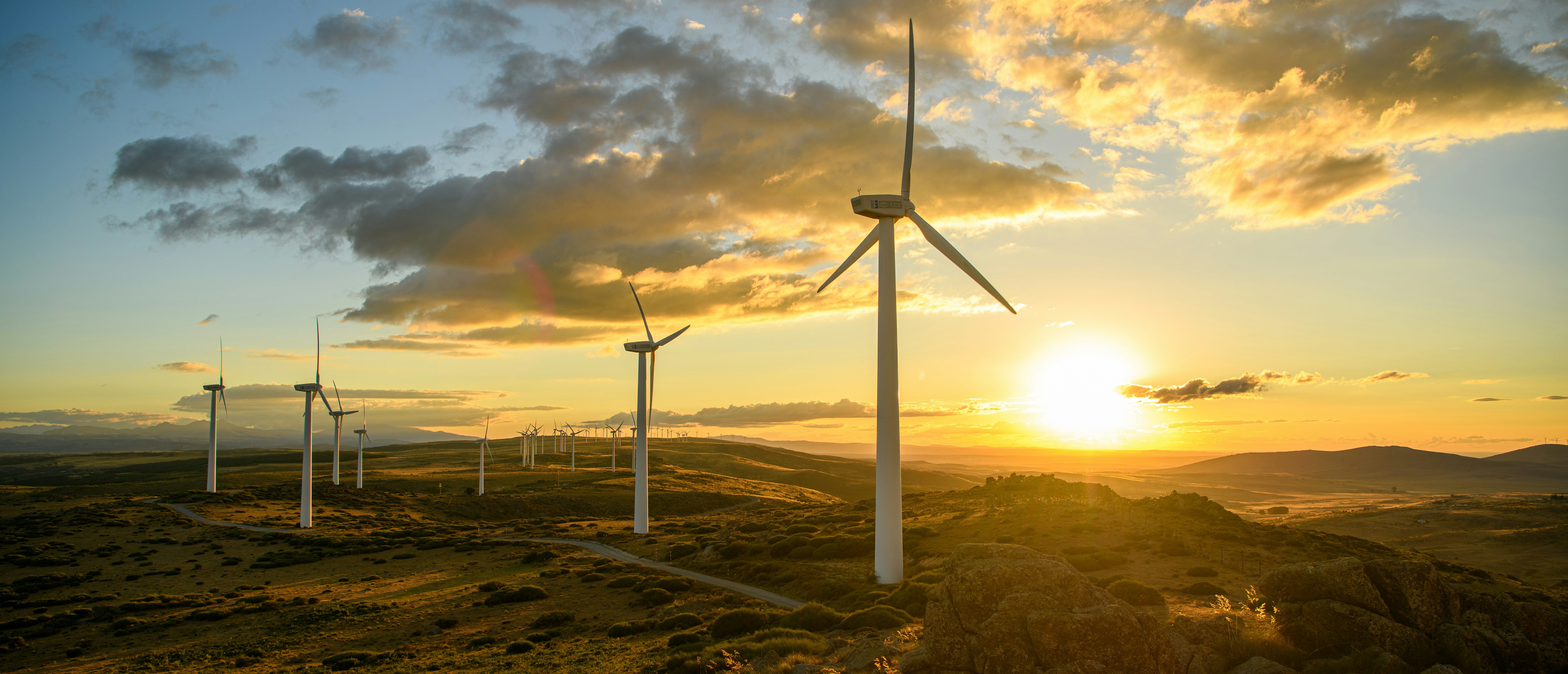
(Photo via Matteo del Piano / Unsplash)
A constellation of left-wing environmental groups wants to re-open the climate lawsuit floodgates, throwing their weight behind a high-stakes case in Colorado.
At least 20 new “friend of the court” briefs were filed last week in the Suncor Energy Inc. v. County Commissioners of Boulder County case, which will decide whether local governments can use state tort law to pursue claims with implications extending far beyond their borders. A network of left–leaning climate groups and legal figures appear in the amicus curiae briefs in support of Boulder, adding to a long list of high-profile court cases challenging fossil fuel companies.
“[The Left’s] goal is going to use courtrooms [and] lawfare to unlock their policy dreams. The faster conservatives wake up to that, the faster we can respond and not end up living in Gavin Newsom’s America, without realizing that it was happening,” O.H. Skinner, executive director at Alliance For Consumers, told the Daily Caller News Foundation. Skinner has filed an amicus brief in support of Suncor.
Boulder County and the City of Boulder sued Suncor Energy and ExxonMobil in 2018, alleging the fossil fuel companies contributed to climate change and seeking damages under Colorado state tort law. Suncor and ExxonMobil argue that states cannot use their own tort laws to impose liability for harms allegedly caused by interstate and international greenhouse-gas emissions, an issue they contend is governed by federal law.
A win for climate activists would reinvigorate the environmental left’s campaign in the courts, which sustained massive losses in cases like Lighthiser v. Trump and Mayor & City Council of Baltimore v. BP.
In Lighthiser v. Trump, 22 young plaintiffs challenged three Trump energy executive orders on constitutional grounds, but a federal judge dismissed the case for lack of standing, a decision the Ninth Circuit unanimously affirmed in June 2026.
In Mayor & City Council of Baltimore v. BP, the Maryland Supreme Court upheld the dismissal of climate-related tort suits brought by Baltimore, Annapolis and Anne Arundel County against 26 oil and gas companies, concluding that Maryland tort law could not be used to impose liability for harms arising from global greenhouse-gas emissions.
There aren’t special constitutional rules for interstate pollution, WHEN Justice, a non-profit focused on “accountability,” claimed in its brief supporting County Commissioners of Boulder County.
“Sherlock Holmes famously calls attention to the dog that does not bark; the absence of a thing that should be there is often the most probative piece of evidence,” the brief says.
Analysts who have closely watched the left’s legal campaign over the years aren’t convinced that the Suncor case will be a silver bullet.
“The brief Boulder’s lawfare attorneys submitted in late July recycles arguments which have been repeatedly rejected in various state and federal courts, including by the Supreme Court itself, in other cases that are part of this same legal grift,” David Blackmon, an energy public policy analyst, told DCNF. “Expecting the Supreme Court to reverse itself now is the definition of insanity regardless of how many supporting amicus briefs are filed by coordinating activists and lawfare attorneys.”
Our Children’s Trust, a left-wing nonprofit that represents young people in climate litigation trials, filed an amicus brief representing eight young people, ages 8 to 22, living in Boulder County. Its brief alleges that these individuals “are being directly harmed by air pollution from fossil fuels and climate disruptions.”
“The money is not the point of these lawsuits. The money is a means of crippling the energy industry that they don’t like and funding all the things that they do like,” Skinner explained. “This is being pushed by ideological donors to accomplish ideological ends, and the amicus briefs are a really good reflection of that because [a] large number of them were filed by groups or people or law firms that are receiving money from the same set of donors.”
Blackmon noted that the lawsuits end up costing “tens of millions of dollars for the defendant companies,” as they have to mount a defense.
The case has drawn attention from Ivy League law professors, including Harold Hongju Koh at Yale Law School and Michael Burger at Columbia.
“Senior Republican and Democratic officials who have shaped American climate policy reject the claim of energy companies and the Trump Administration that foreign policy concerns ‘preempt’ state lawsuits like Boulder’s,” Koh told the DCNF. “The Trump Administration has no clear climate policy with which Colorado’s aw could conflict and the Supreme Court does not apply preemption by disengagement or policy vacuum. In earlier cases, some of the same companies told the Court that the Clean Air Act cut off federal lawsuits against their emissions. Now to escape Boulder’s suit, they argue that those emissions are ‘inherently federal,’ so that state lawsuits should be cut off too.”
“This bait-and-switch should not allow them to escape accountability for the harm they have caused every Coloradan,” Koh concluded.
Burger, the executive director of the Sabin Center for Climate Change Law and Counsel at Sher Edling, a firm that has built more than two dozen climate-liability suits against energy companies, appears as counsel on an amicus brief filed on behalf of a coalition of Democratic-led cities and states.
Burger did not respond to the DCNF’s requests for comment.
“The left is basically trying to play games to undermine the structure and order of our constitutional system to accomplish their policy goals, even though they are trying to shred the kind of core foundational fabric of how our constitutional structure operates,” Skinner told the DCNF. “And so this goes entirely against the conservative legal framework of the world.”
Burger previous work appears to have been used in an “attribution science” chapter in the fourth edition of the National Academies of Science (NAS) Reference Manual on Scientific Evidence. That chapter was removed from the Federal Judicial Center’s website after it received immense backlash.
Supreme Court Associate Justice Elena Kagan wrote the foreword to the hotly contested fourth edition, in which she expressed views on climate change.
“Despite having been ongoing for almost a decade now, this lawfare campaign has yet to actually recover even a dollar on behalf of its myriad local and state “plaintiffs,” Blackmon said. “To this point, the only people benefitting from the campaign’s myriad separate lawsuits have been the lawfare firms themselves and the leftwing conflict groups and consultants with which they coordinate.”
Notably, the climate chapter’s section on so-called “attribution science,” the key theory behind the climate litigation, was apparently lifted from previous work he produced. That controversy is now colliding with the Boulder case.
“The only positive aspect of the Boulder case is that it gives the Supreme Court the chance to belatedly do the right thing and put an end to this shameless grift,” Blackmon said.
All content created by the Daily Caller News Foundation, an independent and nonpartisan newswire service, is available without charge to any legitimate news publisher that can provide a large audience. All republished articles must include our logo, our reporter’s byline and their DCNF affiliation. For any questions about our guidelines or partnering with us, please contact [email protected].