

Commentary: Big Tent Ideas
The Double Standard Slowly Tearing Apart America’s Partnership With South Korea
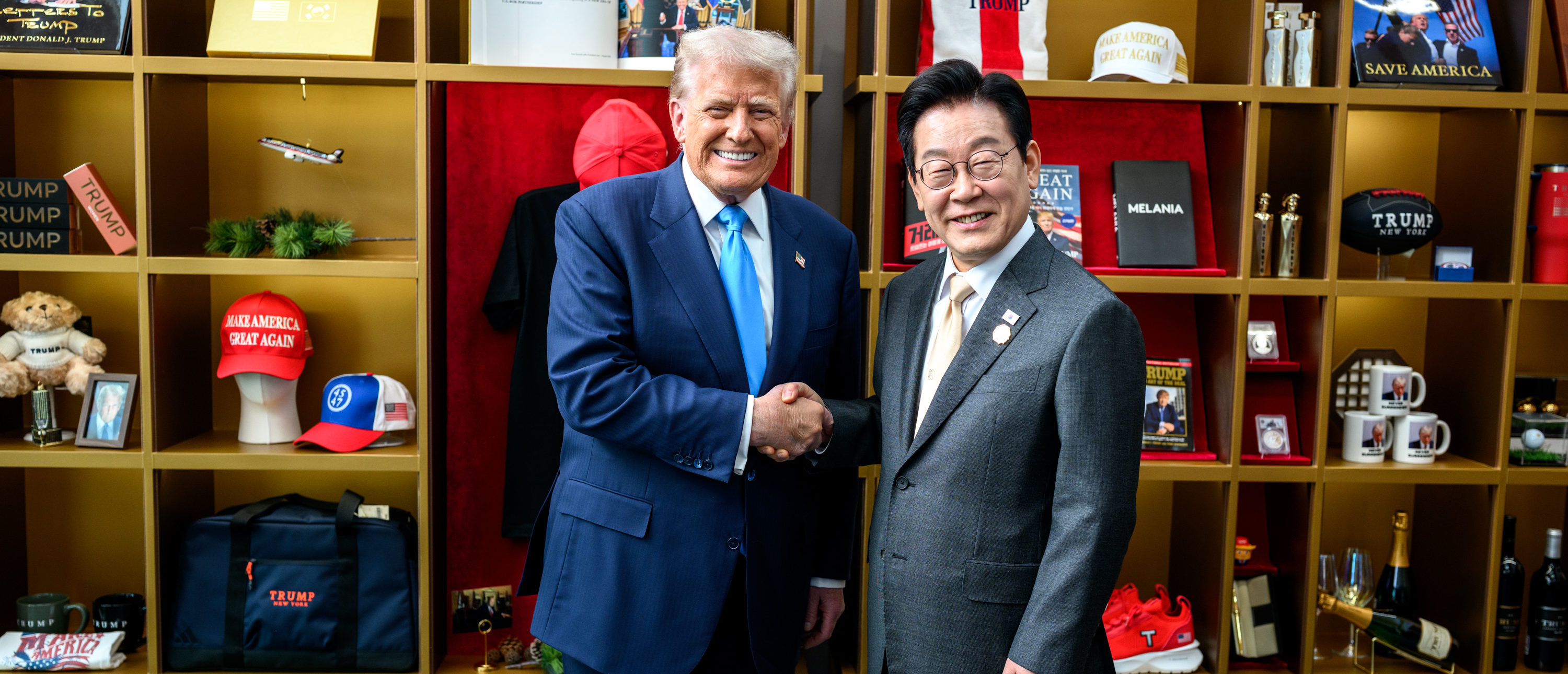
Official White House Photo by Daniel Torok
The alliance between the United States and the Republic of Korea is indispensable. President Trump knows this and is doing amazing work when it comes to foreign trade. Yet beneath the surface of diplomatic pleasantries between the United States and Korea, something is quietly tearing at the fabric of mutual trust.
Nowhere is that double standard more evident than in the contrasting fates of two corporate giants operating on opposite sides of the Pacific: Hyundai and Coupang.
When Hyundai broke the law on American soil and the Korean government demanded leniency, Washington accommodated to maintain a cooperative partnership.
When Coupang, an American company, suffered a minor data leak on Korean soil and U.S. officials expressed concern about a disproportionate and politicized response, Seoul intensified its enforcement.
Such blatant hypocrisy — especially from an ally that the U.S. supports in myriad ways—must be addressed and corrected.
Last September, U.S. authorities raided Hyundai’s battery plant in Georgia and detained hundreds of Korean nationals. Many had entered the country on business-visitor visas that did not permit the work they were performing; others overstayed the date their status expired. In short, they were working in plain violation of American immigration law.
Seoul was furious. Korean officials denounced the enforcement as a betrayal and accused Washington of humiliating their manufacturing champion after it had pledged billions in electric-vehicle investment. Korea demanded concessions — and as good-faith ally, the U.S. granted them.
Now consider the mirror image.
Coupang — a U.S. based technology company that has poured billions of American investment dollars into Korea — discovered last autumn that a former employee had accessed a database with customer records. The data was of the lowest sensitivity: names, addresses and order histories. No financial information, no passwords and no login credentials were exposed. And the incident produced no secondary harm to a single consumer.
None of this restrained Seoul. It imposed a $409 million fine on Coupang, the largest data-privacy penalty in the nation’s history.
And the fine was merely the opening move. According to a report by my good friend Chairman Jim Jordan and the U.S. House Judiciary Committee, Korea mobilized a whole-of-government campaign against the company —11 separate agencies opening more than 40 investigations, most of which have nothing to do with data security, with armies of investigators conducting 700 interviews and issuing thousands of document demands.
No Korean firm, and no Chinese-owned platform operating in Korea, has endured such a multi-agency siege over a data incident. The Committee described it as a “coercive” and protectionist campaign against a company that had been a “consistent target” of legal and regulatory pressure.
From there it escalated.
According the Committee’s report, Korean regulators pressed for criminal charges against Coupang’s American CEO— this, after the company, acting at the direction of Korea’s own intelligence service, had mounted a dangerous joint operation with the Korean government to recover the perpetrator’s devices and secure the stolen data. Seoul would later disavow any role in that operation.
This is not the conduct of an ally.
The largest regulatory fines in Korea’s history have fallen, with striking regularity, on American companies. Only this year — after a 19-year standoff and sustained pressure from Washington — did Seoul consent to let Google Maps function normally, a concession that has since stalled and remains, in practice, unfulfilled.
Vice President Vance, Secretary Rubio, the American Embassy in Seoul, and more than fifty members of Congress from both parties have pressed Korea to relent in its campaign against Coupang.
So far, Seoul has dismissed their appeals.
That is a grave miscalculation. Korea depends on America for its national security and relies on free-market access to American consumers who buy its semiconductors, automobiles, appliances, and entertainment.
No alliance can endure a double standard that grants Korean companies leniency in America while subjecting American companies to disproportionate punishment in Korea.
If Seoul expects Washington to keep its market open to Korean conglomerates, it cannot treat American technology companies as bottomless piggy banks.
Friendship requires reciprocity.
Mark Meadows served as the 29th White House chief of staff and as a member of Congress for North Carolina’s 11th District from 2013 to 2020.
The views and opinions expressed in this commentary are those of the author and do not reflect the official position of the Daily Caller News Foundation.
All content created by the Daily Caller News Foundation, an independent and nonpartisan newswire service, is available without charge to any legitimate news publisher that can provide a large audience. All republished articles must include our logo, our reporter’s byline and their DCNF affiliation. For any questions about our guidelines or partnering with us, please contact [email protected].