

Healthcare
Is This Drug Pricing Program Actually Making US Healthcare Affordability Crisis, Hospital Consolidation Worse?
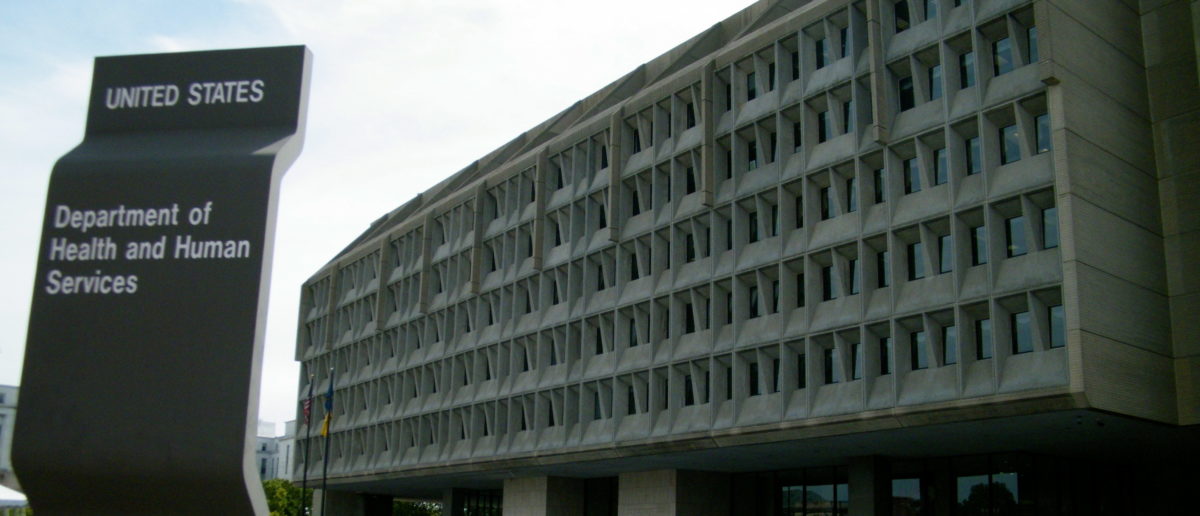
Sarah Stierch/Wikimedia Commons
The 340B Drug Pricing Program may be partly driving U.S. hospital consolidation and worsening affordability for patients, some analysts have warned.
Section 340B of the Public Health Service Act requires drug manufacturers participating in Medicaid to provide outpatient drugs at discounted prices to eligible healthcare organizations that serve large amounts of uninsured and low-income patients, according to an American Hospital Association (AHA) fact sheet. The program also allows eligible entities to “stretch scarce federal resources as far as possible, reaching more eligible patients and providing more comprehensive services,” per the Health Resources and Services Administration.
While proponents of the 340B program have touted its potential benefits such as rural U.S. hospitals better managing costs and bolster healthcare access for patients, critics have warned that some hospitals can easily exploit “loopholes” in the program, which may worsen hospital consolidation and drive up costs.
“When Congress created the 340B drug pricing program in 1992, it was bad policy from the start,” executive director of the Institute for Legislative Analysis’ Center for Healthcare Affordability Fred McGrath told the Daily Caller News Foundation. “Instead of funding the hospital safety net system directly, Congress created a scheme that forced drug manufacturers to provide steep discounts to hospitals in order to participate in Medicaid.”
“At first, the impact on drug manufacturers was limited,” McGrath added. “That changed after the Affordable Care Act expanded the program and supercharged its growth. In 2010, there were roughly 500 contract pharmacies participating in 340B. Today, there are more than 35,000. Now, more than 40% of U.S. hospitals receive 340B benefits. Many buy drugs at below market prices and then sell them to patients or insurers at list price. That spread has turned 340B into a major hospital profit center, with estimates showing hospitals generate more than $52 billion annually from the program.”
McGrath also claimed that the 340B program has “most certainly driven hospital consolidation and worsened the healthcare affordability crisis” in the U.S.
“Similar to how the Affordable Care Act incentivized insurers to merge with [pharmacy benefit managers] and abuse the system, 340B has created incentives for hospitals to merge with eligible entities so the entire network can take advantage of the program,” he explained.
In 2022, discounted purchases under the 340B program reached a total value of about $53.7 billion, and rose to roughly $81.4 billion total in 2024, according to a Paragon Health Institute study published in April.
“This program functions as a significant indirect subsidy, providing tens of billions of dollars in additional hospital revenue annually,” the study claims. “The 340B program also leads to increased consolidation, with hospital systems buying 340B-covered entities.”
The Centers for Medicare & Medicaid Services (CMS) proposed a rule on July 2 aiming to “update payment rates for drugs purchased under the 340B Drug Pricing Program to better reflect what hospitals pay for these medications” in 2027.
“Medicare beneficiaries deserve a program that pays for the right care, in the right setting, at the right time,” CMS Administrator Dr. Mehmet Oz said in a statement. “This proposed rule focuses squarely on patient affordability by strengthening our utilization management tools, aligning drug payments with actual acquisition costs, and removing site-of-care disparities that have unnecessarily driven up costs for millions of seniors.”
“We are committed to ensuring that Medicare resources are directed toward clinically appropriate, affordable high-value care for every patient we serve,” Oz added.
The program has grown significantly over the years, with total drug purchases climbing from $2.4 billion in 2005 to $66.3 billion in 2023, according to KFF.
Additionally, the program contributes to federal spending via higher Medicare reimbursements, lost Medicaid rebates or increased patient costs, a March analysis by public policy think tank Third Way suggests.
“A substantial share of 340B revenue flows to for-profit companies, including Fortune 50 companies, not nonprofit safety-net providers,” Paragon Health Institute Director of Congressional Relations Ryan Long told the DCNF. “Large for-profit intermediaries, contract pharmacies, and third-party administrators capture significant portions of the spread between discounted acquisition prices and reimbursement, diverting resources the program was intended to direct toward vulnerable patients.”
Long also said he thinks the program sometimes “unnecessarily increases drug spending.”
Still, savings from participating in the 340B program can help many American hospitals provide free or lower-cost drugs to patients, according to AHA Vice President of Advocacy and Grassroots Aimee Kuhlman.
“The 340B program is designed to help hospitals serving low-income, uninsured, rural, and chronically ill patients stretch limited resources and keep essential care available in their communities,” Kuhlman told the DCNF. “For more than 30 years, 340B has allowed eligible hospitals to purchase outpatient drugs at a discount to do just that. Hospitals use their 340B savings to provide free or low cost drugs to patients, and to provide a range of healthcare services that they could not afford to provide without those discounts. This is especially important at a time when drug companies continue to set record high prices for drugs.”
“Blaming 340B for health care affordability problems gets the issue backwards,” she continued. “340B is one of the few programs that helps reduce the impact of high drug prices (that are set by drug companies) for patients and communities. When critics point to the size of 340B, they ignore a basic fact: the program grows when drug companies raise prices on their products.”
A February 2024 report from global policy think tank RAND estimated that U.S. prescription drug prices were 2.78 times higher on average than those in 33 other nations. Six in ten U.S. adults reported feeling concerned about being able to afford their prescription drug costs, according to a KFF poll released in March.
Republican Kentucky Rep. Brett Guthrie said in a September 2025 statement that while the 340B program is “an important lifeline to many of our safety net providers,” it possesses the “ability to be abused and drive-up overall healthcare costs for Americans.”
Still, Kuhlman maintained that the 340B program “does not drive hospital consolidation” in the U.S.
“Providers choose to integrate with hospitals for reasons that have nothing to do with 340B, including chronic underpayment by Medicare and Medicaid, burdensome prior authorization requirements, continued coverage denials, medical malpractice burdens, technology costs, and the need to coordinate care across settings,” Kuhlman stated. “In many communities, provider integration helps preserve access to care that otherwise could be lost.”
Several experts previously told the DCNF that increased hospital consolidation has been raising medical costs and reducing competition across the nation’s healthcare market.
“Most people have been told or [led] to believe that the program is designed to help truly safety net hospitals in rural or poorer urban areas. The exact opposite is true,” Long told the DCNF. “The current structure of the programs leads to wealthier entities receiving much more 340B revenue than poorer entities. That will always be the case if assistance is functionally based off of the price of a drug and the percentage of commercially insured patients an entity has.”
All content created by the Daily Caller News Foundation, an independent and nonpartisan newswire service, is available without charge to any legitimate news publisher that can provide a large audience. All republished articles must include our logo, our reporter’s byline and their DCNF affiliation. For any questions about our guidelines or partnering with us, please contact [email protected].