

National Defense
Trump Can Bomb Iran. He Still Can’t Reopen The Strait Of Hormuz.
Screenshot/Rumble/CBS
A wave of attacks on oil tankers in the Strait of Hormuz this past week set off a new round of fighting that jeopardizes the preliminary deal between the United States and Iran.
Three commercial ships took hits in the Strait of Hormuz on Tuesday, according to a U.S. Central Command press release.
The Al Rekayyat, a Qatari-owned tanker, was hit by a projectile and caught fire off Oman’s coast, Reuters reported. A crude carrier flying the Saudi flag sustained separate damage near the border between Oman and the United Arab Emirates (UAE) in a second attack. A drone struck a third, Liberian-flagged vessel, according to gCaptain.
Iran did not directly claim responsibility for any of the strikes, The New York Times reported.
The U.S. Response
The U.S. launched overnight strikes on “over 80 targets” in Iran on Wednesday. A U.S. official told the AP that the strikes “would likely last for hours.”
“U.S. Central Command forces have begun launching a series of powerful strikes against Iran to impose heavy costs for targeting and attacking commercial shipping crewed by innocent civilians in an international waterway,” U.S. Central Command wrote on X.
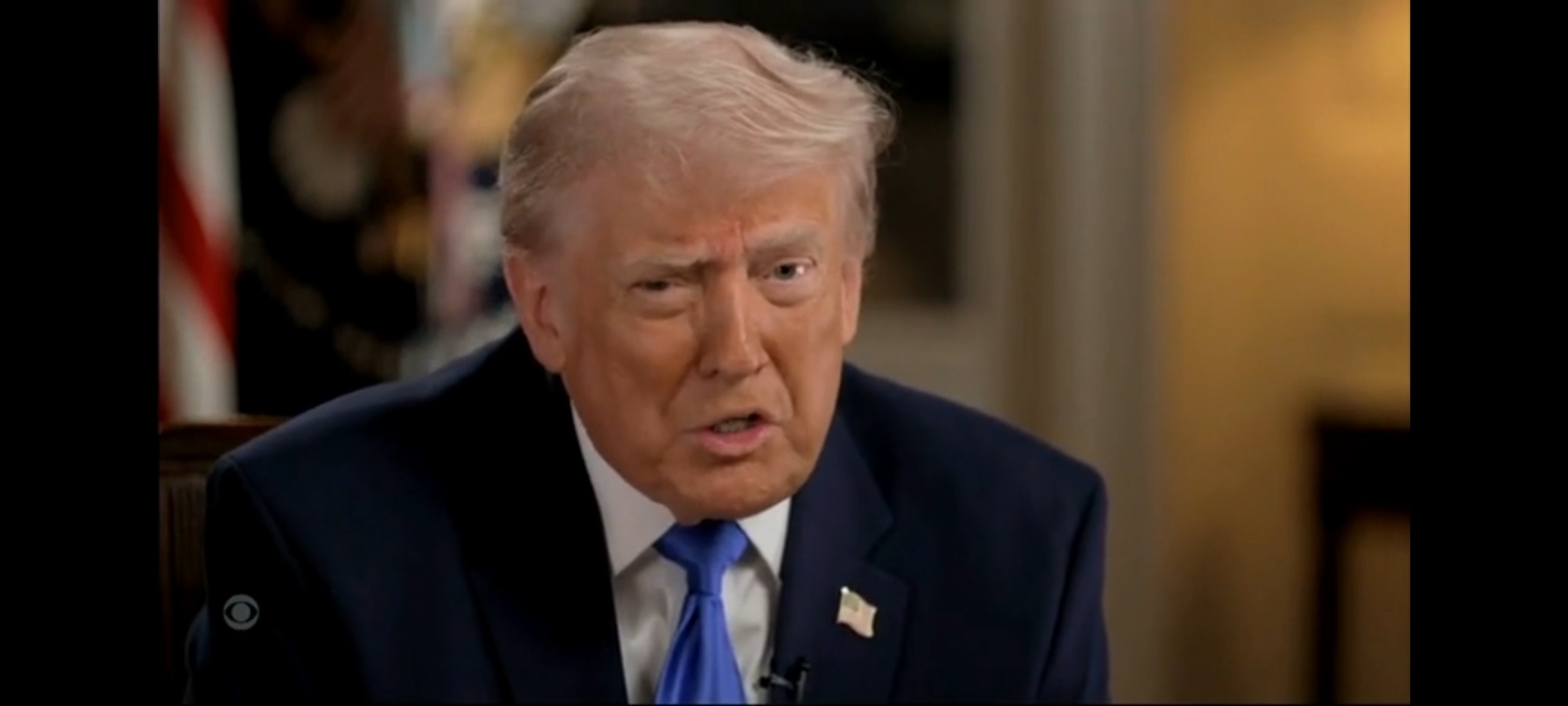
“We attacked very powerfully last night, the very dangerous people from Iran,” President Donald Trump said at a NATO summit in Turkey. “They’re sick, there’s something wrong with them.”
The strikes targeted Iran’s port cities of Sirik and Bandar Abbas, Qeshm Island in the Strait of Hormuz, and two bases in Iran’s Bushehr province, Al Jazeera reported. (RELATED: Israel Reportedly Attempted To Shoot Down Iran’s Negotiators)
Iran’s Counterstrike
The Islamic Revolutionary Guard Corps (IRGC) retaliated with strikes on U.S. military sites in Bahrain and Kuwait early Wednesday.
Iran “destroyed 85 major U.S. military installations in Port Salman, [the US] Fifth Naval Base in Bahrain, and Kuwait’s Ali Salem Airbase, and shot down an enemy MQ9 drone that attempted to interfere in the operation,” the IRGC said, according to Al Jazeera.
“The terrorist US military, in clear violation of Article 2, Paragraph 4 of the United Nations Charter, committed military aggression against several monitoring and surveillance centres on the southern coasts of Iran,” Iran’s Ministry of Foreign Affairs said, AL Jazeera reported. “[The strikes] constitute a flagrant violation of Paragraph 1 of the Memorandum of Understanding on the Termination of War.”
This handout photo made available by the Iranian Army Office on March 12, 2025 shows local officials and navy personnel attending a joint Iranian-Russian-Chinese military drill in the Gulf of Oman. (Photo by Iranian Army Office / AFP via Getty Images)
Why The Strait Matters
Roughly one-fifth of the world’s traded oil and gas passed through the strait before the war began in February. Iran restricted shipping through the strait since the war’s onset, but shipping traffic had partially recovered following the ceasefire, according to Kpler data. (RELATED: US Reinstates Sanctions On Iran After Multiple Ships Reportedly Attacked In Strait Of Hormuz)
Iran sought to control the strait and charge ships as they passed through the waterway, but the U.S. refused to allow that arrangement. “It’s an international waterway. No country is allowed to charge tolls or fees on an international waterway. That’s existing international law,” Secretary of State Marco Rubio told PBS NewsHour.
The two nations agreed to a memorandum of understanding in June allowing ships to pass for 60 days without paying Iranian fees.
Where This is Headed
While speaking at the NATO conference in Ankara, Turkey, Trump emphatically stated that he thinks the Memorandum of Understanding (MOU) “is over.”
“I don’t want to deal with them anymore. They’re scum. You know what scum is? They’re sick people. They’re led by sick people,” the president said. “And they’re vicious, violent people. And, if they had a nuclear weapon, they’d use it. As far as I’m concerned [the MOU] is over […] as far as I’m concerned, they’re liars.”
With those words, Trump has effectively scuttled his one chance to get a peaceful end to this war. At the time of this writing, the strikes against Iran have continued. Meanwhile, the Iranians have reportedly struck Bahrain, Kuwait, and even Jordan.
But the question remains: how does this war end?
Trump understands the Iranians believe they have won the war.
So, he is trying his best to reset the table enough to gain more leverage over Tehran. Thus far, however, much of what the Americans have done to restore their leverage over Iran has not made Iran more pliable.
That’s because of a fundamental mismatch in strategic objectives. The Americans are clearly playing a classic military game here. But the Iranians have decided to use geoeconomics as their primary battlefield.
The latest round of violence began over a disagreement about who, in fact, controls the Strait of Hormuz. The Americans want the Omani route in the Strait used by as many ships as possible. The Iranians oppose this because they want to force the world’s shippers to use Tehran’s Traffic Separation Scheme (TSS).
The more that the world’s shippers utilize Iran’s TSS for the Strait of Hormuz, the more that legitimizes Iran’s claim of ownership over the Strait. And the stronger their claim is, the more likely the Iranians will successfully impose transit fees on ships passing through the Strait. Trump understands that the Iranians are thinking this, so he tried to muscle them out of that position by having ships use the Omani route in the Strait.
The Americans are lashing out. Iran is retaliating. The greater the instability there, the more likely the Strait of Hormuz remains closed to most traffic. That doesn’t hurt the Iranians. The closure of the Strait of Hormuz, whether formally announced or not, harms Americans and the rest of the world.
Already, reports have proliferated warning about the dire state of America’s dwindling Strategic Petroleum Reserve (SPR). It has gone below 330 million barrels of oil. Many experts believe that if it reaches 300 million barrels, the US will face shortages because the remaining oil in the SPR is tainted due to its storage in salt caverns.
Once the U.S. can no longer rely on its SPR to get it through the global energy crisis caused by the closure of the Strait of Hormuz, the economy goes into a tailspin.
With a bit more than three months before Americans cast their votes in the 2026 Midterm Elections, if the US economy is collapsing because of oil shortages caused by the ongoing disruptions to the flow of goods through the Strait of Hormuz, there could be a decisive shift in which party dominates American politics-and that will lead to significant changes in US policy.
The Islamic Republic of Iran, on the other hand, just has to survive long enough for those harmful effects to be felt by the U.S.-and those harmful impacts could start hitting within a few weeks from now.
Under these conditions, if Trump continues the war, things get harder for Americans rather than better-and there is still no guarantee that Trump’s war results in a defeat of the Islamic Republic. Even if it does, given the kind of economic damage the world has already sustained resulting from the Strait of Hormuz being closed down, any victory for the U.S. in this war might seem pyrrhic at best.
All content created by the Daily Caller News Foundation, an independent and nonpartisan newswire service, is available without charge to any legitimate news publisher that can provide a large audience. All republished articles must include our logo, our reporter’s byline and their DCNF affiliation. For any questions about our guidelines or partnering with us, please contact [email protected].