

Commentary: Big Tent Ideas
American Ally Has Gone Beyond Tariffs To Inflict Pain On US Businesses
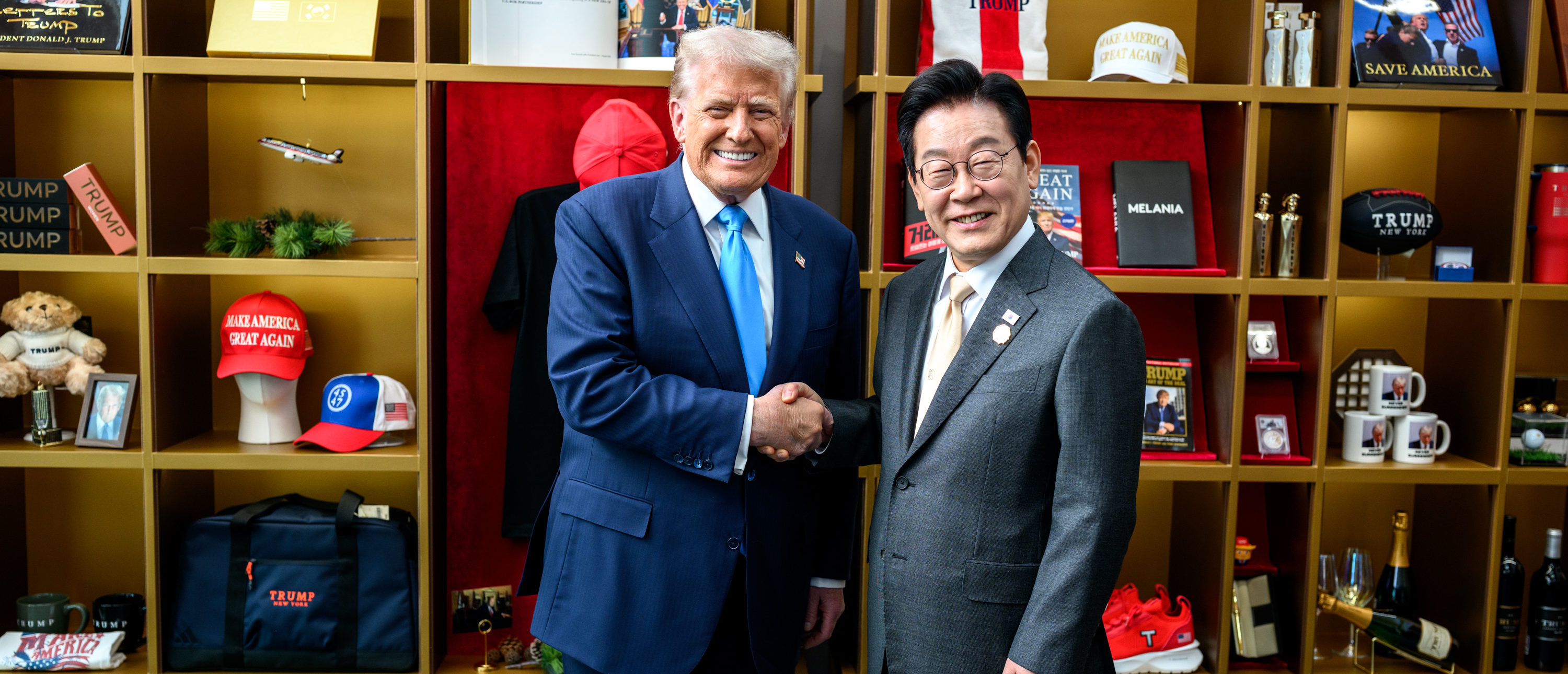
President Donald Trump and President Lee Jae Myung, Official White House Photo by Daniel Torok
The trade debate in Washington has been dominated by tariffs for years.
They drive headlines and shape negotiations, yet if policymakers are serious about protecting American competitiveness, they need to look beyond tariffs to the growing challenge U.S. businesses are facing overseas: discriminatory non-tariff barriers.
Non-tariff barriers come in the form of selective regulation, politically motivated investigations, digital restrictions and enforcement actions that disproportionately target American companies while favoring domestic competitors.
Last week, the House Judiciary Committee released a report that shines a spotlight on how South Korean regulators used the full weight of their government to stifle an American that has invested billions of dollars in South Korea and become one of its largest private employers.
According to the Committee, Korean authorities framed a limited data breach as a national security crisis while treating more serious incidents involving domestic companies differently. The report describes what followed as a “whole-of-government assault” involving more than ten government agencies, over 4,200 document requests, more than 650 employee interviews, dozens of unrelated investigations and threats of criminal prosecution against American executives.
The targeting campaign has not stopped, as just last month, South Korea’s Personal Information Protection Commission (PIPC) imposed a historic $410 million fine, the largest privacy penalty ever levied against a single company in Korea. The House report argues the fine far exceeds penalties imposed on domestic companies that were responsible for more serious data breaches, raising obvious questions about whether American firms are being held to a different standard.
Discriminatory targeting of U.S. businesses directly hurts American workers and investors. The Committee cites estimates suggesting South Korea’s discriminatory regulatory practices alone could contribute to more than $500 billion in economic losses for the United States while costing the average American household approximately $3,800 over the next decade.
These non-tariff barriers also hurt Asian workers and economies by deterring the foreign investment. Foreign capital is selective. When potential investors assess a market, they seek predictable regulatory climates and transparent governments that have a proven track record of treating foreign investors fairly. So, when governments treat major foreign investors unfairly, it creates a damaging narrative about the future safety of those investments.
Sadly, governments across Asia are increasingly using competition policy, digital regulation and administrative enforcement to disadvantage American companies and advantage domestic ones. Japan’s new Mobile Software Competition Act and recent antitrust actions target Apple and Google, India’s data and e-commerce policies create significant barriers for companies like Amazon and other U.S. platforms, and China’s extensive data localization requirements increase costs and operational complexity for American firms while benefiting domestic competitors.
While these are different countries with different laws, they all have the same underlying impact of hurting U.S. companies and citizens.
Fortunately, Washington has woken up to the danger of an unlevel playing field for U.S. companies. The Trump administration has elevated non-tariff barriers in discussions with both South Korea and China, and the Office of the U.S. Trade Representative has increasingly highlighted discriminatory regulatory practices in its annual trade reports.
The House Judiciary Committee’s findings should serve as a wake-up call: the next generation of trade disputes will be fought in regulatory agencies, competition authorities and digital policy regimes across Asia. America cannot afford to ignore that reality.
Matt Mowers is the executive director of the U.S. – Asia Fair Market Alliance. He previously served as a senior White House advisor at the U.S. Department of State, where he advised the secretary of State and was engaged on issues including North Korea, immigration reform and The Global Coalition to Defeat ISIS.
The views and opinions expressed in this commentary are those of the author and do not reflect the official position of the Daily Caller News Foundation.
All content created by the Daily Caller News Foundation, an independent and nonpartisan newswire service, is available without charge to any legitimate news publisher that can provide a large audience. All republished articles must include our logo, our reporter’s byline and their DCNF affiliation. For any questions about our guidelines or partnering with us, please contact [email protected].