

Politics
Here’s Where The Battle For Election Integrity — After Weeks Of Setbacks — Is Now
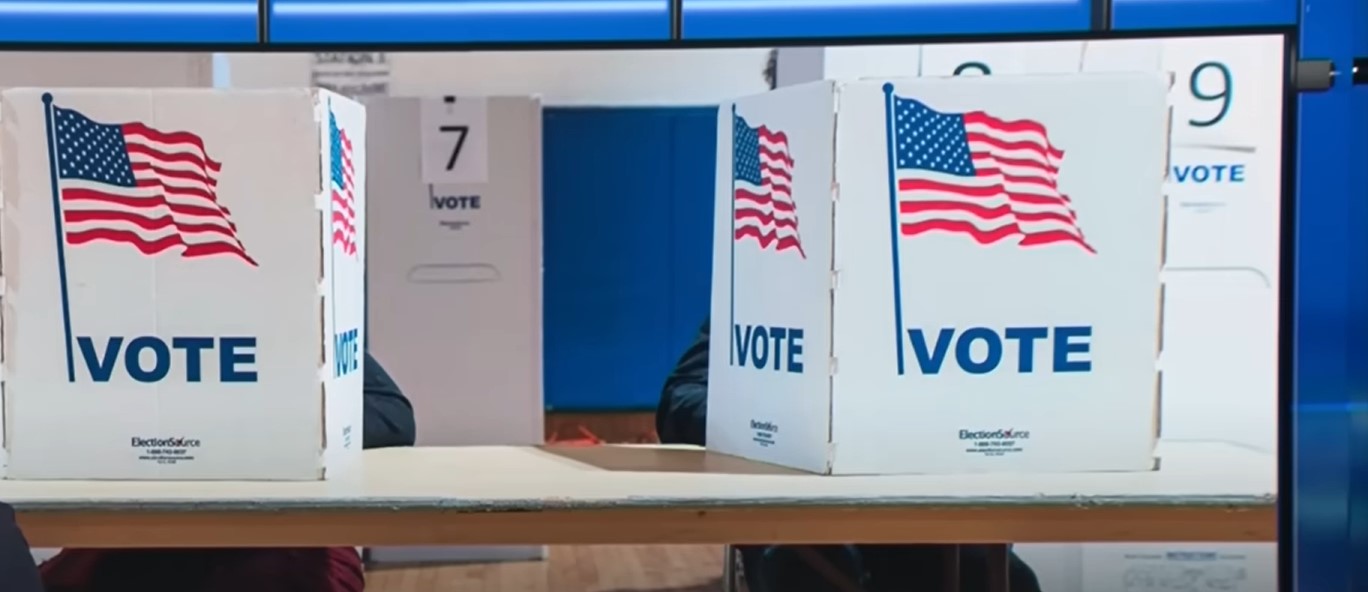
Screen Capture/PBS NewsHour
The world’s most prominent democratic republic celebrates its 250th anniversary Saturday, ending a week many election integrity advocates would rather forget.
The Supreme Court ruled Monday in Watson v. RNC that states can count non-military mail-in ballots received days and even weeks after the closing of polls. Later that same day, supporters of stricter election laws suffered another legal defeat as Alaska’s highest court ruled that a Senate candidate with the same name as the lawmaker he is trying to oust can remain on the ballot.
At the same time, the SAVE America Act — which would require voter ID nationwide and proof of citizenship for voter registration — remains held up in the Senate with an uncertain path ahead.
Jason Snead, the executive director of Honest Elections Project (HEP) Action, told the Daily Caller News Foundation (DCNF) in an interview there is “no excuse for any state to continue to allow late ballot deadlines, especially not conservative states.” He singled out Mississippi, West Virginia, and Texas, who are among the 14 states that count mail-in ballots received after Election Day.
Snead said that, while he was disappointed by the surprise 5-4 outcome of Watson, it serves as a good reminder the “Court isn’t going to save us from these bad policies.”
“We have to do that ourselves, that’s what democracy is all about,” he added.
“These laws that set ballot-receipt deadlines beyond Election Day are a creature of state law. If a state legislature can enact them, then a state legislature can repeal them,” Snead told the DCNF. “You’ve got a few red states that have done that already. You know, this past year you had Kansas, Ohio, Utah — all passed laws to get rid of these late ballot periods. You got a few more red states that have been a little stuck in the mud.”
“I think it’s time to look at your law and to repeal those statutes, at least as it goes to people that are voting here within the United States,” he continued. “You can make an argument about military deployed overseas — that’s a different category — but here, if you live down the street from a polling place, there is no reason at all that you can’t get your ballot in by Election Day.”
Snead also pointed out the Watson ruling marked the first time a coalition of Chief Justice John Roberts, Associate Justice Amy Coney Barrett, and the Court’s three liberal justices formed the majority in a 5-4 ruling. Barrett, an appointee of President Donald Trump, wrote the opinion upholding the late ballot deadlines.
“So, I think that it’s fair to say that most of us were a little bit surprised about that,” he noted.
He added that Mississippi — the state whose COVID-era late ballot deadline law was the basis of the Supreme Court case — is already starting to take steps to crack down on late mail-in ballots.
“The governor’s already called for the legislature to repeal that law which, after all, was only created in 2020,” Snead told the DCNF. “So, this isn’t something that Mississippi has been doing for a long period of time, and I think that you get those red states that will have plenty of incentive to come in and repeal those those deadlines in the next legislative session.”
Republican Mississippi Gov. Tate Reeves posted to X hours after the ruling that he is calling on his state’s legislature to repeal the law and “and require mail-in ballots to be received by the clerk by 5:00pm on Election Day in order to be counted.” Reeves himself signed the law he is now seeking to repeal on July 8, 2020, during the COVID-19 pandemic.
“And then you’ve got a lot of blue states where there’s really no excuse for legislative inaction. These laws do nothing to improve turnout, they do nothing to improve the overall functioning of the election system,” Snead continued. “If anything, all they do is encourage people to hold on to their ballots even later than they otherwise would. And you wind up with people getting them in the mail late, and then they come in late, and then you’re waiting longer and longer and longer for those ballots to appear, and you get California chaos time and time again.”
My statement on the decision in the Mississippi ruling before the Supreme Court should highlight for you the difference between conservatives and the far left liberals that run today’s Democrat party:
While I disagree with Justice Roberts and Justice Barrett joining the three…
— Governor Tate Reeves (@tatereeves) June 29, 2026
California, which has a ballot deadline of one week after Election Day, is a so-called “all-mail voting state” where all registered voters receive mail-in ballots by default but still have the option to cast their vote in person. The state is well known for taking a significant amount of time to count its ballots, with the results of June’s gubernatorial and Los Angeles mayoral elections not being called for days.
“And you can see the sort of downward spiral where if you’ve got a law that says you can request a mail ballot until, you know, the Friday before Election Day — so basically three days before the election — when you know there’s no way that ballot is going to be able to do a two-way round trip through postal service,” Snead told the DCNF. “So maybe it gets to the voter by Election Day, and if it does that, that person can get it in the mail on Election Day, and then it takes five to six days to get to its destination. Then you get into this pattern of, well, suddenly [a] one-day or three-day grace period isn’t enough.”
“So, now we need to be talking about a five-day or ten-day or 15-day grace period, because we keep having ballots to get stuck in the mail, and every person who gets their ballot in by Election Day, that ballot should be counted,” he added. “So, you can see the downward spiral in these laws. It’s much, much better to have a clean receipt deadline. There’s really no excuse for inaction unless chaos is the point, and that’s, I think, what we’ve kind of learned, unfortunately, with California.”
HEP filed an amicus brief inWatson, calling on the Court to strike down Mississippi’s late ballot deadline law. The nonpartisan election integrity group also filed an amicus brief with the Alaska Supreme Court arguing that having a little-known candidate on the ballot with the same name as incumbent Republican Sen. Dan Sullivan creates confusion for voters.
While Dan J. Sullivan is running as a Republican against Sen. Sullivan, the press release announcing his candidacy was written by a Democratic strategist, the DCNF reported in June. The incumbent senator is locked in a tight race with former Democratic Alaska Rep. Mary Peltola.
When asked by the DCNF if political parties will try the strategy of propping up candidates with the same name as the one they are looking to defeat, Snead said he thinks it will depend on whether the gambit of running the new Sullivan —who he called “Decoy Dan” — is ultimately successful in unseating the incumbent.
“Obviously we have a history in this country of candidates that have tried to get on the ballot with varying degrees of success using names that are designed to confuse voters, and usually what we see is that states will refuse to put those people on; not because they have the same name, right?” he said.
Snead clarified that Dan J. Sullivan should not be barred from the ballot “simply because he has the same name as a sitting senator.”
“It’s the fact that he is only running to try to mislead voters and ultimately to suppress the ability of the public to make a decision about who’s going to represent them in the Senate, that is why he should be barred,” he said. “And the only reason that Alaska is so uniquely vulnerable to this at the level of, like, the U.S. Senate race is because of their jungle primary ranked-choice voting system. In an ordinary primary system, it is highly, highly unlikely that this Decoy Dan is going to unseat Senator Dan Sullivan.”
Snead also explained that, due to Alaska’s unique voting system, if enough people intending to vote for the incumbent mistakenly voted for the other Dan Sullivan, it could cause Peltola, the Democrat, to receive more votes in later rounds of ranked-choice voting tabulation.
“If they unseat Dan Sullivan and get Mary Peltola in the Senate,” he said, “and can credibly claim that having Decoy Dan on the ballot made that victory possible, then I think that you would see more of that in any place where they might be able to to get away with it. It’s one of the fundamental flaws and weaknesses of ranked-choice voting.”
With regard to the popular policies in the SAVE America Act, Snead told the DCNF that, while he thinks the bill needs to pass at the federal level, even with it in effect, “the real work needs to be in the state legislatures.”
“Many Republican states … have really strong upfront proof of citizenship requirements,” he said. “We’ve got a model that we’ve developed, and we’re looking forward to pushing those [requirements] in states [in a manner] that works within the confines of federal law, but establishes a system that would guarantee that you have upfront group citizenship from almost everybody that registers to vote.”
“And I think that you need to have strong voter identification laws as well, and all of that can be done at the state level, and should be done at the state level next year,” he concluded.
All content created by the Daily Caller News Foundation, an independent and nonpartisan newswire service, is available without charge to any legitimate news publisher that can provide a large audience. All republished articles must include our logo, our reporter’s byline and their DCNF affiliation. For any questions about our guidelines or partnering with us, please contact [email protected].