

Foreign Affairs
Beijing’s Military Shadow Looms Large Over Key Taiwan Tech Conference
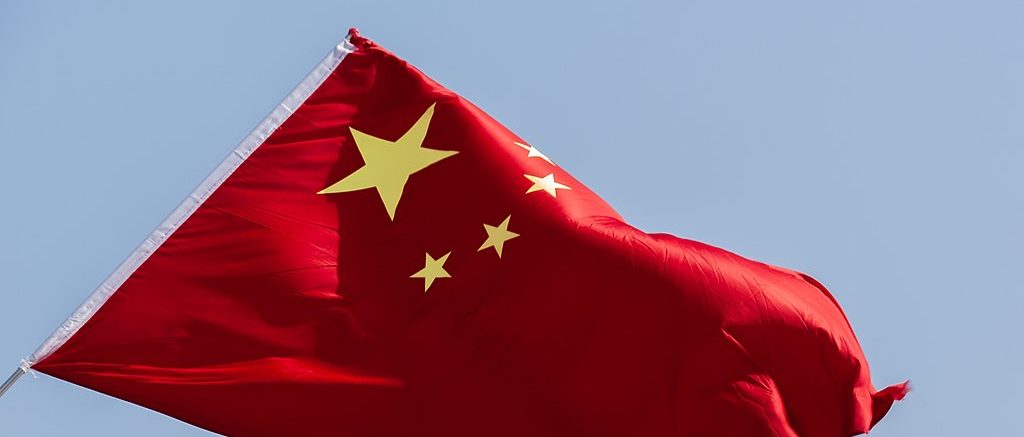
(Wikimedia Commons/Public/Ermell)
Chinese aircraft and ships prompted a response from Taiwan as a major tech convention unfolded on the island.
Beijing’s naval vessels and aircraft cast a long shadow over each day of the COMPUTEX Taipei conference, with it all culminating in an intense naval standoff on the final day, according to multiple X posts from Taiwan’s Defense Ministry. The conference had some of the world’s most prominent leaders in chip manufacturing and AI development, such as Intel, Nvidia and SK Group, according to the event’s exhibitor list.
Chinese military assets plagued the area on Tuesday, Wednesday, Thursday and Friday, according to multiple X posts from Taiwan’s Defense Ministry. A total of 79 People’s Liberation Army aircraft sorties were spotted by Taiwan’s Defense Ministry.
“The best way to protect critical technology supply chains to Taiwan is to avoid a major crisis or conflict over the island. But deterrence alone will not achieve that goal,” senior research fellow in the Quincy Institute’s East Asia Program Michael Swaine told the Daily Caller News Foundation. “Beijing will almost certainly resort to force if the US and Taiwan simply resort to force buildups without credible levels of reassurance, even if both parties amass superior capabilities.”
“The government will firmly safeguard peace and stability across the Taiwan Strait and is committed to maintaining the status quo,” Reuters reported, citing Taiwan President Lai Ching-te’s speech during the conference. “This is an unwavering national policy, as well as Taiwan’s most responsible commitment to the global technology supply chain.”
Nvidia, the State Department, U.S. Indo-Pacific Command, the Chinese Embassy in Washington and Taiwan’s Military News Agency did not immediately respond to a request for comment. The Pentagon declined to comment.
China has only confirmed that it will not invade Taiwan for the duration of the Trump presidency.
“Xi Jinping has assured President Trump that China will not invade Taiwan, guaranteeing a free and open Indo-Pacific for the rest of the President’s term in office,” a senior administration official told the DCNF.
The aerial engagement peaked on Wednesday with 32 Chinese aircraft sorties in one day, as “25 out of 32 sorties crossed the median line and entered Taiwan’s northern, central, southwestern and eastern part ADIZ [Air Defense Identification Zone],” according to the X post.
32 sorties of PLA aircraft, 10 PLAN vessels and 5 official ships operating around Taiwan detected up until 6 a.m. (UTC+8) today. 25 out of 32 sorties crossed the median line and entered Taiwan’s northern, central, southwestern and eastern part ADIZ. #ROCArmedForces have monitored… pic.twitter.com/48ERiiclJ3
— 國防部 Ministry of National Defense, ROC(Taiwan) 🇹🇼 (@MoNDefense) June 4, 2026
Taiwan’s ADIZ is not the same as its sovereign airspace; instead, it is an area where the Taiwanese military tracks aircraft and ships for national security reasons. Sovereign airspace usually extends 12 nautical miles from a country’s coast, while Taiwan’s ADIZ extends much farther.
Taiwan’s ADIZ is roughly 188,000 square miles, while its sovereign airspace has a smaller footprint, according to the Global Taiwan Institute. Taiwan’s ADIZ overlaps with China’s by nearly 9,000 square miles, according to the report.
One specific incident included a game of cat-and-mouse between Chinese and Taiwanese coast guard vessels near Taiwan’s Dongsha Island, according to a press release from Taiwan’s Coast Guard on Friday.
‘Vital’
“Peace in the Taiwan Strait is vital to the stability of the global economy, and the lifeline of the technology industry,” Reuters reported, citing a broadcast warning from Taiwan’s Coast Guard to a Chinese vessel near Taiwan’s Pratas Islands.
Chinese incursions into Taiwan’s area of influence are nothing new.
The Chinese Navy and Coast Guard deployed 100 vessels in the East and South China Seas on April 10, Reuters reported, citing two Taiwanese security officials. A joint combat readiness patrol of 29 Chinese aircraft in Taiwan’s ADIZ caused Taiwan’s air force to scramble aircraft in self-defense on May 25, according to an X post from Taiwan’s Ministry of National Defense.
The Taiwan Semiconductor Manufacturing Co. is one of the world’s largest computer chip manufacturers and a key player in the new global AI industry. Taiwan is responsible for more than 90% of the world’s leading-edge chip manufacturing, according to the Department of Commerce.
A lapse in exports of these chips could lead to devastating economic consequences for the U.S., as 39.4% of the S&P 500’s market cap is based on technology, Reuters reported, citing LSEG Datastream.
Anduril Industries is one of the world’s largest manufacturers of AI-powered weapon systems. Anduril founder Palmer Luckey attended the Computex conference and said that Taiwan should step up to become an arms exporter, rather than relying on U.S. military aid as it currently does.
“Taiwan is not ever going to need enough arms purely for itself to justify a large defense market or a large weapons market,” Focus Taiwan CNA English News reported, citing Luckey. “I think the ideal situation is one where Taiwan is not just exporting high-end semiconductors and chips, but actually completed weapons systems to the rest of the world.”
Despite Chinese aggression in the area, chip manufacturers such as Nvidia seem optimistic about investments in Taiwan.
“Four years ago, five years ago, Nvidia was spending about 10, 15 billion dollars a year in Taiwan. Now we’re spending 100, going to 150 billion dollars in Taiwan each year,” Reuters reported, citing Nvidia CEO Jensen Huang’s statements during a launch party for Nvidia’s planned Taiwan headquarters on May 27.
Editor’s note: This article has been updated to include additional expert commentary.
All content created by the Daily Caller News Foundation, an independent and nonpartisan newswire service, is available without charge to any legitimate news publisher that can provide a large audience. All republished articles must include our logo, our reporter’s byline and their DCNF affiliation. For any questions about our guidelines or partnering with us, please contact [email protected].