

Foreign Affairs
Maduro’s Grip Over Venezuela Has Ended, But Cleaning Up His Regime’s Mess Is Another Story
White House Photo by Molly Riley
Venezuela is no longer locked in the same Maduro-era standoff with Washington, but the country remains poor, politically fragile and its future is deeply dependent on whether its new leaders can turn a U.S.-backed transition into daily relief for ordinary people.
Nearly five months after the U.S. operation that captured Nicolás Maduro, Venezuela is being run by interim President Delcy Rodríguez, a longtime Maduro ally now trying to reopen the country to Washington, oil buyers and creditors. Despite the U.S. government’s “three-phase plan” to revitalize Venezuela, consumer prices are expected to rise over 300%, more than half of the Venezuelan population lives in poverty and it could take years to revitalize the country’s oil production.
“The Trump Administration remains committed to advancing the three-phase plan for Venezuela’s stabilization, economic recovery and reconciliation, and democratic transition,” a State Department official told the Daily Caller News Foundation.
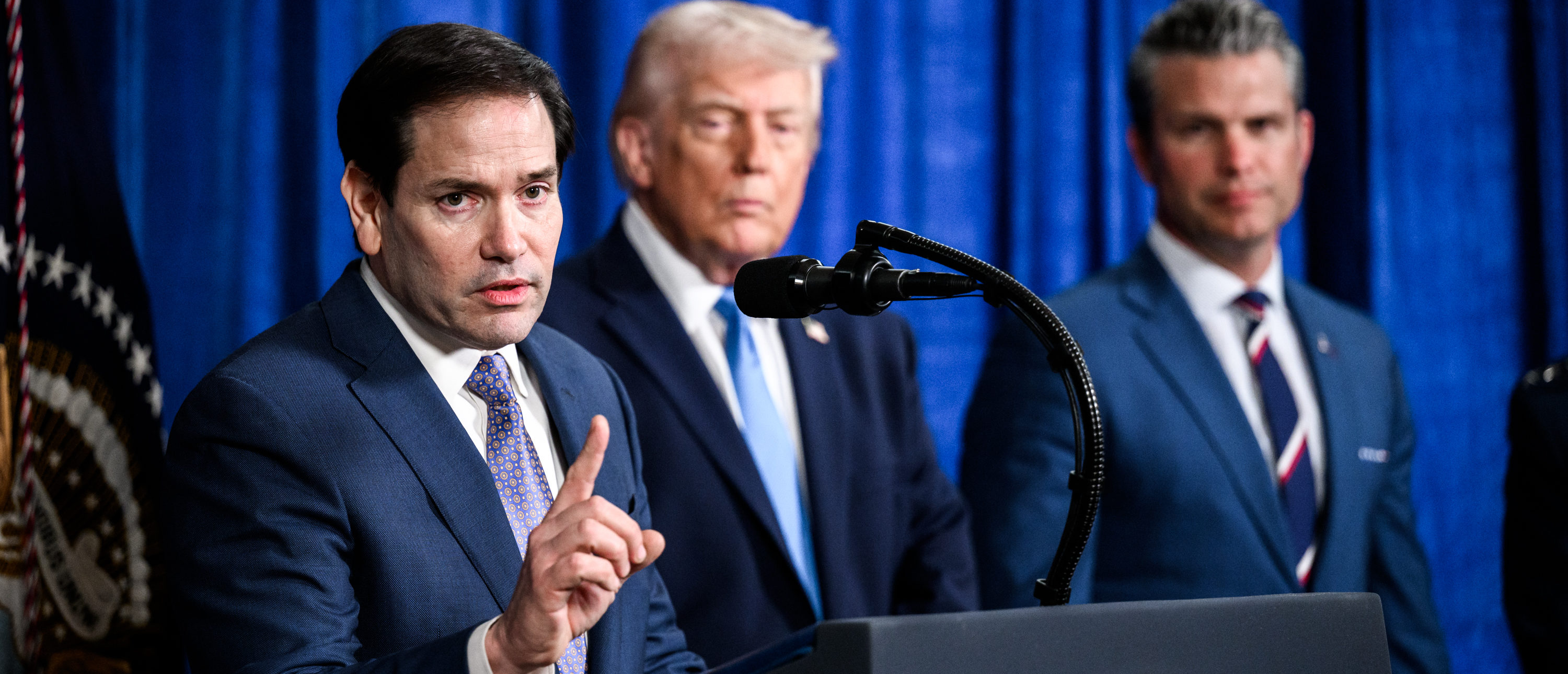
Secretary of State Marco Rubio revealed that the profits from Venezuelan oil are going to be managed by the U.S. government, and the proceeds would be redirected back to Venezuela.
“That three-phase process, you know, of obviously stabilization, recovery and transition,” Rubio said during a cabinet meeting in late May. “Over 10 million barrels of Venezuelan oil have been delivered to the United States since the 3rd of January. That industry is being professionalized for the first time ever. It’s going to the benefit of the Venezuelan people. They are selling oil in the market at market rates. The money is going to an account in the United States, controlled and monitored by Treasury, audited by KPMG. And for the first time ever, the money’s not being stolen. It’s going to the benefit of the Venezuelan people.”
En estos momentos se está llevando a cabo un ejercicio de respuesta militar estadounidense en la Embajada de los Estados Unidos en Caracas. Garantizar la capacidad de respuesta rápida del ejército es un componente clave de la preparación de la misión, tanto aquí en Venezuela como… pic.twitter.com/PpEwghap8r
— Embajada de los EE.UU. en Caracas (@usembassyve) May 23, 2026
“As the President stated, relations between Venezuela and the United States have been extraordinary for us and for the Venezuelan people,” a White House official told the DCNF. “We are dealing very well with President Delcy Rodriguez, and her Representatives. Oil is starting to flow, and large amounts of money, unseen for many years, will soon be greatly helping the people of Venezuela.”
The Venezuelan Embassy in Washington did not respond to requests for comment.
Tall Order
Maduro’s removal has opened doors for western investment to flow into Venezuela, but digging the country out of the economic hole it finds itself in is easier said than done.
Though Venezuela’s economy is projected to grow 4% in 2026, it’s also expected to experience a massive 387.4% inflation rate, International Monetary Fund data shows.
The government is also trying to restructure more than $150 billion in sovereign and state oil company debt, Reuters reported, citing Venezuelan officials and investors. Caracas selected U.S. firm Centerview Partners to advise the process, the outlet reported, citing people familiar with the matter.
“Because of the [Venezuelan] Communist takeover and the lack of investment in maintenance, they [Venezuela] have lost so much production permanently that they may never be able to get back up to previous per day barrel per day quotas,” E.J. Antoni, chief economist at The Heritage Foundation, previously told the DCNF.
President Donald Trump has pushed for western oil companies to spearhead the recovering, calling for $100 billion in funding. But the initiative has gotten a lukewarm response, with ExxonMobil CEO Darren Woods saying the country is “uninvestable,” the BBC reported.
Venezuela’s domestic electricity supply remains damaged after years of neglect from the communist regime. Power suppliers have been hesitant to help repair Venezuela’s electrical grid without payment guarantees, Reuters reported, citing industry sources.
The humanitarian picture remains grim. Roughly 7.9 million people in Venezuela need humanitarian assistance, with major needs in health, food security and other basic services, the United Nations reported in December 2025.
Roughly 56% of Venezuela’s population lives in extreme poverty, while monthly groceries remain unaffordable for most families, the European Commission reported on February 6.
“Delcy Rodríguez, who is the President of Venezuela, is doing a great job, and working with U.S. Representatives very well. The Oil is beginning to flow, and the professionalism and dedication between both Countries is a very nice thing to see!” – President Donald J. Trump 🇺🇸 pic.twitter.com/KBTKnXubGu
— The White House (@WhiteHouse) March 4, 2026
“The truth is that, so long as the repressive apparatus remains intact, everything will stay the same,” El Pais reported, citing Juan Carlos Apitz, the dean of Central University of Venezuela’s Law School. “The core ideology of [the Chavista regime] is intact.”
The Trump administration told federal prosecutors not to pursue criminal investigations into Rodríguez, The Associated Press reported, citing current and former U.S. law enforcement officials. Rodríguez has never been charged, but she had previously drawn scrutiny in Drug Enforcement Administration investigations, AP reported, citing agency records.
The military and security forces also remain central to Venezuela’s future. The Venezuelan military recognized Rodríguez’s leadershiip after Maduro’s capture, Reuters reported, citing Venezuelan military statements, preserving enough continuity to prevent immediate state collapse.
Opposition leader María Corina Machado has vowed to run for president again and return from exile before the end of 2026, AP reported. She has pushed for free elections and electoral reforms, AP reported, citing her remarks to Venezuelan exiles in Panama.
During a visit from U.S. Secretary of the Interior Doug Burgum, Rodríguez’s government expressed its interest in building a strong working relationship with the U.S. government, according to a statement from Venezuela’s presidential press office.
The U.S. conducted a military drill over Caracas on May 23, according to the U.S. Embassy in Venezuela. The exercise appeared to involve two MV-22B Osprey aircraft landing near the reopened U.S. Embassy, according to a video uploaded by the embassy on X.
All content created by the Daily Caller News Foundation, an independent and nonpartisan newswire service, is available without charge to any legitimate news publisher that can provide a large audience. All republished articles must include our logo, our reporter’s byline and their DCNF affiliation. For any questions about our guidelines or partnering with us, please contact [email protected].