

Commentary: Big Tent Ideas
JAMES CARTER: Congress Has a Plan. Several, Actually
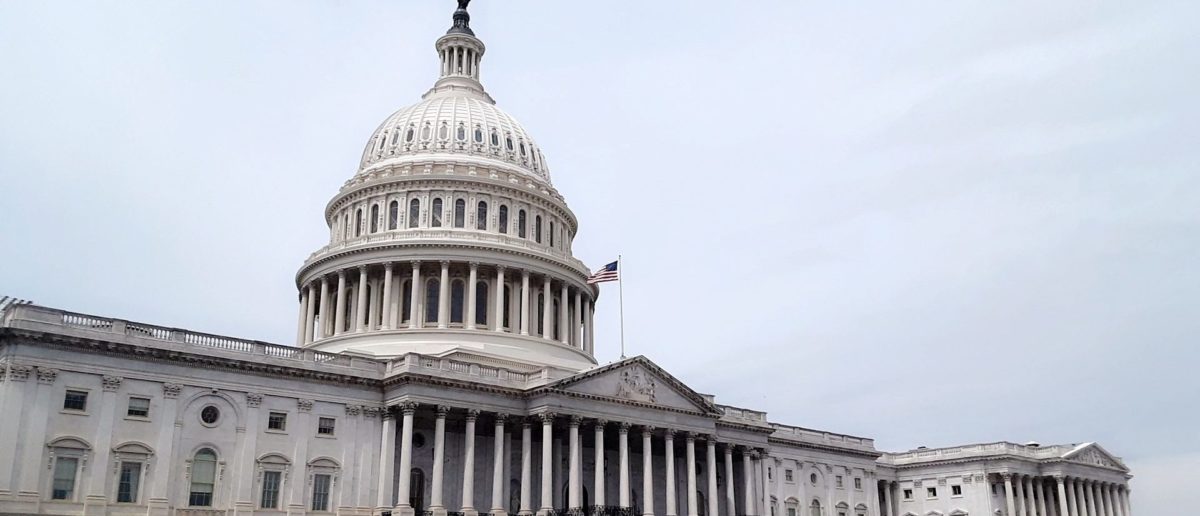
Wikimedia Commons/Public/Jessica Rodriguez Rivas
Spring in Washington usually brings cherry blossoms, warmer weather, and a familiar reminder that Congress has a habit of taking on more than it can neatly resolve. This year is no different. What stands out is how much is moving at once, and how much now depends on Republicans keeping their strategy aligned with President Donald Trump.
This week will say a great deal about how the rest of the summer unfolds, especially in the House as it decides whether to line up with the Senate’s plan for finishing fiscal year 2026 Department of Homeland Security (DHS) funding.
The Senate has already sent over a partially funded DHS bill that leaves out key accounts for Immigration and Customs Enforcement (ICE) and Customs and Border Protection (CBP). Senate leadership, with reported backing from Trump, wants to pair that bill with a two-step reconciliation strategy to finish the job.
The first step would focus narrowly on the unresolved DHS accounts and could fund them for up to three years, or even through the remainder of the President’s term. That would mark a notable shift in how America funds the agencies most directly responsible for border security and immigration enforcement.
That is the point. Trump campaigned on restoring control at the border and giving law enforcement the tools to do the job. A longer-term funding structure for ICE and CBP is the kind of governing choice that turns campaign promises into policy. Instead of lurching from one short-term funding fight to the next, Republicans would be using their majority to support a more durable approach.
Of course, that strategy raises two practical questions. Politically, some Republicans want the money formally offset, even if it replaces spending that would otherwise be renewed every year. Institutionally, reconciliation instructions go to authorizing committees, not appropriators, which means the usual appropriations process would give up some control over homeland security funding.
But that is not a reason to retreat. It is a reason to use the process deliberately. If the goal is stronger border security and a more disciplined government, then the process should serve the outcome.
The House is not fully there yet. Members want proof the Senate can actually complete the follow-on reconciliation step before they agree to the partial DHS bill. That is a fair concern, but it should not become an excuse for delay. A Republican majority is supposed to make decisions.
If the schedule holds, the House could take up a broader DHS funding package in the coming weeks. If it slips, the two-step strategy loses momentum.
A second, broader reconciliation package is also taking shape. This one is the more traditional policy bill, built around Republican priorities and offsetting revenue measures. Here again, the Trump administration and congressional Republicans have a real opportunity to show that they can do more than fight over stopgaps. They can govern.
The policy list includes the SAVE Act, which would tighten voter registration rules and require documentary proof of citizenship. It could also include a defense supplemental if leadership decides not to move that separately, along with permitting reform, health care changes, affordability measures, and tax provisions.
Ways and Means will be central to the pay-fors. Options under discussion include tighter Earned Income Tax Credit enforcement, housing eligibility changes, higher taxes on university endowments and some nonprofit activity, and a possible increase in the stock buyback tax above 1 percent.
Beyond reconciliation, Congress still has a long list of bipartisan work: FISA authorities, surface transportation, the Farm Bill, water infrastructure, crypto regulation, and housing legislation. Anything outside reconciliation still needs 60 votes in the Senate, which means Republicans will still have to negotiate when the process requires it.
That is the larger test. The more ambitious the reconciliation strategy becomes, the harder it may be to keep the rest of the agenda moving. But that is exactly why this moment matters. If Republicans can use their majority, their budget tools, and the President’s backing to produce durable results on border security and enforcement, they will have done more than win a procedural fight. They will have shown they can govern.
James Carter is a Principal and Policy Director with Navigators Global. He previously served as Deputy Undersecretary for International Affairs at the U.S. Department of Labor (2006-07) and as the Director of the America First Policy Institute’s Center for American Prosperity (2021-23).
The views and opinions expressed in this commentary are those of the author and do not reflect the official position of the Daily Caller News Foundation.
(Featured Image Media Credit: Wikimedia Commons/Public/Jessica Rodriguez Rivas)
All content created by the Daily Caller News Foundation, an independent and nonpartisan newswire service, is available without charge to any legitimate news publisher that can provide a large audience. All republished articles must include our logo, our reporter’s byline and their DCNF affiliation. For any questions about our guidelines or partnering with us, please contact [email protected].