

Video News Clips: In Their Own Words
Watch French Official Contradict Himself On Whether Europe Needs US In NATO
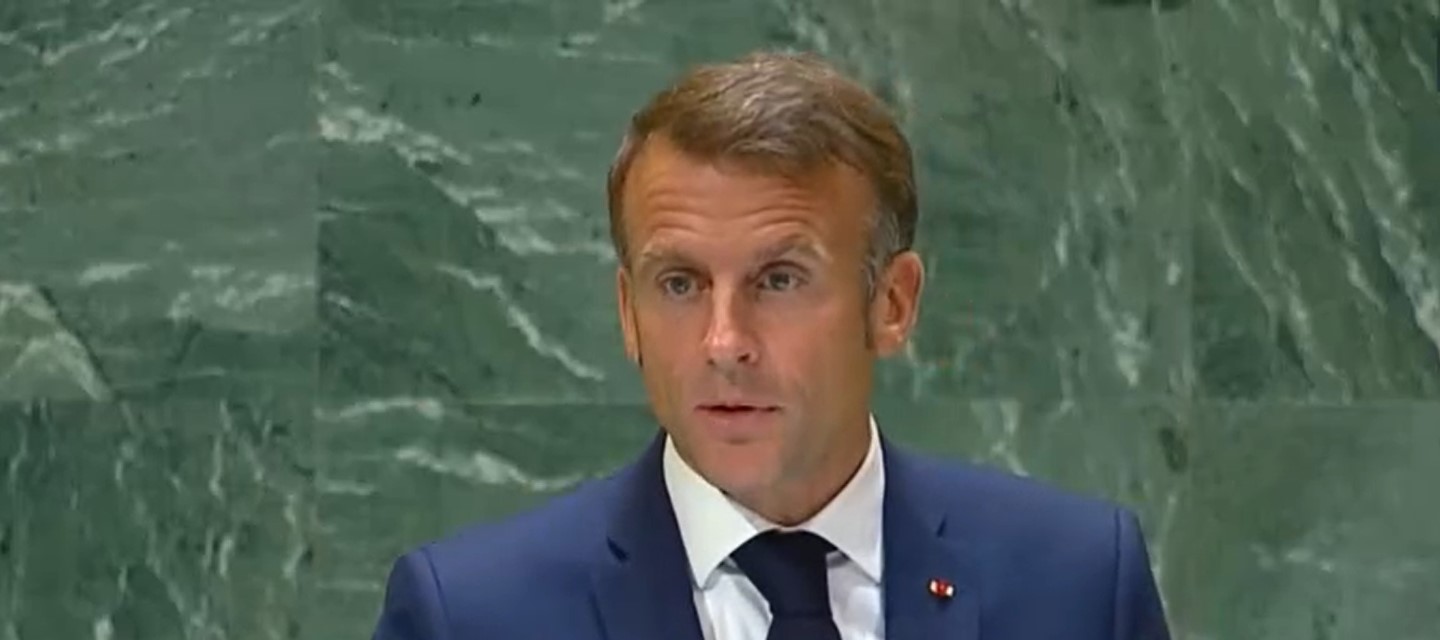
Screen Capture/CSPAN
France’s finance chief suggested that the U.S. contributes little to NATO, then seconds later said Europe cannot afford a potential American withdrawal from the alliance.
Roland Lescure, the French Minister of Economics and Finance, took the stage Tuesday for the “The Future of Capitalism” session on the second day of the Semafor World Economy summit at the Conrad Washington, D.C. During the session, IMI Chief International Anchor Hadley Gamble asked Lescure if he worries that the U.S. “may pull out of NATO,” something President Donald Trump has hinted at considering in recent weeks.
“I certainly hope not,” replied the finance minister, who is a member of French President Emmanuel Macron’s party Renaissance.
Gamble then followed up by asking Lescure “who’s going to make up the shortfall in terms of cost” if the U.S. were to depart NATO after 77 years.
“You know there’s two things,” the Macron ally said. “And you know who contributes the most to the budget of NATO? Sixty percent — the EU.”
“The actual contribution of the U.S. to NATO is not that big. It’s about 20% even less,” Lescure said, appearing to refer to the direct operating budget of NATO to which the U.S. contributed about 16% — tied for the most with Germany — in 2024, according to Reuters. The sum each member state of NATO contributes to the organization’s direct budget is preset and for the most part proportional to their respective gross national income.
“This is the principle of common funding, and it demonstrates burden-sharing in action,” NATO’s website states.
“But can you afford — can you afford to have the U.S. go out of it [NATO]?” Gamble asked Lescure.
“No, I don’t think any of us do. We need each other,” the French finance minister answered matter-of-factly, referring to the U.S. and the EU.
Lescure then acknowledged that “what the U.S. has done,” which Europe has not done enough of, “is defense spending.”
“It’s not the budget of NATO that counts,” he said, despite having made a point of bringing up the budget seconds earlier.
Despite the U.S. not being able to contribute more than 16% of NATO’s current budget, it can and does pitch in significantly more of the alliance’s defense spending — a fact Trump has often pointed to in order to make the case that other NATO members who pay significantly less are “ripping off” the U.S.
In 2025, the U.S. spent just shy of one trillion dollars on its defense budget, more than 10 times the amount any other nation in the explicitly defensive alliance doled out that year, according to World Population Review. France by comparison, spent only $66.5 billion on defense that year, about one-fifteenth of what the U.S. spent. Seventeen NATO member states each spent less than $10 billion that year, including three that spent less than $1 billion.
Shortly before Gamble asked him the question about NATO, Lescure pointed out that the U.S. and France “have been friends for 250 years.”
“And we have to remember that every day. And sometimes where it is a bit of a strain, we need to remember that at the end of the day, we need together [sic], and we are going to be better together, in AI [artificial intelligence], in geopolitical and everything else,” he added.
Also during his interview with Gamble, Lescure made it clear that he was not running in France’s 2027 presidential election saying, “By the way, I’m not the next president.”
Gamble also asked him if he was “encouraged” by the Sunday landslide defeat of longtime Hungarian Prime Minister Viktor Orbán, a key European Trump ally.
“I don’t interfere with others’ elections. But it’s a sign,” he said.
“You’re smiling!” Gamble pointed out, as the audience briefly laughed.
“It’s a sign,” he repeated. “I think there’s a sign that people want hope. They want optimism. … I think they want progress, they want prosperity.”
(Featured Image Media Credit: Screen Capture/CSPAN)
All content created by the Daily Caller News Foundation, an independent and nonpartisan newswire service, is available without charge to any legitimate news publisher that can provide a large audience. All republished articles must include our logo, our reporter’s byline and their DCNF affiliation. For any questions about our guidelines or partnering with us, please contact [email protected].