

Business
Economic Shocks Will Permeate Long After Iran Strikes Stop, Analysts Predict
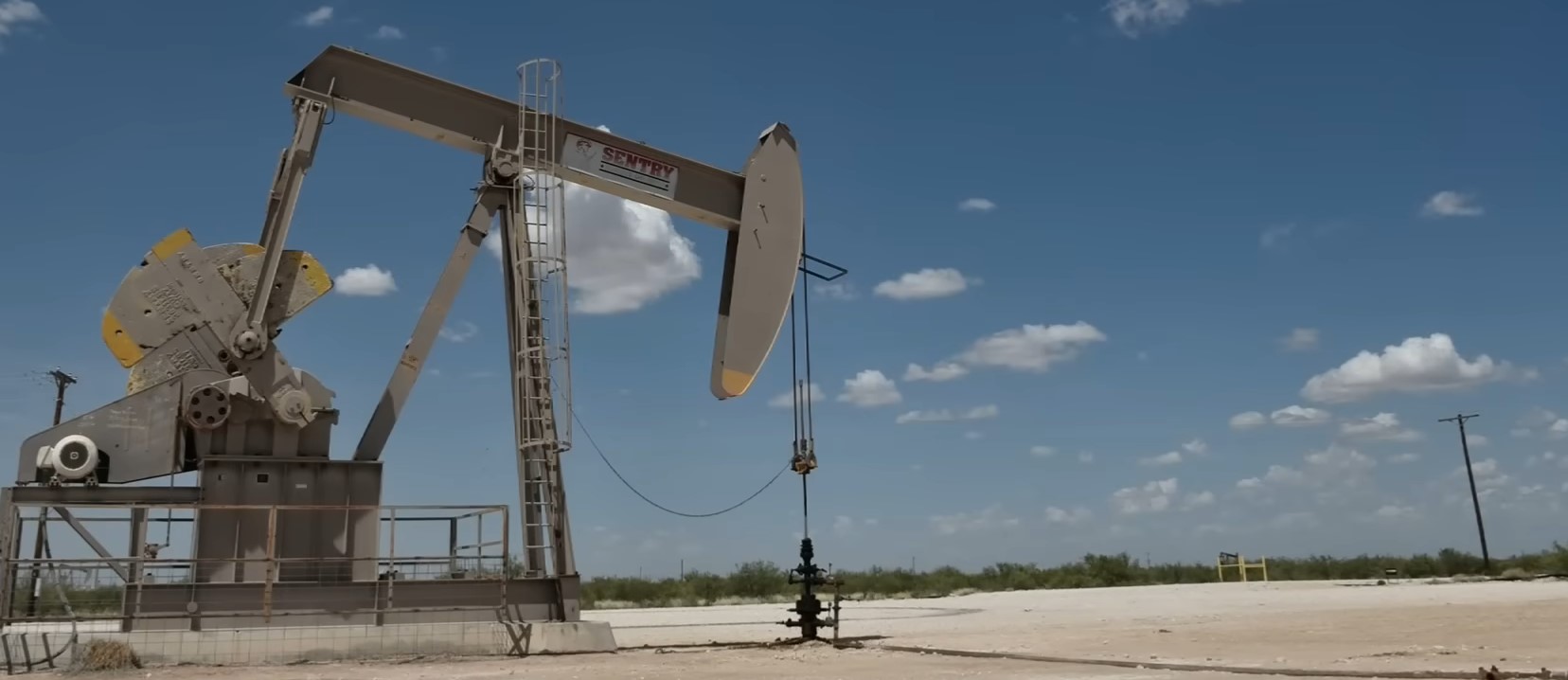
Oil pump (Screen Capture/PBS NewsHour)
Some analysts say the economic effects of Operation Epic Fury in Iran could persist for years, even after the strikes end.
Oil prices have climbed since Operation Epic Fury began, with WTI crude futures closing at $98.32 on Friday, up more than $30 from $67.02 on Feb. 27 — the day before the conflict with Iran began — according to Investing.com. Analysts claim effects from Iran’s efforts to close the Strait of Hormuz on the prices of multiple commodities could linger beyond the moment active hostilities cease, according to Axios.
“Productive capacity will be offline for an uncomfortably long time, meaning energy prices are likely to fall much slower than they rose,” Kyle Rodda, a senior analyst for the online trading platform Capital.com, told Axios, referring to an Israeli attack on Iranian oil and gas production facilities.
Strikes on the Middle Eastern country’s oil facilities even drew criticism from one of the more hawkish members of Congress, Republican South Carolina Sen. Lindsey Graham who told Israel, “please be cautious about what targets you select.”
“Our goal is to liberate the Iranian people in a fashion that does not cripple their chance to start a new and better life when this regime collapses,” Graham wrote in a March 8 X post after an earlier set of Israeli strikes. “The oil economy of Iran will be essential to that endeavor.”
Oil prices may not be the only thing affected by the conflict, as roughly half of the world’s production of two crucial agricultural fertilizer precursors, urea and sulfur, passes through the Strait of Hormuz, according to the Fertilizer Institute. Saudi Arabia, which has been targeted by Iranian missile and drone strikes, also is the leading supplier of phosphate imports to the United States, the Fertilizer Institute reported, while also noting that other major phosphate producers include Russia and China.
A fertilizer shortage could reduce crop yields, sending prices higher, with the president of the American Farm Bureau Federation (AFBF) telling the Associated Press (AP) that farmers could be in a “dire situation.”
“We’re being told that many of our farmers that haven’t preordered their fertilizer and paid for it may not even obtain the fertilizer that they’re going to need during the season or for spring planting,” AFBP President Zippy Duvall told the outlet.
Farmers could also be hit by rising diesel prices, which make operating farm equipment much more expensive.
The average price of a gallon of diesel in the United States rose from $3.74 on March 1 to $5.19 Saturday, according to GasBuddy.com. Diesel fuel is also the primary fuel used by truckers to deliver food and other products to grocery stores.
Taiwan’s semiconductor industry could also be affected by the conflict, due to difficulty getting supplies of helium from Qatar, the world’s second-largest producer of the inert gas, CNBC reported. Analysts note that there had been an oversupply of helium for the past two years, which might ease the strains from the conflict.
“President Trump has always been clear about temporary disruptions as a result of Operation Epic Fury, but America’s economic fundamentals and trajectory remain resilient: real wages are growing, CPI inflation has cooled, productivity growth remains robust, and trillions in investments continue to pour into American manufacturing,” White House spokesman Kush Desai told the Daily Caller News Foundation in a statement.
“The Trump administration remains laser-focused on a long-term pro-growth agenda of tax cuts, rapid deregulation, and energy abundance that has delivered historic progress over the past year while taking a whole-of-government approach with our allies to shore up any short-term economic impacts,” Desai added. “Meanwhile, the U.S. Military and our allies continue to make astonishing progress towards neutralizing the Iranian terror regime and putting an end to current – and future – Iranian disruptions to the American and global economy.”
All content created by the Daily Caller News Foundation, an independent and nonpartisan newswire service, is available without charge to any legitimate news publisher that can provide a large audience. All republished articles must include our logo, our reporter’s byline and their DCNF affiliation. For any questions about our guidelines or partnering with us, please contact [email protected].