

Politics
How Using Talking Filibuster For Trump’s SAVE Act May Be Minefield For GOP
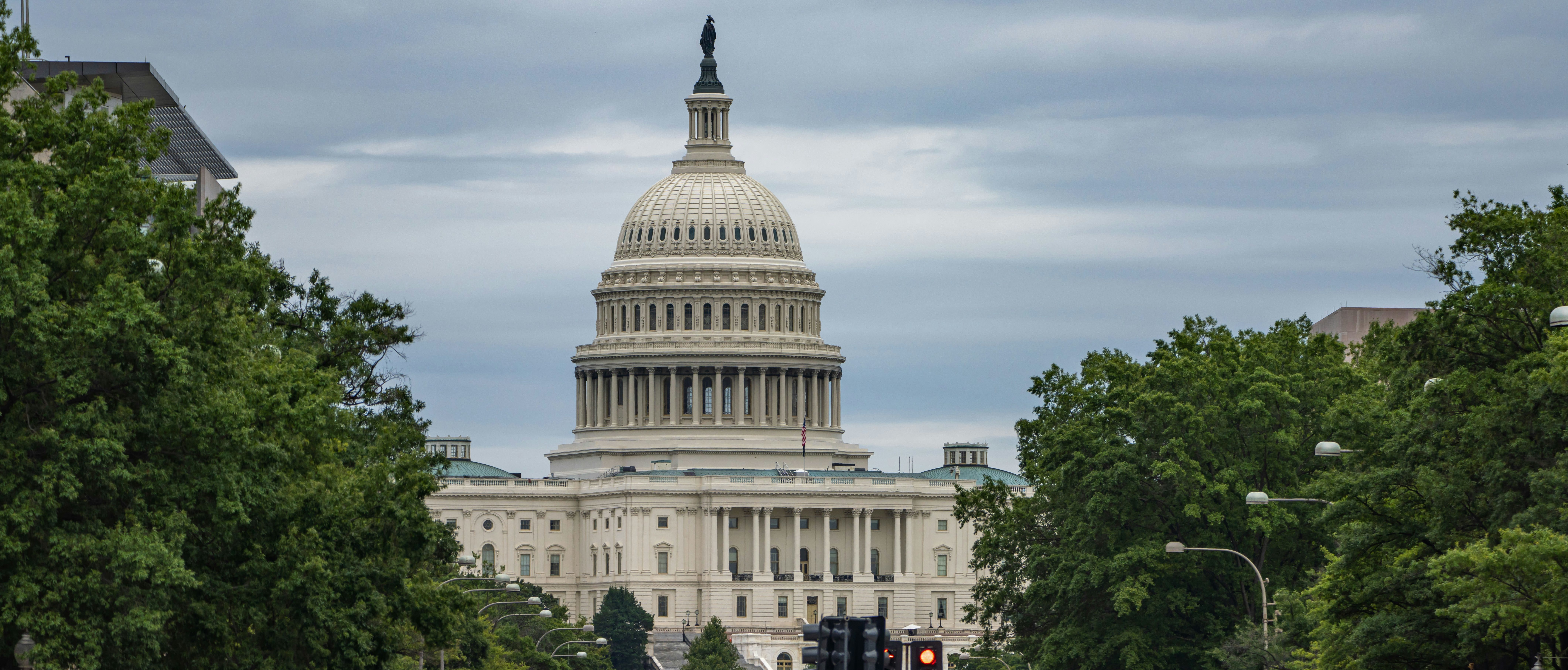
U.S. Capitol (Adam Michael Szuscik/Unsplash)
Some Republican lawmakers are pushing an old Senate procedure to pass the Trump-backed SAVE America Act — although it may turn the upper chamber into bedlam for weeks and ultimately backfire.
While Republican lawmakers — like the vast majority of Americans — strongly support the election integrity bill’s national voter ID requirement, Democrats have come out in strong opposition to the legislation, with some likening it to racial segregation. A group of conservative lawmakers in both chambers, including Republican Utah Sen. Mike Lee and Republican Florida Rep. Anna Paulina Luna, is advocating forcing Democrats into a talking filibuster to pass the bill, despite the possibility the tactic could allow the opposition party to advance much of their agenda.
The filibuster is a Senate procedure inherently designed to protect the chamber’s minority party — now the Democrats — by enforcing a 60-vote threshold. The “talking filibuster” involves both parties physically debating legislation on the floor rather than allowing the minority to silently block its passage by withholding its votes, as the filibuster is commonly used today.
There has never been a piece of legislation passed by using the specific application of the talking filibuster Lee, Luna and other conservatives are calling for, according to independent Capitol Hill correspondent Jamie Dupree.
Senate rules allow each member of the upper chamber two speeches of unlimited time to debate the bill, during a filibuster. In 2025 Democratic New Jersey Sen. Cory Booker held the floor for 25 hours, breaking the Senate record. All 47 members of the Democratic Caucus could theoretically do the same if the GOP forces a talking filibuster.
Lee has pushed for the caucus to force Democrats to go on record regarding their opposition to the bill.
“We must make filibustering senators speak— even through long nights, weekends, and long-scheduled recesses,” Lee said in a video posted to X Thursday.
However, unlimited floor time could present the minority with the opportunity to message against the Trump administration ahead of the midterms and advocate for their own agenda instead.
Democrats would be offered an opportunity to gridlock the Senate floor, and other parts the president’s agenda would be frozen for as long as the minority pleases as no other business can be brought to the floor during the talking filibuster.
During his Feb. 24 State of the Union address, President Donald Trump called on Congress to pass legislation banning stock trading, redirecting Affordable Care Act subsidies directly into health savings accounts, and ending sanctuary city policies, among many other agenda items. All of these priorities would be stalled if the talking filibuster was enacted.
Any efforts to fund the Department of Homeland Security (DHS) would similarly be tabled for as long as the debate ensues. Members of the Coast Guard and Transportation Security Administration (TSA) employees are working without paychecks, and the Cybersecurity and Infrastructure Security Agency (CISA) is defunded as the conflict in Iran continues. The Coast Guard, TSA and CISA all operate under the DHS.
If the Senate adjourns for any reason, its two-speech rule restarts and Democrats have a renewed opportunity to give lengthy floor speeches.
Democrats On Offense?
In addition to freezing the president’s priorities, the Democratic minority can use the talking filibuster to codify their own agenda. Any member can introduce an amendment to the SAVE Act which would require a renewed debate and restart the clock on the two-speech rule. There are no limits to how many amendments can be offered, and only 51 votes are needed to add amendments to the election integrity bill.
Republican Montana Sen. Steve Dainestold the Daily Caller News Foundation that voting down Democrats’ “toxic” amendments would not be “a good idea” for Republicans ahead of the midterms.
The only way to prevent the SAVE Act from gathering Democrats’ amendments is for the GOP to remain united in tabling every vote. If there is a 50-50 tie, Vice President JD Vance would have to remain on call at all times to break the tie.
Democrats could introduce amendments ranging from enhanced Obamacare subsidies and restrictive tariff authority to increasing the federal minimum wage and raising taxes on billionaires — some of which have gotten votes from moderate Republicans in the past and could earn them once more.
Republican Maine Sen. Susan Collins, a moderate in the party, proposed an amendment to the One Big, Beautiful Bill Act (OBBBA) in June to raise taxes on individuals earning over $25 million a year, and eighteen of her Republican colleagues joined her in supporting the measure. She also voted to restrict the president’s tariff authority over Brazil and Canada, alongside Republican Alaska Sen. Lisa Murkowski and Republican Sens. Mitch McConnell and Rand Paul of Kentucky.
Republican Missouri Sen. Josh Hawley also supports raising the federal minimum wage.
The political fallout of voting down certain policies could be brutal especially in a midterm year. Retiring Republican senators such as Thom Tillis of North Carolina have the potential to be wild cards on certain amendments. Tillis also voted to eliminate Trump’s tariffs on Brazil in October 2025.
Republicans also lack the votes to change the chamber’s rules and eliminate the filibuster altogether — despite somesupport to do so from Republican senators such as John Cornyn of Texas and Ron Johnson of Wisconsin — leaving the 60-vote threshold firmly in place. Eliminating, or “nuking” the filibuster would remove the minority’s protective 60-vote threshold along with the talking filibuster.
‘Only Need A Simple Majority’
Furthermore, analysts have raised alternative methods to pass the SAVE Act, including regarding it as a “Message from the House.”
“You only need a simple majority to proceed to the House-passed SAVE America Act, which was presented to the Senate as a Message from the House,” The Federalist co-founder Sean Davis wrote in a Tuesday X post. “That maneuver makes it privilege and eliminates the 60-vote obstacle to get on the bill.”
Despite the talking filibuster’s unpopularity among some Senate Republicans, nearly the entire conference cosponsors the SAVE Act, signaling deep support for the policy but a lack of unity over the process to pass it.
Senate Majority Leader John Thune told reporters Monday the talking filibuster is “much more complicated and risky than people are assuming at the moment,” and pointed to a “paid influencer ecosystem” for the mounting pressure to pass the legislation despite the lack of votes in the chamber.
“That is just a function of math,” the leader later said Tuesday.
All content created by the Daily Caller News Foundation, an independent and nonpartisan newswire service, is available without charge to any legitimate news publisher that can provide a large audience. All republished articles must include our logo, our reporter’s byline and their DCNF affiliation. For any questions about our guidelines or partnering with us, please contact [email protected].