

Exclusives
Truckers Headed For A Freight Depression After Historic Diesel Spike
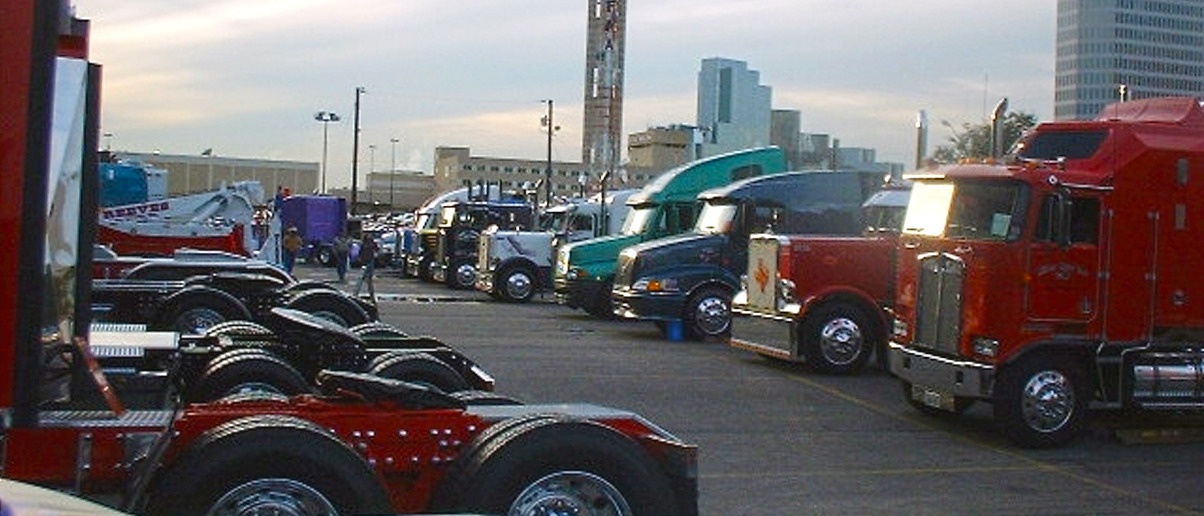
(Ted Gresham via Wikimedia Commons)
Truckers have overwhelmingly supported President Trump since his first campaign, but his latest move could put them out of business.
On February 28, President Trump launched Operation Epic Fury, decapitating Iranian leadership and sparking a shipping crisis in the Strait of Hormuz. Diesel prices rose by over 85 cents to $4.59 a gallon in the week after, throttling independent truckers’ bottom lines nearly four years into a freight recession.
“For us to absorb this cost for much more than a few months means extinction,” independent trucker and Hell Bent Xpress President Jamie Hagen told the Daily Caller News Foundation. “Fuel was the death blow to an already beaten up industry.”
With diesel rising nearly a dollar in mere days, independent truckers are scrambling to keep their companies afloat. The industry’s years-long decline isn’t solely attributable to diesel prices. Pandemic-era policies and mass immigration have both wreaked havoc on truckers’ livelihoods.

(Courtesy of Donald Trump Campaign)
Freight Recession
During the COVID-19 lockdowns, online shopping exploded and carriers put new rigs on the road to meet the huge demand. But when lockdowns lifted, the increased demand vanished virtually overnight.
Since 2022, consumers have reverted to spending on travel, restaurants, and other services that don’t drive up freight volume. With collapsing demand for consumer goods and a precipitous drop in major purchases exacerbating carrier oversupply, cascading bankruptcies soon followed.
Though UPS, FedEx, and other major carriers are able to issue a General Rate Increase (GRI) to cope with increased expenses, independent owner-operators’ options are more restricted. “Our members often work load to load and can’t simply raise their rates when fuel spikes the way their larger competitors can,” the Owner-Operator Independent Drivers Association (OOIDA) told the DCNF. “With freight rates already low, a sharp increase in diesel can quickly eat up what little margin a small trucking business has left.”
In addition to slim margins, there were simply truckers chasing too few loads. This oversupply was partially caused by migrants entering the workforce, with the number of foreign-born truckers doubling since 2000.
Foreign-born workers make up nearly 20% of the U.S. truck driver workforce, according to Bureau of Labor Statistics data analyzed by multiple industry groups. High-profile accidents involving illegal and non-citizen truck drivers catapulted the issue into the public eye, but the structural problems largely remain.
“The market got flooded with unqualified people. It’s an absolute mess out here with all different nationalities and almost none speaking English,” Hagen noted to the DCNF when discussing oversupply. “And they’re willing to risk their lives for little reward. If I could pay my people very little, basically food money, then maybe our situation wouldn’t be so dire. As a driver myself I am not willing to do anyone that dirty though.”
Prior to Operation Epic Fury and Iranian retaliation, some industry experts were optimistic about the Trump administration’s immigration crackdown. “New immigration restrictions could curb driver availability, trigger a massive capacity crunch, and pull the trucking industry out of The Great Freight Recession,” CEO of supply chain intelligence company FreightWaves Craig Fuller wrote in late 2025. “Since 2022, trucking has been mired in overcapacity, with excess trucks and soft demand driving spot rates to $2.28 per mile on July 1, 2025, per SONAR data, down from $3.53 per mile on January 9, 2022.”
Restricting foreign-born participation in the trucking labor force could help solve the overcapacity problem driving down profit for owner-operators. But after years of declining demand and consistently high gas prices under the Biden administration, it’s unclear if carriers can even survive the largest one-week diesel spike in history.
Diesel Disaster
“This is sort of the nail in the coffin,” owner-operator James Hagen told the DCNF, referring to diesel’s one-week surge. “This raise in cost could slow the momentum we had going into 2026…after 3 years of downturns, Hell Bent Xpress doesn’t have a year 4 left in it. It is now or never. Henceforth why I don’t sleep much at night these days.”
UPS and FedEx issued new surcharges on top of their 5.9% GRI, but independent carriers operate in a more volatile contract environment. “I’m actively trying to renegotiate contracts with some verbiage to help with the situation. Typically, fuel doesn’t rise this fast. At a slower pace we could have eventually just raised the rate of our contracts, but this is bonkers,” Hagen told the DCNF. “We don’t have contracts in place with a good fuel surcharge.”
Global oil market volatility is likely to continue as long as the Strait of Hormuz remains closed, preventing tankers from reaching markets and restricting worldwide supply.
Consumers are unlikely to bear the brunt of increased operating costs. “Because of economies of scale, consumers are protected somewhat from a rise in transportation costs,” trucking industry veteran and analyst Justin Martin told the DCNF. “Even if shipping rates doubled, we’d only be looking at a 1-3% increase in the retail price of the item being moved.”
“When consumers pay more at the pump, they have less money to spend on other goods that motor carriers haul for their customers. So, it can hurt freight volumes,” American Trucking Association Chief Economist Bob Costello told the DCNF. Even if consumers don’t see grocery receipts or Amazon prices rise dramatically, they may be spending too much on gas to drive demand for trucked goods. The national average gasoline price sits at $3.59, an increase of over 60 cents, according to AAA.
Ultimately, independent truckers are depending on a sharp downturn in diesel prices to remain operational after the lengthy freight recession. “I’ve been in this industry my entire life and I’ve never experienced anything like this. I’ve seen small slow downs and reduced demand but never a three year stretch before. I’m know for being a very efficient operator and this has out paced anything I was prepared for,” owner-operator Hagen said.
All content created by the Daily Caller News Foundation, an independent and nonpartisan newswire service, is available without charge to any legitimate news publisher that can provide a large audience. All republished articles must include our logo, our reporter’s byline and their DCNF affiliation. For any questions about our guidelines or partnering with us, please contact [email protected].