

US
Can Trump’s DOJ Finally Put An End To Male Inmates In Women’s Prisons?
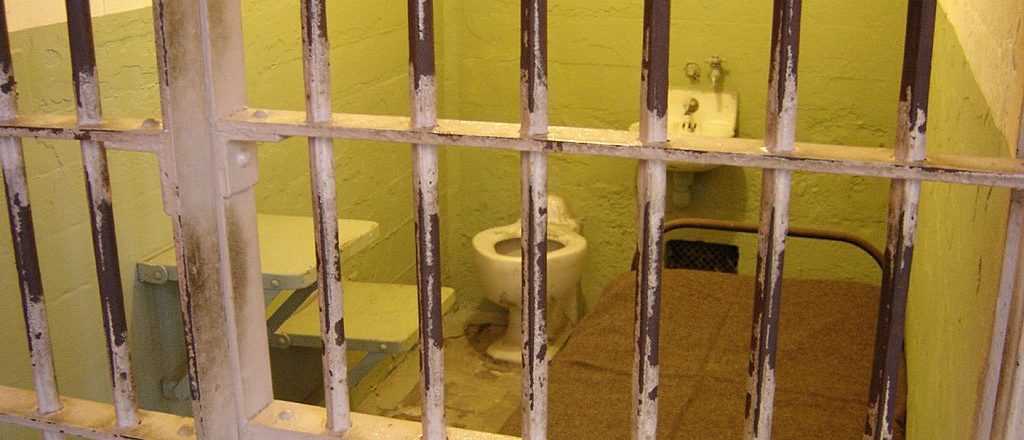
Prison cell (Dylan Oliphan/Wikimedia commons/Flickr
President Donald Trump’s Justice Department is taking further action to keep male inmates away from women’s prisons, but potential obstacles remain.
The Department of Justice (DOJ) issued a memo on Dec. 2 reinforcing a January 2025 executive order requiring inmates to be housed according to sex, a policy that challenges Federal Prison Rape Elimination Act (PREA) standards published in 2012 allowing males to be housed in female prisons. It’s uncertain if states with policies allowing men in women’s prisons will comply with these news standards which are used to guide corrections agencies at the local and state level.
“For years, officials have used ‘because PREA’ as an excuse to house violent, predatory men in facilities meant for women—a practice that defies logic, safety, and basic decency,” Leigh Ann O’Neill, chief legal affairs officer at America First Policy Institute told the Daily Caller News Foundation.
“This memo signals the beginning of the end of that dangerous and indefensible rationale. And while it’s an important step, there’s far more work ahead to ensure that even progressive states with laws that allow males to be housed with female inmates are pulled into line,” O’Neill said.
The DCNF reached out to several state corrections departments with policies allowing male inmates to be housed in women’s prisons, including California, Minnesota, New Jersey, Maine and Washington State, asking if they plan on complying when the PREA standards are updated to align with President Trump’s executive action.
The California Department of Corrections and Rehabilitation told the DCNF it continues to follow current PREA standards and state law regarding the housing of “transgender” inmates, and the Minnesota Department of Corrections confirmed it follows PREA standards, adding that it will “evaluate any proposed changes through the lens of safety, legal compliance, and our core values.”
The Washington State Department of Corrections (DOC) declined to comment. The DCNF did not receive a response from New Jersey or Maine.
PREA standards were supposed to protect female inmates from sexual assault but instead forced incarcerated women, who are overwhelming sexual-violence survivors, to share intimate spaces with violent men. The standards instruct local correctional agencies to allow inmates to be housed according to their gender identity — how they feel about their sex — on a case-by-case basis. Correctional facilities undergo a PREA compliance audit from a DOJ-certified PREA auditor every three years.
The leaked memo instructs DOJ-certified PREA auditors to “immediately pause” from evaluating compliance with PREA standards that conflict with President Trump’s executive action.
“Although PREA was created to reduce sexual assault and ensure humane treatment for all individuals in custody, gender-identity-based housing has undermined the intent of PREA itself,” Beth Parlato, senior legal advisor at Independent Women told the DCNF. “Revising the PREA guidelines to ensure that housing prioritizes biological sex is essential to restoring safety, reducing risk, and protecting the rights and wellbeing of female inmates.”
President Trump’s order defines “sex” as an “individual’s immutable biological classification as either male or female” which does not include the concept of “gender identity” and prohibits the use of federal funds for medical sex rejecting procedures euphemistically called “gender affirming care.”
📞 TRUMP ANSWERS THE CALL: Americans overwhelmingly recognize the utter unfairness of allowing men into women’s spaces.
This absurd ideology goes far beyond athletics. Female inmates in prison, women in domestic violence shelters, women and girls using locker rooms, they have… pic.twitter.com/4JROXf2npi
— Independent Women (@IWF) January 21, 2025
Trump’s executive action immediately drew legal challenges, including from a group of “transgender” men who claimed their safety could be jeopardized if they were forced to return to male prison and called it “discriminatory” to define sex as a biological classification, according to their lawsuit.
A Reagan-appointed federal judge in Washington, D.C., granted the “transgender” men an injunction in the case, allowing them to remain housed in women’s prisons until February 2026.
‘Complete Abandonment’
Allowing male inmates to be housed according to the Obama-era PREA standards has had devastating consequences for women across America.
For example, a self-identified “transgender” man raped a female inmate while she exited the shower in a New York prison in 2021. Another biological man impregnated two women in a New Jersey prison after the state changed its housing policy to allow inmates to be housed according to their “gender identify” following a legal settlement with the American Civil Liberties Union.
Democrat legislators in New York state are trying to codify transgender policy into law through the “Gender Identity Respect, Dignity and Safety Act,” which was introduced in January 2025. The bill would legally require correctional facilities to house inmates according to their self-determined gender identity.
“Prioritizing the fleeting feelings of predatory men that have adopted a trans identity, above the physical safety and mental health of the entire female prison population is the biggest step backwards in women’s rights in modern history,” Amie Ichikawa, an ambassador for Independent Women and co-founder of the nonprofit Woman II Woman told the DCNF.
“I have sat through hearings and witnessed the complete abandonment of juris prudence in exchange for trans radical activism,” Ichikawa said.
Woman II Woman is a nonprofit that advocates for the dignity and safety of incarcerated women.

Washington Department of Corrections document obtained through public records request by the DCNF.
In Washington State Christopher Williams, a 6’4” male serving a 28-year sentence for first-degree assault, allegedly assaulted a woman in January and February of 2022, just months after being housed within the state’s only female prison after self-identifying as female.
In August 2025 he allegedly assaulted another woman, attacking her from behind after they’d had a disagreement, according to reporting from Independent Women. Williams is currently in a men’s prison, according to the Washington DOC.
Williams requested transfer to a women’s prison in 2019 claiming he did not “feel safe” around men, in a series of offender complaints obtained through a public records request to the Washington DOC.
“I do not feel safe around men. I do not feel safe in male populations and facilities. I do not feel safe being classified as male and I do not feel safe being treated as male,” wrote Williams in the offender complaint obtained by the DCNF.
Williams cited PREA standards as justification for his transfer, claiming in male prison he was “placed around a population where I am at the highest risk of male sexual assault and male rape.”
A Washington DOC Housing Assignment Review committee did not support Williams’ request to be transferred to a women’s prison in November 2019 due to his “level of past violence towards women,” documents show.
However, despite having a history violence and being a full foot taller than the average American woman, in late 2021 Williams requests for transfer to the women’s prison were granted and within months of entering the women’s prison he allegedly sexually assaulted his female cellmate, according to a lawsuit she filed against the Washington State DOC.
The DCNF was unable to reach Williams for comment and it appears that he is currently without legal representation.
“One person’s rights do not have to come at the cost of another’s. Basic human rights like respect, agency and dignity are free and should be things every one in prison has access to – including women,” Ichikawa told the DCNF.
(Featured Image Media Credit: Dylan Oliphan/Wikimedia commons/Flickr)
All content created by the Daily Caller News Foundation, an independent and nonpartisan newswire service, is available without charge to any legitimate news publisher that can provide a large audience. All republished articles must include our logo, our reporter’s byline and their DCNF affiliation. For any questions about our guidelines or partnering with us, please contact [email protected].