

Politics
Democrats Torpedo Bipartisan Talks With Take-It-Or-Leave-It Obamacare Plan
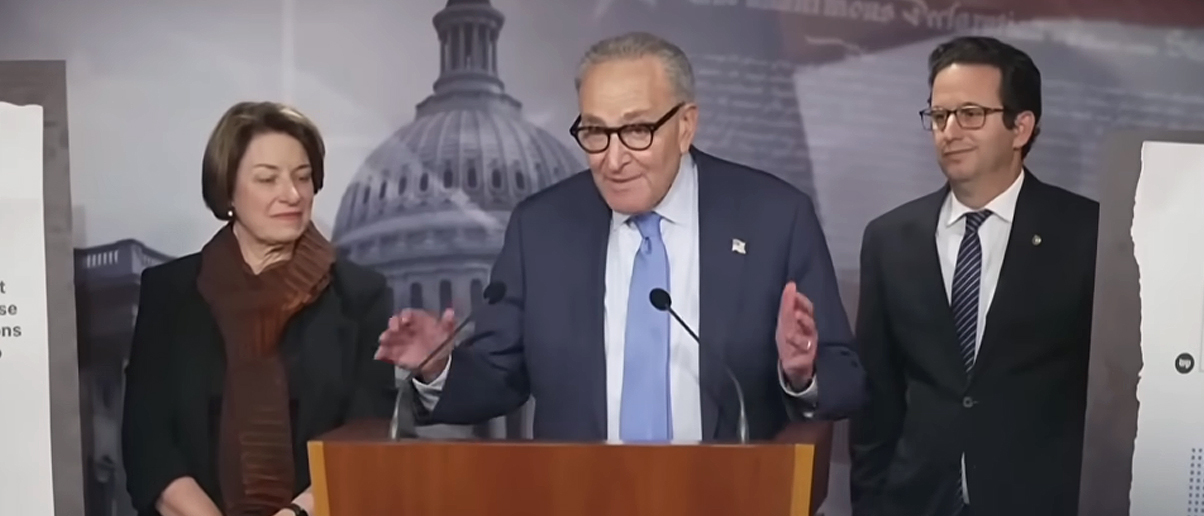
Screenshot via YouTube/The Democrats
Democrats on Thursday proposed a three-year extension of the soon-to-expire enhanced Obamacare premium subsidies despite the measure’s near-certain failure to secure the votes needed to pass.
As part of the deal to end the record-setting shutdown, Senate Majority Leader John Thune offered Democrats a floor vote on their healthcare proposal, scheduled for Dec. 11. Although bipartisan talks have explored possible compromise on the enhanced subsidies — originally enacted in 2021 by Democrats without a single Republican vote — the plan announced by Senate Minority Leader Chuck Schumer has no chance of winning GOP support, multiple Republican senators told the Daily Caller News Foundation.
“I don’t see a path forward to 60 votes with a three-year extension,” said Sen. Steve Daines of Montana.
Schumer’s latest proposal goes further than what Democrats initially proposed during the shutdown, when they offered only a one-year clean extension. Senate Republicans shot down the proposal, arguing that healthcare talks could not proceed until the government reopened.
“This is the bill, a clean three-year extension of ACA (Affordable Care Act) tax credits, that Democrats will bring to the floor of the Senate for a vote next Thursday, and every single Democrat will support it,” Schumer said Thursday. “Republicans have one week to decide where they stand.”
The ACA subsidies were originally limited to households earning between 100% and 400% of the federal poverty level. However, Democrats removed the upper-income cap and increased the subsidy amounts, in some cases dropping premiums to zero.
Even though Democrats themselves set the enhanced subsidies to expire at year’s end, they now warn that allowing them to lapse will trigger sharp premium increases for millions and cause many to lose coverage.
Critics say Democrats’ push to extend the subsidy expansion amounts to an admission that the law, as written, was insufficient.
“The vast majority of those people getting the enhancement is just going to go back to the normal Obamacare subsidy rates,” Republican Sen. Ron Johnson of Wisconsin told the DCNF. “I mean, complain to Obama about that.”
Others, including Sen. John Curtis of Utah, told the DCNF that a three-year extension is off the table and that any extension must include an income cap and the elimination of zero-dollar premiums.
“I think there are a lot of us that are very sympathetic, that would like to see something that works for the American people, but it has to be smart, and that’s not smart,” Curtis said.
Research has shown that fraud is especially widespread among enrollees who qualify for zero-premium plans, which critics say create opportunities for bad actors to enroll unsuspecting individuals without their knowledge.
A scathing Government Accountability Office report released Wednesday also identified rampant fraud and systemic failures in the ACA marketplace, including fictitious identities, invalid Social Security numbers, and even deceased individuals being routinely approved for taxpayer-funded subsidies.
“There’s massive fraud caused by that enhancement,” said Johnson. “I’m happy to do something, but Democrats have to acknowledge the reality of their system’s miserable failure, and have to work to fix that.”
Other Republicans, including Sens. Susan Collins of Maine, Lisa Murkowski of Alaska, and Thom Tillis of North Carolina, have backed a two-year extension but also say it would need income caps and other restrictions to win sufficient support.
Republicans’ demand for codification of the Hyde Amendment to bar federal funding of abortion in ACA plans has been flatly rejected in the Schumer proposal.
“Republicans have never voted for Obamacare, so any kind of discussion has to include [Hyde] protection,” Senate Majority Whip John Barrasso of Wyoming told the DCNF on Wednesday. “If they’re not included, that makes it very, very difficult for Republicans to support anything that the Democrats are proposing.”
Democrats argue that Obamacare already complies with Hyde principles by requiring insurance plans to segregate premiums for abortion and non-abortion services, while pro-life advocates call it a mere “accounting gimmick.”
“They know that that’s a non-starter,” said Sen. Mike Rounds of South Dakota, who told the DCNF that Democrats must limit abortion funding and address fraud before any deal can be reached.
“If we can fix those two items, I think there’s a possibility of finding some common ground, but I think this is just their shot over the bow to begin with,” Rounds said.
Democrats, including Sen. John Fetterman of Pennsylvania, told the DCNF they would vote for the three-year extension proposal. However, the senator, who frequently breaks with his party, said “it’s entirely necessary for other negotiations with the Republicans.”
Meanwhile, Republicans are still debating their own healthcare frameworks.
Sen. Bill Cassidy of Louisiana, chairman of the Senate Committee on Health, Education, Labor and Pensions, has pitched redirecting federal funds into Flexible Spending Accounts, which would allow individuals to set aside pre-tax dollars for medical expenses. Sen. Josh Hawley of Missouri has proposed allowing taxpayers to deduct out-of-pocket medical expenses up to $25,000 per individual or dependent.
“Bill Cassidy has great ideas, but it’s complex,” Tillis said Wednesday. “We have an opportunity to go simple, keep it simple, get it done.”
Speaker Mike Johnson has said he plans to release a Republican healthcare framework by next week.
Also on Thursday, a bipartisan group of nearly three dozen House moderates proposed the “CommonGround 2025” framework, calling for a two-year extension of the boosted subsidies with added reforms such as income limits. They sent a letter to congressional leaders urging a vote on their proposal in both chambers by Dec. 18.
“I thought what was announced over on the House side today with the bipartisan coalition was encouraging,” Hawley, who has advocated for an extension in addition to his own tax deduction proposal, told the DCNF. “I hope that maybe that’ll get a vote in the House. Maybe get a vote over here, but I think at this point we need to start thinking about what a short-term extension looks like.”
Andi Shae Napier and Caden Olson contributed to this report.
All content created by the Daily Caller News Foundation, an independent and nonpartisan newswire service, is available without charge to any legitimate news publisher that can provide a large audience. All republished articles must include our logo, our reporter’s byline and their DCNF affiliation. For any questions about our guidelines or partnering with us, please contact [email protected].