

Commentary: Big Tent Ideas
It’s Time For America To Turn The Page On Its Nuclear Fears
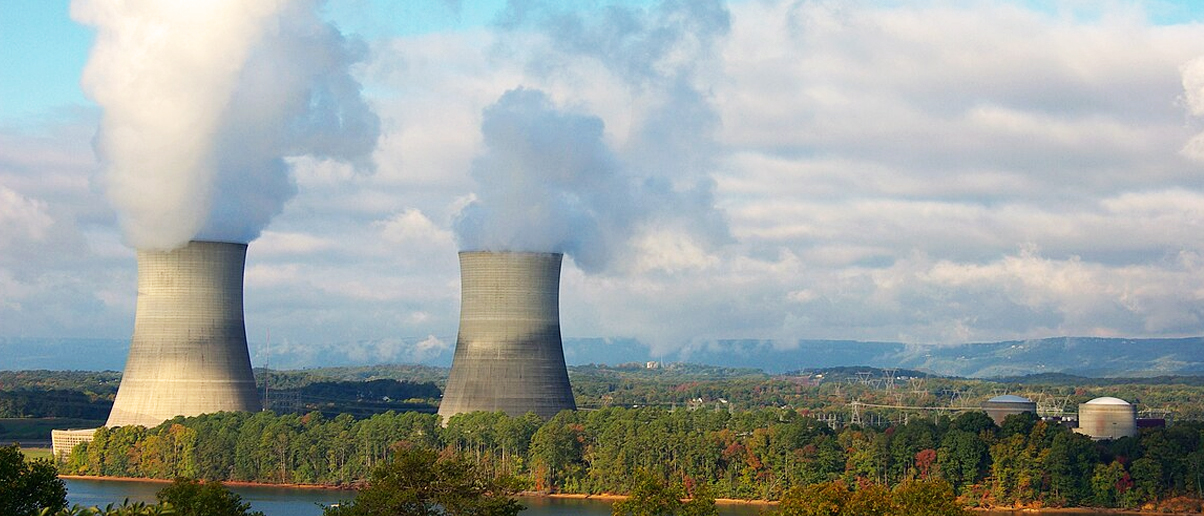
(Photorush / Wikimedia Commons)
A disappointing study came out in the U.K., polling Britons on what they think about nuclear energy. In general, U.K. voters believe nuclear power is good for the national energy mix but are undecided on whether there should be more of it. The interesting part of the polling comes when results are broken down by gender.
Only 30% of women support the use of nuclear power, compared to 74% of men. Most shocking, 69% of women said they do not believe nuclear has low carbon dioxide emissions, compared to 32% of men.
Carbon dioxide emissions do not make my list of concerns when it comes to energy generation, but it is a good demonstration of how little people — especially women in the U.K. apparently— know about nuclear energy. It should go without saying that nuclear power produces no carbon dioxide emissions.
I have little confidence that the public of the United States is much more informed.
Today, nuclear makes up around 18% of U.S. electricity, and 9% of primary energy consumption.
But nuclear has hardly seen any new construction, just three new reactors over the course of decades. Part of that is driven by public fear. Close calls like that at 3 Mile Island and catastrophes like Fukushima and, more pointedly, Chernobyl gave many concern.
That concern was concentrated and sustained by Hollywood disaster movies and an active campaign by anti-nuke activists expanding their opposition to atomic weapons. But that fear is misplaced. Advanced nuclear reactors make events like Chernobyl a thing of the past.
Some are also worried about nuclear waste disposal, but the image of barrels of oozing, bubbling green sludge is just not the reality. Spent nuclear fuel is stored with ample radiation shielding. By far the best place to store nuclear fuel is deep underground, like this site in New Mexico. It has been monitored continuously for water, soil and air contamination since 1999, and nothing has ever been detected. Nor has nuclear fuel ever disappeared or been stolen from storage.
We also should utilize nuclear waste recycling, which reduces the amount of end-waste that needs storage. You can thank President Jimmy Carter for America not taking advantage of that technology, even though countries like France make successful use of it.
Nuclear power can be expensive, but a huge chunk of that expense has historically come from regulation — the average nuclear plant pays around $60 million in regulatory costs, fees and liabilities every year. This is changing under the Trump administration, thankfully. In 2025, President Donald Trump signed executive orders cutting regulations hindering licensing and construction of new nuclear.
The cost of building and operating a nuclear power plant over its lifetime is less than wind, solar photovoltaic and solar thermal plants because of the significant added costs of power that is weather dependent. Plus, nuclear generation costs have already come down 40 percent since 2012, and that’s without massive subsidies on the scale that wind and solar receive.
We’re going to build more datacenters. Data from the internet and businesses needs to be processed and stored somewhere, and there is more of it every day.
With nuclear, particularly small modular reactors (SMR) and other emerging technology, the massive amount of stable energy those datacenters consume ideally could come from off-grid power producers. That should mean your local power bills won’t increase, and there won’t be extra strain on the grid.
Additionally, the land footprint of SMRs is far smaller than solar with battery storage. Siemens Energy estimates the land footprint of a 200-300 MW SMR is about 0.01 square kilometers, about 2.5 acres. The same installed capacity of solar without batteries can take as much as five to eight acres per MW. That is more than 2,000 acres at the high end, and it will not actually produce 300 MW because solar does not work at night. So, solar needs to be overbuilt, and backed up, which takes even more land.
Nuclear plants also last longer. Some nuclear plants have approval to operate up to 80 years. Meanwhile, solar panels have an expected service life of only 25 years and wind turbines much the same, though their mechanical parts generally have to be rebuilt after 10 to 15 years. Replacing them is an entirely new capital investment.
There is no need to be against investment in nuclear energy on environmental grounds, nor economic. There is no single magic bullet energy source, but alongside cheap natural gas and coal, nuclear investment is only going to benefit America over the long term.
Linnea Lueken ([email protected]) is a research fellow with the Arthur B. Robinson Center on Climate and Environmental Policy at The Heartland Institute. X: @LinneaLueken
The views and opinions expressed in this commentary are those of the author and do not reflect the official position of the Daily Caller News Foundation.
All content created by the Daily Caller News Foundation, an independent and nonpartisan newswire service, is available without charge to any legitimate news publisher that can provide a large audience. All republished articles must include our logo, our reporter’s byline and their DCNF affiliation. For any questions about our guidelines or partnering with us, please contact [email protected].