

Religion
Heroic Epic About French Catholic Resistance Reaches America
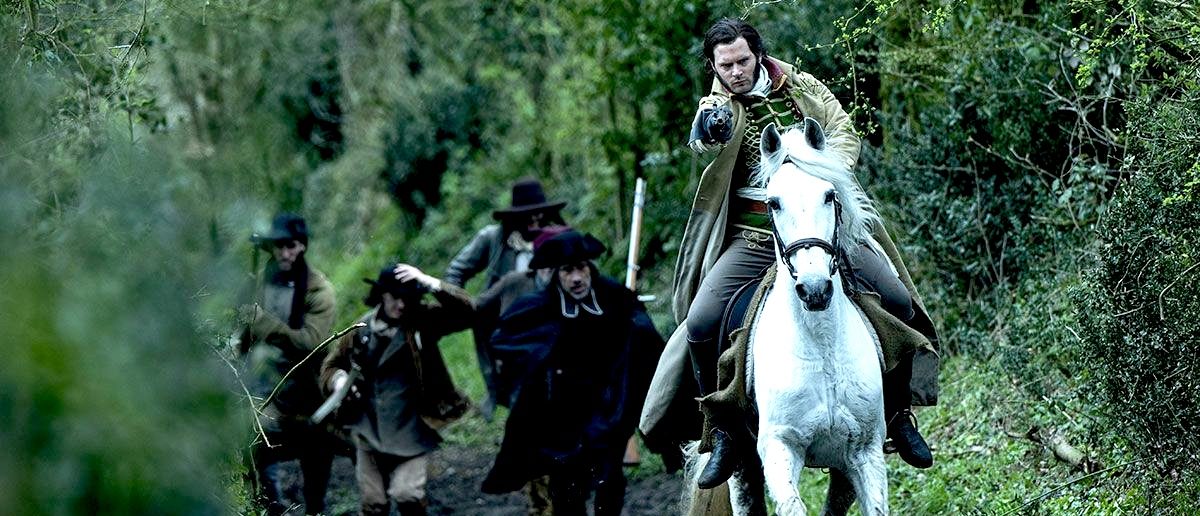
(Courtesy: Innonde Films/Christine Tamalet)
WASHINGTON — Why should Americans care for a movie about a Catholic monarchist freedom fighter resisting the French Revolution in the 1790s?
That’s a question Eduard Habsburg-Lothringen, Hungary’s former ambassador to the Holy See, answered at the U.S. premiere of “Victory or Death,” a French film which has been re-released for streaming and on DVD with English subtitles.
“What I think will connect most with Americans is you have a nation that’s built from the bottom up,” Habsburg said during a screening of the film Sunday at the Trump-Kennedy Center. “Your smallest item, identity, is the family, the township, the county. And while you are a nation, you are still the United States.”
The film is also important to Americans, its backers advocate, due to the dangers of violent, anti-Christian movements. The film retells an often forgotten chapter of the French Revolution: the violent, ruthless genocide against Catholics in western France who resisted and took up arms against the new government after the murder of King Louis XVI and Marie Antoinette, a distant cousin of Habsburg-Lothringen.
“You want to know what the origins — this is just my view — of violence against people who stand up for the Catholic faith? You want to know where the origins of antifa are? You want to know where the origins of woke are? Look at the philosophies, look at the French Revolution,” said Brian Brown, leader of the Louis IX Foundation, a fiscal sponsor of the film’s U.S. release.
The movie follows the final years of the life of François-Athanase de Charette de la Contrie, a French naval officer who supported the Revolutionary War in America, then, upon returning to his homeland, resisted the French revolutionary government’s chaotic and bloody suppression of regions that remained loyal to the Catholic Church and the monarchy.

“For God and the King” was a rallying cry of the Vendee rebels. (Courtesy: Innonde Films/Christine Tamalet)
“It is a story of a small people, farmers and peasants from Western France who rose against a totalitarian project that sought to destroy their roots and impose a new order and a new kind of man. It is a little-known story because it comes in contradiction with the official narrative,” said producer Guillaume Allaire of Innonde Films.
The film opens with Charette being urged to lead peasants of the Vendee region of the western coast of France in an uprising in early 1793. Charette, hoping for a life of peace, struggles with the call. He believes in the royalist cause, opposes the secularist republican regime and is horrified by the oppression of the deeply Roman Catholic region. One peasant in the movie likewise complains the French government had removed the “good priests.”
Though he senses the fight is unwinnable, Charette agrees to lead the ragtag army.

Courtesy: Innonde Films/Christine Tamalet
The action sequences, script, and acting stand up against any Hollywood epic. The first half of the film, however, suffers slightly from narrated exposition as it recounts a year of fighting, during which Charette and his band of peasant fighters win surprising victories against the vastly superior armies of the new government.
Napoleon, decades later, would praise Charette’s skill as a military leader and exemplar of heroic virtue.
“Charette was the only great character, the true hero, of that remarkable episode of our Revolution, which, if it presented great misfortunes, at least did not sacrifice our glory. In the wars of La Vendée, Frenchmen destroyed each other; but they did not degrade themselves,” Napoleon observed.
The latter half of the film, however, has no expository weaknesses. Instead, the film vividly depicts Charette and others who, facing certain defeat, fight to the end. Though often violent, the action sequences have none of the awkwardness self-conscious American religious movies sometimes exhibit.

Courtesy: Innonde Films/Christine Tamalet
“The message of that resistance against an unjust government or regime has to happen locally, has to happen through a band of friends who, with all their weaknesses and all their problems, and all their not being competent to do that, find out that they have to do it,” Hapbsurg said.
Despite ruthless oppression and betrayal by the royals he offered his life to restore to the throne, broken promises of the republican regime, and risks of disloyalty by his own men, Charette persists until his final end comes.
“There is a resurgence of interest in the war of the Vendee. Historians, artists, commentators have taken notice. This story is one we cannot allow to come lost to history. This is a story that needs to be told again today,” Brown said.
Estimates of the number of people killed in the Vendee genocide range between 120,000 and 200,000. Suspected brigands would be executed in groups without trial. Drowning became a regular method of punishing rebels and even children and women, who would be drowned naked, often after being raped. “Refractory” priests were likewise rounded up by the dozen and drowned.
One French general even bragged about the brutality, stating, “Citizens of the Republic, there is no more Vendée. She has died beneath our sabre of freedom, with her women and children. I have buried her in the woods and marshes of Savenay. Following your orders, I have crushed her children under the hooves of my horses, and massacred her women … who will give birth to no further brigands now. There is not a single prisoner who could criticize my actions—I have exterminated them all.”
The producers “never ever imagined that this film would one day be shown in the U.S.,” Allaire said.
Though well known in France, the resistance of the Vendee is less understood in America, a situation Brown hopes to change.
“The reason this movie is important is because it shows the men and women who refused to bow down to a false god,” Brown said. “All of us need to refuse to bow down to false gods.”
“People need to understand that heroes like Charette should not die without us knowing who they are, that the heroes should give us an example of what we do in our own lives,” he added.
All content created by the Daily Caller News Foundation, an independent and nonpartisan newswire service, is available without charge to any legitimate news publisher that can provide a large audience. All republished articles must include our logo, our reporter’s byline and their DCNF affiliation. For any questions about our guidelines or partnering with us, please contact [email protected].