

National Defense
China Reportedly Holds Pentagon Talks Hostage Over Trump’s Taiwan Arms Package
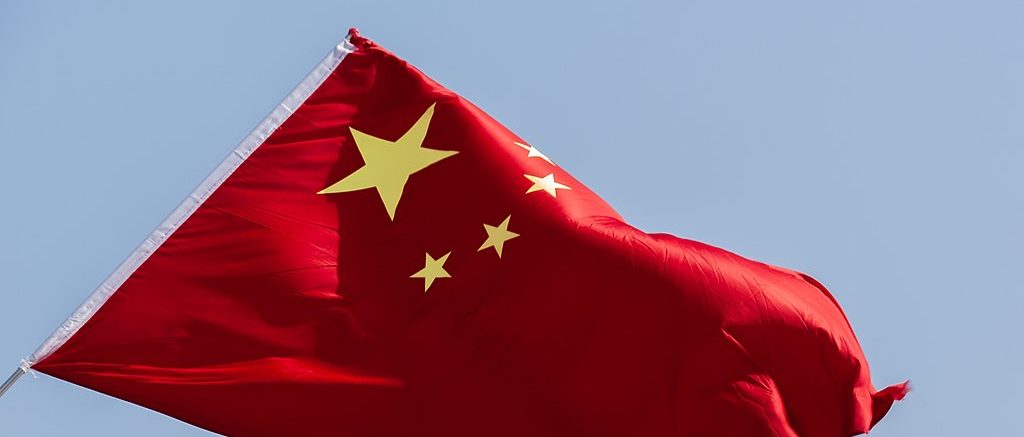
(Wikimedia Commons/Public/Ermell)
China is holding up high-level talks with the Pentagon as President Donald Trump weighs whether to approve a proposed $14 billion arms package for Taiwan, the Financial Times reported.
Beijing has delayed approval for a proposed summer visit by the Pentagon’s undersecretary of defense for policy until Trump decides how to proceed with the Taiwan weapons package, the FT reported, citing anonymous sources familiar with the talks. The proposed package includes Patriot interceptor missiles and NASAMS advanced surface-to-air missiles, according to the outlet.
The dispute puts the Trump administration in the middle of a growing test between keeping military communication channels open with Beijing and moving forward with weapons sales aimed at strengthening Taiwan’s defenses.
“As President Trump said, he will make a determination in a fairly short time regarding a new Taiwan arms package,” a White House official told the Daily Caller News Foundation.
Chinese officials pushed back on Thursday as the U.S. government considered the weapons sales.
“China’s opposition to any official exchanges between the U.S. and China’s Taiwan region, and the U.S.’s arms sales to Taiwan is consistent, clear and rock-firm,” Chinese foreign ministry spokesperson Guo Jiakun said at a press conference on Thursday. “China urges the U.S. to implement the important common understandings between our two leaders, honor its commitments and statements, exercise extra caution in handling the Taiwan question, stop sending any wrong message to ‘Taiwan independence’ separatist forces.”
Members of the U.S. Senate have recently been pushing the Trump administration to commit to selling the weapons package to Taiwan.
“We strongly encourage your administration to formally notify the $14 billion in U.S. arms sales to Taiwan that Congress pre-approved in January 2025,” several senators wrote in a joint letter on May 11, pushing for the finalization of the deal.
On Dec. 17, 2025, the State Department approved a sale to the “Taipei Economic and Cultural Representative Office in the United States (TECRO) of High Mobility Artillery Rocket Systems and related equipment for an estimated cost of $4.05 billion,” according to the Defense Security Cooperation Agency.
‘He Will Make A Determination’
Trump recently made the public aware of his intentions to hold a call with Taiwanese President Lai Ching-Te.
“Well, I’ll speak to him. I speak to everybody,” Trump said at Joint Base Andrews before boarding Air Force One, according to Reuters. “We have that situation very well in hand. We had a great meeting with President Xi. It was amazing, actually. It was amazing.”
The U.S. government is required by law to provide the means for Taiwan to defend itself, according to the Taiwan Relations Act, passed in 1979.
“The United States will make available to Taiwan such defense articles and defense services in such quantity as may be necessary to enable Taiwan to maintain a sufficient self-defense capability,” according to Section 3301 of the act.
“The Chinese are well aware that President Trump is not going to end arms sales to Taiwan, but their ultimate goal is to delay the announcement of another major arms package until after Xi Jinping’s late September state visit to Washington,” the Financial Times reported, citing Dennis Wilder, a former top CIA China expert. “It is less a test of Trump’s commitment to assisting with Taiwan’s defence than an effort to save Xi any embarrassment.”
The administration had planned to notify Congress about the arms sales in February. It delayed the decision after criticism from Beijing, FT reported.
The Trump administration has been expanding diplomatic and military communications with China in an effort to stabilize the region.
Alvaro Smith, the deputy assistant secretary of war for China, Taiwan and Mongolia, met with People’s Republic of China Maj. Gen. Ye Jiang in Washington on Dec. 15, 2025, to discuss the communication with Beijing.
“DASW Smith reiterated the Department of War’s support for a wider range of military-to-military communications with the People’s Liberation Army (PLA) with the goal of supporting strategic stability as well as crisis deconfliction and de-escalation, more broadly,” a press release covering the meeting stated. “DASW Smith explained how such lines of communication align with and help to reinforce ongoing efforts by President Trump to achieve a stable peace and respectful relations between the United States and China.”
“In his first term, President Trump approved more arms sales to Taiwan than any other President in history,” the White House official told the DCNF. “In his second term, President Trump approved more in his first year than all four years under President Biden.”
However, this communication with adversarial powers does not mean a de-escalation of weapons development.
Secretary of War Pete Hegseth said that the United States would resume the testing of nuclear weapons to modernize the U.S. nuclear triad of air-, land- and sea-launched nuclear munitions.
“We will develop additional options to support deterrence and escalation management, and we will never allow this nation to be left vulnerable to nuclear blackmail, even in a world where we face two other major nuclear-armed powers,” Hegseth said during remarks at the Reagan National Defense Forum on Dec. 6, 2025. “And we will test nuclear weapons and nuclear delivery systems on an equal basis as others.”
All content created by the Daily Caller News Foundation, an independent and nonpartisan newswire service, is available without charge to any legitimate news publisher that can provide a large audience. All republished articles must include our logo, our reporter’s byline and their DCNF affiliation. For any questions about our guidelines or partnering with us, please contact [email protected].