

Commentary: Big Tent Ideas
Does China Have The Upper Hand?
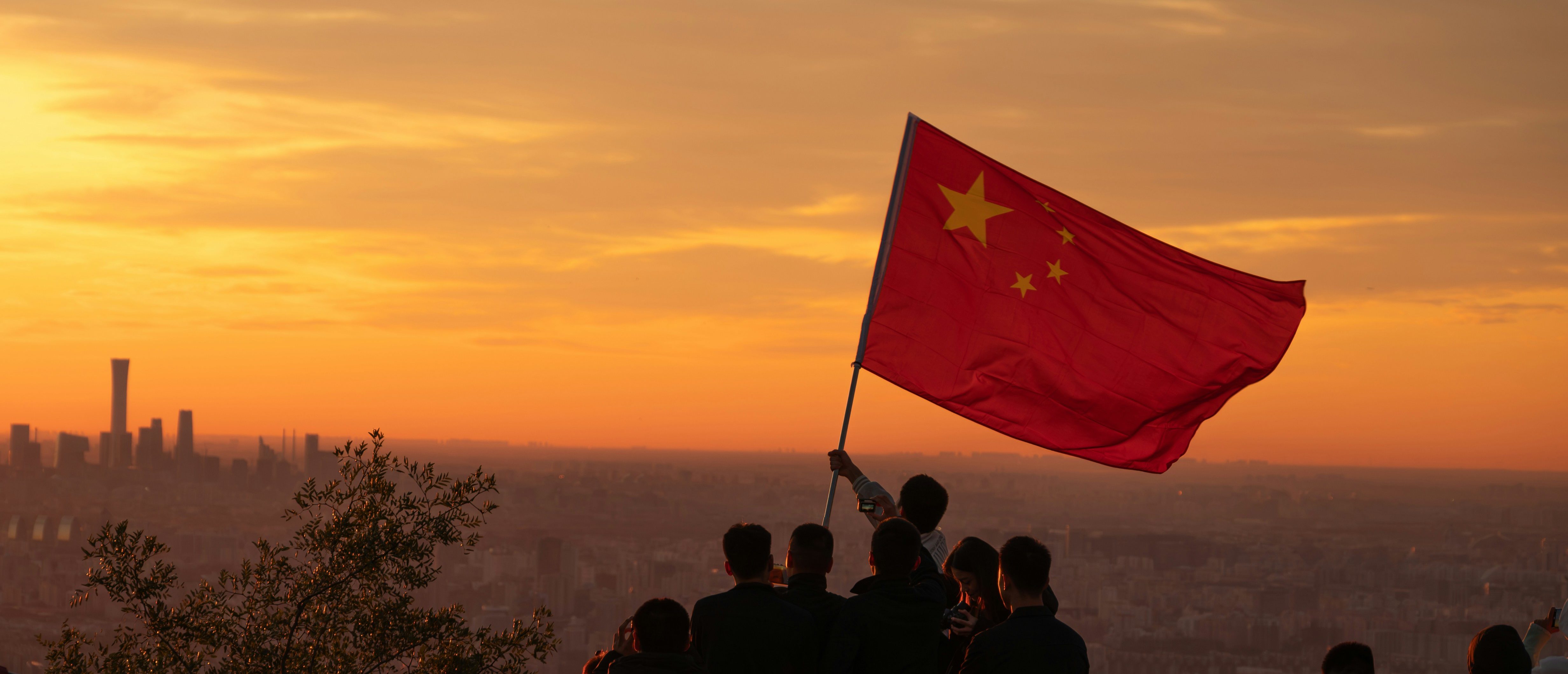
Ran Liwen/Unsplash
A growing consensus holds that Donald Trump’s confrontation with China has weakened the U.S. Some China experts, like former Morgan Stanley Asia Chairman Stephen Roach, argue that the U.S. needs China more than China needs the U.S. The Western press from London to New York tells us that China has the upper hand.
That misses the bigger picture, which I link to here for anyone looking for a good explanation.
The U.S. still has the stronger hand in this new multipolarity. But that advantage is not guaranteed. It can be weakened by bullying, drifting away from reindustrializing the homeland and a prolonged Iran war that will give Beijing a better story to tell the rest of the world.
The U.S.-China relationship is still entangled, but not like it was ten years ago. Supply chains are being rerouted. Washington is less willing to tolerate dependency on China in critical industries. Beijing knows this. So does Wall Street. The U.S. Chamber of Commerce knows it now, as well.
The United States begins this next phase of competition with advantages China does not have.
The U.S. gets along with most of its neighbors and remains tied to Europe. In fact, Europe is increasingly aligning parts of its trade and industrial policy with Washington’s concerns about China, and Asia more broadly. The European Union’s push for greater pharmaceutical security, through its Critical Medicines Act, is one example. Mexico remains perhaps the most important country to the U.S. in this hemisphere. They always get along with U.S. leadership.
China’s neighborhood is different. Beijing has strained relations with Japan and the Philippines, a frozen border dispute with India and a complicated relationship with South Korea, which remains far more aligned with the United States than China. China has influence, money, and reach, but it does not have a friendly neighborhood.
Financially, the United States remains the obvious power center because of the dollar and American capital markets. The argument that the world is about to abandon the dollar is like the “peak oil” theory explaining the Iraq War in 2002.
The U.S. has the deepest bond market. It has all the companies that global money managers want to own. The market cap of the NYSE and Nasdaq are worth more than the combined market capitalization of the exchanges in London, Paris, Frankfurt, Shanghai, Shenzhen, Hong Kong, and Tokyo.
The same is true militarily. The U.S. has not been good at winning wars decisively, but no serious person doubts that America is the strongest military in the world.
There are a few exceptions — critical minerals and renewable energy technologies are obvious examples — but overall, China does not “have hand”, as George Costanza once said in the 1990s sitcom Seinfeld.
The Iran war bruises the U.S. advantage because the longer the Strait of Hormuz remains disrupted, the greater the risk to commodity prices, energy security, and supply chains bound for important Asian allies.
Xi Jinping wants Hormuz back to normal immediately. But the longer the strait remains unreliable, the more likely it is that much of the world blames Trump, not Tehran. That works to Beijing’s advantage.
Since the war began, China has positioned itself throughout Southeast Asia as the adult in the room: a force for stability and peace in contrast to an uncertain and punitive West led by the United States.
Recent polling suggests this narrative is beginning to resonate. The ISEAS-Yusof Ishak Institute’s 2026 State of Southeast Asia survey found that 52% of respondents would align with China over the U.S. if forced to choose, reversing last year’s results.
The longer the Iran war goes on, the more that message will resonate. This could become a blind-side strategic risk for Trump.
The Trump-Xi meeting is over. It is good that the two superpowers can meet and discuss their concerns. The International Monetary Fund praised the meeting.
That meeting does not change the larger reality. The two countries are moving into a new kind of great power competition. Yale historian Odd Arne Westad compares today’s world to the late 1890s and early 1900s, when distrust between rising and established powers fueled populism, instability and eventually world wars.
His warning is useful. History does not repeat, but it does offer patterns.
This time is different, however.
In the first Cold War, the U.S. and Soviet Union had nothing in common except fighting the Germans. No American multinationals were earning a third or more of their revenue from the Soviet Union.
That’s not the case with China, and so to avoid conflict, we need managed trade to manage the conflict.
A new global system is emerging. We don’t know what it will look like yet, but it will be heteropolar — defined not just by China or the U.S., but by other global actors that hold power.
At present, those other actors are American multinationals led by Big Tech, Big Finance, and to a lesser extent, Big Ag. They will have a say in this dispute. They will not make it easier for Trump to manage trade with China, but they give the U.S. some leverage as China races to match those powers with their version of the same.
The winner will be the power the rest of the world sees as more predictable and capable of delivering prosperity without disorder.
Kenneth Rapoza is a senior analyst for the Coalition for a Prosperous America. He was a former staff reporter for the WSJ in Brazil and covered the BRIC countries for Forbes up to 2023.
The views and opinions expressed in this commentary are those of the author and do not reflect the official position of the Daily Caller News Foundation.
All content created by the Daily Caller News Foundation, an independent and nonpartisan newswire service, is available without charge to any legitimate news publisher that can provide a large audience. All republished articles must include our logo, our reporter’s byline and their DCNF affiliation. For any questions about our guidelines or partnering with us, please contact [email protected].