

Foreign Affairs
Trump’s Shipping Insurance Flops As Iran Reportedly Launches Bitcoin-Based Insurance For Hormuz
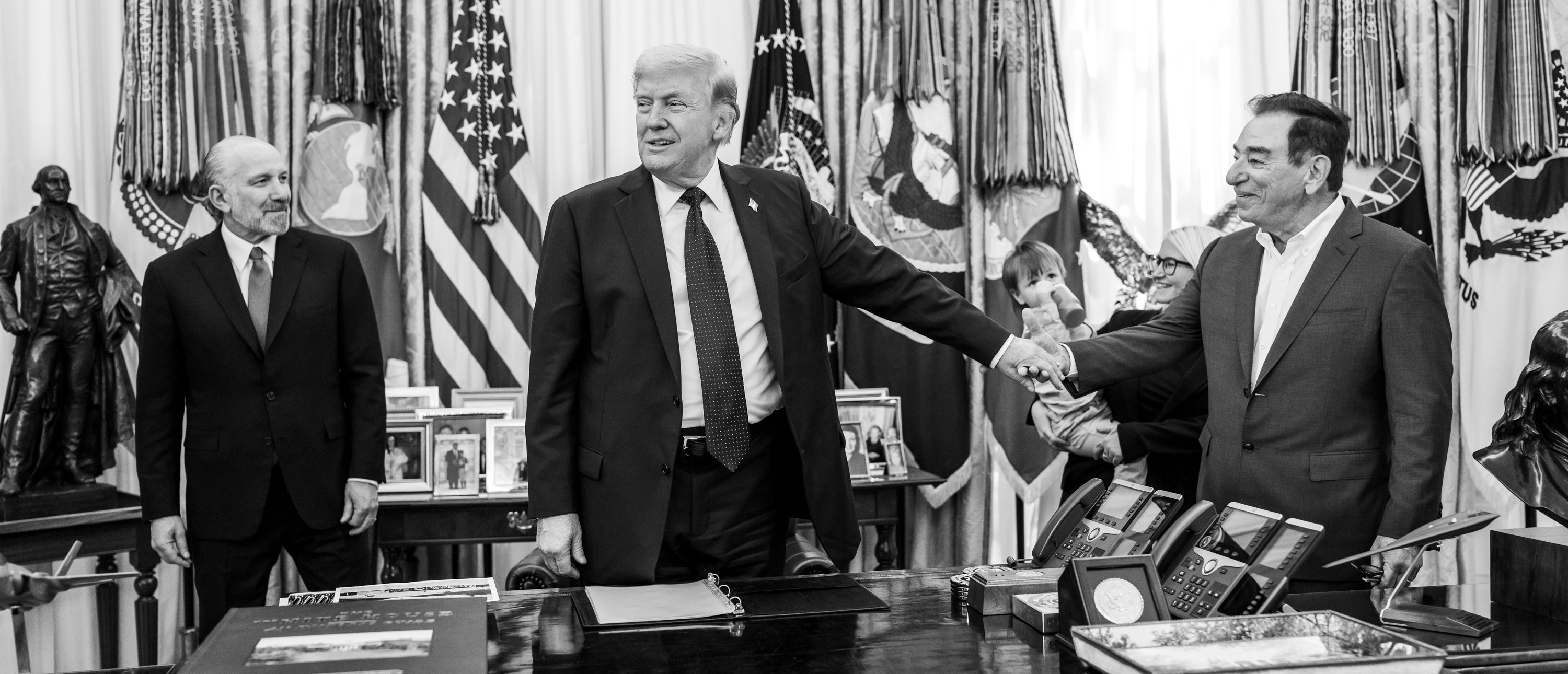
Official White House Photo by Molly Riley
President Donald Trump’s effort to reopen the Strait of Hormuz with a multibillion-dollar maritime insurance program has so far failed to draw buyers.
The U.S. International Development Finance Corporation has not provided a single dollar of coverage since Trump announced the effort in a Truth Social post on March 3, the U.S. International Development Finance Corporation (DFC) to the Daily Caller News Foundation. The program was supposed to be worth up to $40 billion, according to an official press release from the DFC on April 3.
“There are no active policies at this time,” a DFC official told the DCNF. “DFC is in close coordination with the White House and interagency partners. If needed, DFC’s Maritime Reinsurance facility will provide $40 billion of coverage to deliver on President Trump’s directive to help restore maritime trade through the Strait of Hormuz.”
The Strait of Hormuz has been effectively closed to shipping traffic since the U.S.-Israeli war against Iran began on Feb. 28, according to a U.S. Energy Information Administration analysis. Meanwhile, Iran has begun to offer Bitcoin-backed insurance for Iranian shipping companies looking to traverse the strait, Bloomberg reported Monday, citing the Iranian-based Fars news agency, which reportedly obtained government documents.
The DFC announced in the press release that Chubb would be the lead insurance partner for the project.
“The DFC programme’s purpose is to insure ships while transiting under naval escort, and there has been no escort,” the Financial Times reported, citing a Chubb Spokesperson.
The White House, U.S. Central Command (CENTCOM) and Chubb did not immediately respond to requests for comment.
Project Freedom
CENTCOM announced that it would be supporting this mission through Project Freedom in a press release on May 3 in an effort to restore freedom of navigation to the Strait of Hormuz.
“Destroyers, over 100 land and sea-based aircraft, multi-domain unmanned platforms, and 15,000 service members” supported the mission to protect merchant vessels seeking to transit the corridor, CENTCOM said in the press release.
“We’ve now opened a passage through the Strait of Hormuz to allow for the free flow of commerce to proceed,” Adm. Brad Cooper said during a media conference call on May 4. “As the President announced yesterday, U.S. forces in the Middle East are supporting efforts to restore freedom of navigation through the Strait of Hormuz for commercial shipping.”
“Effective IMMEDIATELY, I have ordered the United States Development Finance Corporation (DFC) to provide, at a very reasonable price, political risk insurance and guarantees for the Financial Security of ALL Maritime Trade, especially Energy, traveling through the Gulf,” Trump said in the Truth Social post. “This will be available to all Shipping Lines. If necessary, the United States Navy will begin escorting tankers through the Strait of Hormuz, as soon as possible. No matter what, the United States will ensure the FREE FLOW of ENERGY to the WORLD. The United States’ ECONOMIC and MILITARY MIGHT is the GREATEST ON EARTH — More actions to come.”
Shortly after Project Freedom began, Trump announced that the operation “will be paused for a short period of time” in a Truth Social post on May 5.
The DFC program has reportedly seen no uptake because it was designed around U.S. naval escorts that have not materialized, the FT reported.
When the war broke out, Iran simultaneously attacked multiple oil tankers, Time reported. Since then, random sporadic attacks have taken place, such as the attack on the ADNOC Logistics & Services vessel Barakah on May 4 by two Iranian drones, Reuters reported.
Cooper announced during the media conference call that the U.S. Navy escorted two U.S.-flagged merchant vessels through the strait. However, it appears that no other vessels have been escorted through the strait since then, according to the FT
The Strait of Hormuz remains one of the world’s key energy chokepoints. The key chokepoint supplies nearly one-fifth of the world’s liquid petroleum consumption, according to the U.S. Energy Information Administration analysis.
“Large volumes of oil flow through the strait, and very few alternative options exist to move oil out of the strait if it is closed,” according to the U.S. Energy Information Administration. “In 2024, oil flow through the strait averaged 20 million barrels per day, or the equivalent of about 20% of global petroleum liquids consumption.”
Insurance rates for Gulf shipping remain several times higher than their prewar levels, according to the FT. Current rates range between 3% and 8% of the cost of a vessel, compared with a fraction of 1% before the war, the outlet reported.
All content created by the Daily Caller News Foundation, an independent and nonpartisan newswire service, is available without charge to any legitimate news publisher that can provide a large audience. All republished articles must include our logo, our reporter’s byline and their DCNF affiliation. For any questions about our guidelines or partnering with us, please contact [email protected].