

Commentary: Big Tent Ideas
Washington Has A Better Hand In Africa. But Will It Play It Against Beijing?
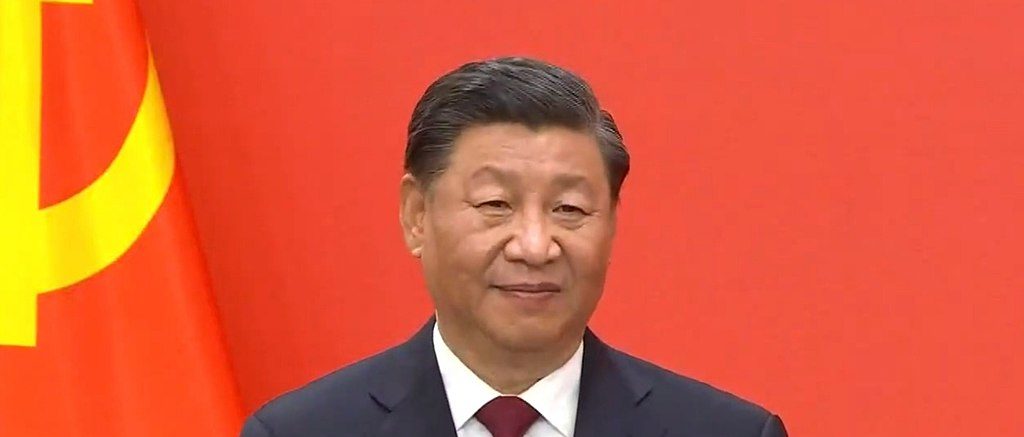
China News Service / Wikimedia Commons
When President Donald Trump and President Xi Jinping sat down in Beijing this week, most of the world was watching for signals about tariffs, Taiwan and technology.
Fair enough. But if you want to understand where the real long-term competition between Washington and Beijing will be won or lost, look south — about 7,000 miles south, to be precise.
Africa is no longer a footnote in great power competition. It is the main event. And America keeps showing up unprepared.
Africa holds roughly 30% of the world’s proven critical mineral reserves: cobalt, lithium, copper, graphite, rare earths and the building blocks of every battery, semiconductor, and weapons system that will define the next century. Eleven of the world’s twenty fastest-growing economies in 2025 are African.
The continent’s working-age population will grow by 740 million people by 2050, the fastest expansion of any region on earth. And yet Washington’s strategic engagement with Africa has historically oscillated between humanitarian concern and benign neglect, with occasional bursts of attention whenever China does something alarming.
China noticed the opportunity decades before Washington did. Beijing spent twenty years building ports, railways, power plants and telecommunications infrastructure across the continent. This was not out of generosity, but out of strategic calculation.
Speed of execution, state-backed financing and a deliberate indifference to governance questions gave China a head start that cannot be wished away.
But here is what the conventional wisdom misses: China’s early advantage is not the same as a permanent one. Ask Kenya.
In 2014, Nairobi borrowed roughly $5 billion from China’s Export-Import Bank to build the Standard Gauge Railway from Mombasa to Nairobi, a project hailed as a symbol of modernization. Today it is more often cited as a cautionary tale. Passenger numbers missed forecasts, freight traffic disappointed and Kenya now spends more than $1 billion every year servicing that debt — a sum that consumed more than 80% of its external debt servicing budget at its peak. The International Monetary Fund has classified Kenya at high risk of debt distress. The railway got built. The bill is still coming due.
Kenya is not alone. Chad, Ethiopia, Ghana and Zambia have all undergone debt restructuring in recent years, in part due to Chinese loans that looked attractive at signing and ruinous at repayment. The conversation on the continent has shifted. Leaders who once welcomed Beijing’s checkbook without conditions are asking harder questions, and that creates a genuine opening for the United States, if Washington is smart enough to take it.
The Trump administration has the right instincts in places. The U.S. International Development Finance Corporation, the Export-Import Bank, and the Prosper Africa initiative represent serious tools for private-sector-led engagement that can compete with Chinese state financing on quality, transparency and long-term reliability.
The administration’s focus on critical minerals supply chain security is exactly the right frame. Cobalt from the Democratic Republic of Congo and copper from Zambia are national security assets, and treating them as such is long overdue.
But tools are only as good as the strategy behind them. And the strategy too often defaults to a single question: how do we counter China? That is the wrong starting point, not because China isn’t a serious competitor, but because African governments can read the room. A relationship built entirely around “we’re not China” is transactional at best and patronizing at worst. Fifty-four countries with a combined GDP of $2.8 trillion deserve a more serious pitch.
The smarter approach starts with what America actually has to offer: transparent financing with enforceable standards, technology that doesn’t come with surveillance built in, private capital that can outlast political cyclesand institutions that survive changes in government on both sides of the Atlantic. These aren’t abstractions; they’re competitive advantages that China genuinely cannot match.
What would a serious strategy look like in practice?
It means showing up before the crisis rather than after. It means DFC and EXIM financing that moves at a speed African governments can actually work with — because if the American answer to a port financing request takes three years and the Chinese answer takes three months, we already know how that ends.
It means treating critical minerals agreements as strategic partnerships rather than extraction arrangements. And it means recognizing that the countries best positioned to resist Chinese pressure are the ones with strong institutions, diversified economies, and real sovereignty — which means American engagement has to build those things, not just exploit them.
The Beijing summit was many things. What it wasn’t was a resolution of the underlying competition for the resources, relationships and strategic geography that will shape the next fifty years. That competition runs through Kinshasa and Nairobi and Lagos as surely as it runs through the Taiwan Strait.
America has the better hand. The question is whether Washington has the patience and discipline to play it.
James Carter is a policy advisor with America’s Economy First. He previously served as director of the Center for American Prosperity at the America First Policy Institute and as deputy undersecretary at the U.S. Department of Labor where he oversaw international affairs. Jacob Choe is an international strategist specializing in Africa, emerging markets, and critical minerals supply chains. He is a member of the Bretton Woods Committee and a Ben Franklin Fellow.
The views and opinions expressed in this commentary are those of the author and do not reflect the official position of the Daily Caller News Foundation.
All content created by the Daily Caller News Foundation, an independent and nonpartisan newswire service, is available without charge to any legitimate news publisher that can provide a large audience. All republished articles must include our logo, our reporter’s byline and their DCNF affiliation. For any questions about our guidelines or partnering with us, please contact [email protected].