

Commentary: Big Tent Ideas
Trump’s DOJ Can Get Us One Step Closer To Ending Child Exploitation. Here’s Where It Should Start
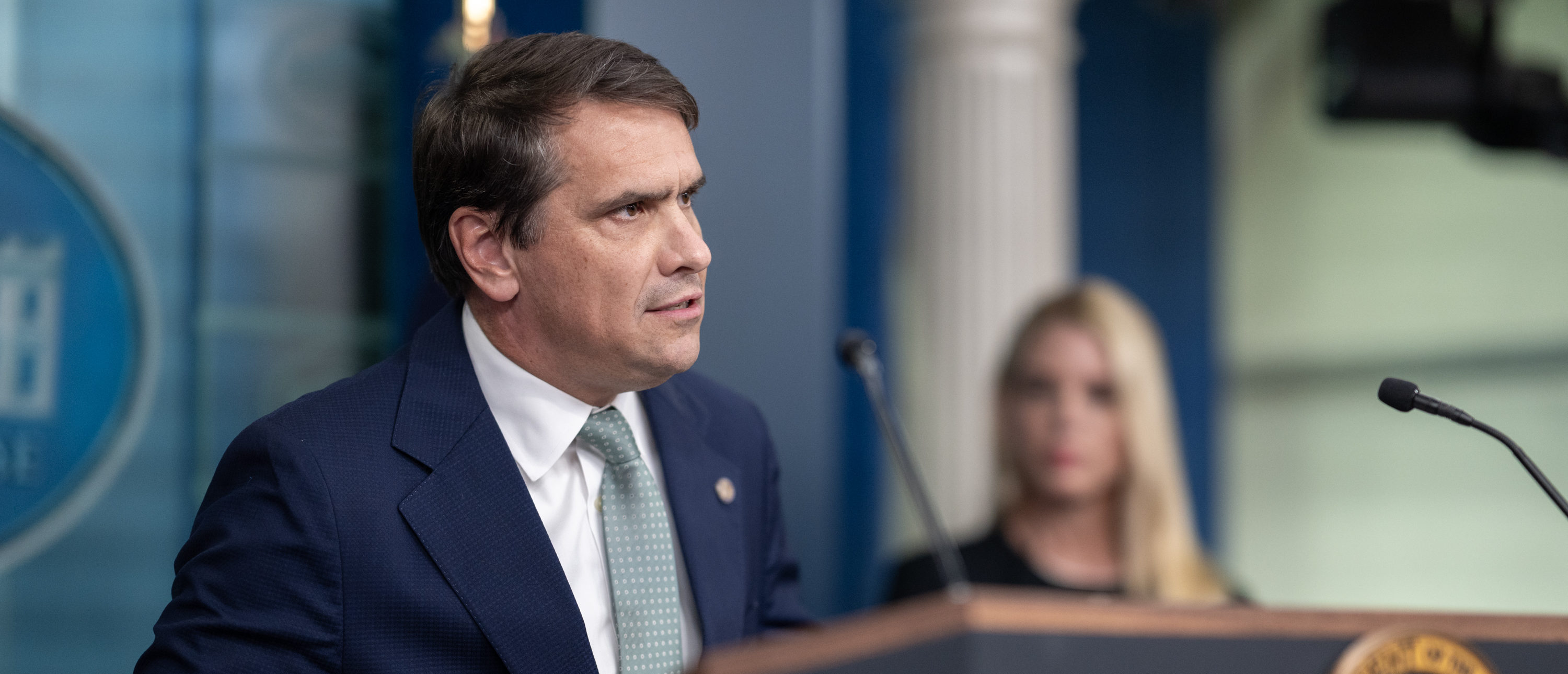
(Official White House Photo by Molly Riley)
In a 2023 report, then-Attorney General Merrick Garland told Congress that “[c]hild exploitation crimes and the threats facing children have been exploding in scale, complexity, and dangerousness.” Even in today’s political climate, protecting children from exploitation has widespread support across partisan and ideological lines.
Just as Child Abuse Awareness Month closed in April, a coalition of grassroots groups sent a letter to Acting Attorney General Todd Blanche urging stronger leadership.
A few laws Congress has passed to combat this scourge require reports on the Justice Department’s efforts. The 2008 PROTECT Our Children Act, for example, requires the attorney general to submit a biannual National Strategy for Child Exploitation Prevention and Interdiction. The law spells out nearly two dozen specific areas that the strategy must address.
Attorneys general of both parties have failed to meet this responsibility. Of the nine reports required so far, only three have been submitted at all, none of them even close to its deadline. Every Attorney General from Eric Holder to Pam Bondi has failed to submit at least one report altogether.
The General Accountability Office documented this poor record in a 2022 report, noting that the strategy “is not up-to-date on key technology advances that are making it more difficult to catch perpetrators.” The Justice Department, GAO concluded, is simply “not making the strategy a priority.”
This has to change. The number of children identified in child sexual abuse material has risen more than ninefold since Congress first required a national strategy, and we know that only a fraction of victims are actually identified.
Technology has also created the second urgent need for leadership. The direct, horrific harm of child pornography production is not difficult to grasp. But it is the distribution and possession of this material that drives the entire exploitive enterprise and, with the internet, will continue indefinitely.
These so-called “non-contact” crimes involve an ever-changing universe of individuals, most of whom will never be identified or prosecuted but all of whom participate in victimizing children.
Federal law requires that victims of such crimes receive the “full amount” of their losses in restitution, but judges increasingly applied this law in child pornography possession cases so that more than 90 percent of offenders were not required to pay any restitution at all and victims had to sue the small fraction that were one-by-one, most of the time ending up with nothing.
In 2018, Congress unanimously enacted a law, introduced by Senator Orrin Hatch (R-UT), to better respond to the nature of these crimes and provide more meaningful restitution to victims. The attorneys general of all 50 states, four’ territories, and the District of Columbia endorsed it. Since then, the percentage of defendants who avoid restitution has plummeted and the median amount of restitution victims actually receive has nearly tripled.
The law also required the attorney general to report to Congress on how the Justice Department is implementing this law and on the financial status of the victim restitution fund that it created. That report was due “[n]ot later than” Dec. 7, 2020, but has never been submitted.
The letter sent last month to Acting Attorney General Blanche was signed by dozens of organizations and other leaders, including state legislators. It closes this way:
“More than four decades ago, in New York v. Ferber, the Supreme Court recognized that ‘[t]he prevention of sexual exploitation and abuse of children constitutes a government objective of surpassing importance.’ Turning that aspiration into reality requires leadership and determined action. Submitting the reports that Congress has required, with candid assessments of the crisis facing our children and meaningful action steps to tackle that crisis, can show that protecting children from exploitation is indeed a top priority.”
Thomas Jipping is a senior legal fellow at the Edwin Meese III Institute for the Rule of Law at Advancing American Freedom Foundation.
The views and opinions expressed in this commentary are those of the author and do not reflect the official position of the Daily Caller News Foundation.
All content created by the Daily Caller News Foundation, an independent and nonpartisan newswire service, is available without charge to any legitimate news publisher that can provide a large audience. All republished articles must include our logo, our reporter’s byline and their DCNF affiliation. For any questions about our guidelines or partnering with us, please contact [email protected].