

Politics
Lawmakers Agree Jack Smith’s Arctic Frost Should Never Happen Again — Despite Delay On Action
Screenshot/YouTube/CSPAN
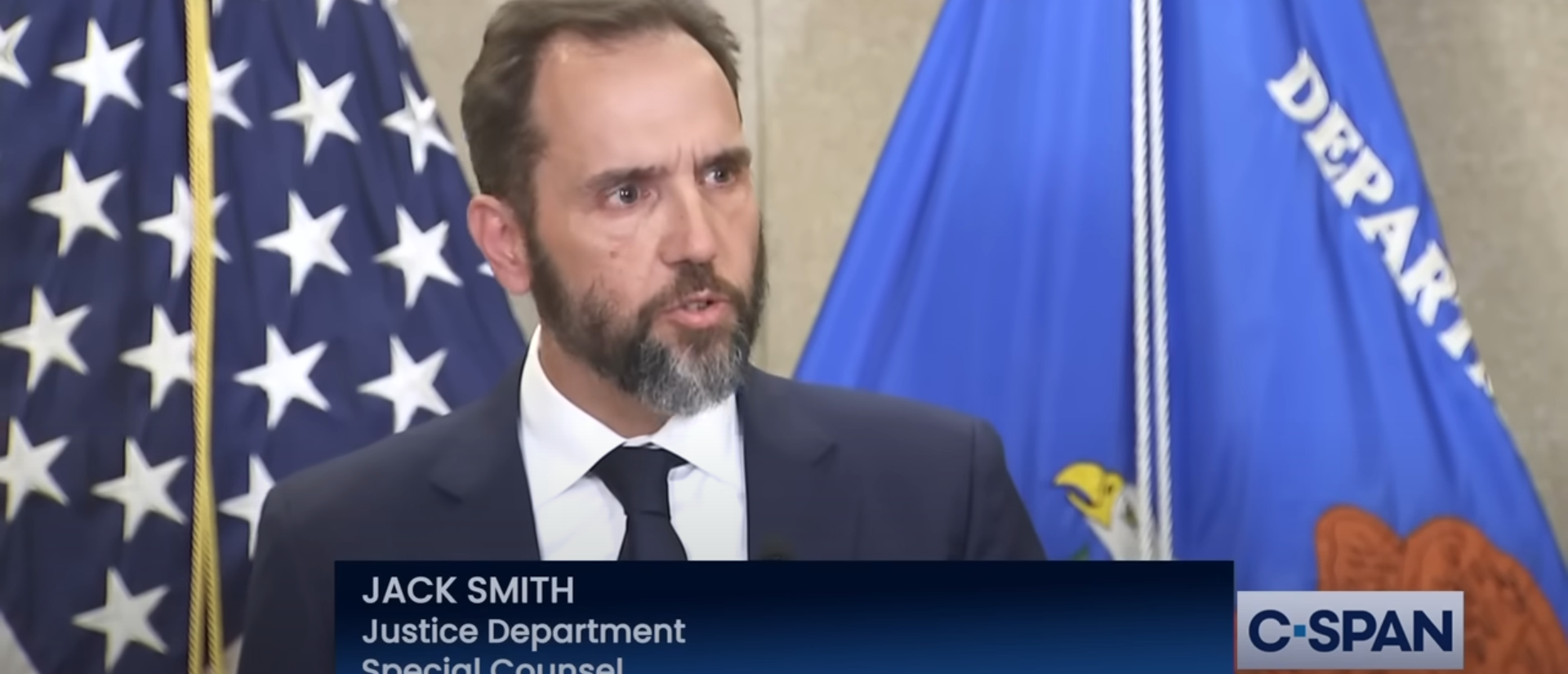
In the wake of former special counsel Jack Smith obtaining data from Republicans without notification under the Arctic Frost investigation, lawmakers are moving to limit federal prosecutors’ ability to secretly obtain phone records.
The NDO Fairness Act would restrict non-disclosure orders (NDO) on American citizens and require notification unless a judge approves a delay, aiming to limit the Department of Justice’s (DOJ) use of secrecy in investigations. An NDO is a legal surveillance tactic that prevents service providers from notifying customers that their data has been disclosed to law enforcement, thereby avoiding the risk of jeopardizing an active investigation.
The NDO Fairness Act passed the House Judiciary Committee with unanimous support in November 2025. Originally scheduled for a House vote in February 2026, the vote was postponed due to a partial government shutdown.
A source familiar with House and Senate discussions said the bill is likely to pass the House with broad bipartisan support, noting there has been “no opposition” and that it will likely move quickly when brought up.
The source said that Senate lawmakers are waiting for the House to act first, with the Senate expected to take up the bill after House passage.
The Daily Caller News Foundation asked Republican House Speaker Mike Johnson’s office for a timeline for bringing the NDO Fairness Act to the floor and for the reasons it has yet to receive a vote despite advancing out of committee.
Johnson’s office did not respond to any of DCNF’s questions.
The Senate bill was introduced with strong bipartisan support by Republican Utah Sen. Mike Lee and Democratic Connecticut Sen. Chris Coons.
In 2023, under the administration of former President Joe Biden, Smith used NDOs to obtain phone records of GOP lawmakers and officials to investigate efforts to overturn the 2020 presidential election.
Phone records belonging to Republican South Carolina Sen. Lindsey Graham, Republican Missouri Sen. Josh Hawley, and allies close to former President Donald Trump, such as White House Chief of Staff Susie Wiles, were accessed without notification.
Legal experts and privacy advocates have raised concerns that the use of nondisclosure orders could implicate Fourth Amendment protections against unreasonable searches and seizures. In 2018, the Supreme Court recognized privacy protections in digital data in Carpenter v. United States, ruling that accessing certain cell phone records constitutes a search under the Fourth Amendment, while civil liberties groups such as the American Civil Liberties Union (ACLU) warn that secrecy provisions can limit individuals’ rights to free speech and due process.
“When the government obtains your data and uses a nondisclosure order to block the service provider from telling you, you have effectively been stripped of any practical ability to hold the government accountable for unlawful surveillance,” Kia Hamadanchy, senior policy counsel at the ACLU told the DCNF in a statement. “Notice is the gateway to every other legal remedy. Without it, you can’t hold the government accountable for overreach.”
Lee, who is sponsoring the Senate version of the bill, told the DCNF that the legislation is aimed at strengthening constitutional protections and limiting the government’s use of secrecy orders.
“The government should not be able to hide domestic spying activities behind non-disclosure orders,” Lee said, adding that the bill would “limit the use and duration of secrecy orders and help safeguard all Americans from unjustified secrecy.”
Graham criticized the investigation during a Senate Judiciary Subcommittee hearing in February.
“If the shoe were on the other foot, it’d be front-page news all over the world that Republicans went after sitting Democratic senators’ phone records,” Graham said.
The DCNF asked Graham’s office for comments on the bill and if he thinks the House should move more quickly to advance the legislation.
Graham’s office did not immediately respond.
“This abuse proves why NDO reform is urgent,” GOP strategist Alex deGrasse said, calling the use of nondisclosure orders in the investigation an example of “dangerous weaponization of government.”
He added that the situation “highlights the need for stronger safeguards to ensure transparency and due process.”
Democrats across the aisle have maintained a similar tone as their colleagues on the risks of NDOs.
Democratic Maryland Rep. Jamie Raskin, his party’s top member on the House Judiciary Committee, vocalized his support for the bill in a statement released in January.
“As a matter of law, that nondisclosure order can last forever. As a matter of Department policy, nondisclosure orders now typically last one year. Even when our investigators can be trusted to be professional and good faith actors, many of these orders are unnecessarily and unfairly long. They prevent us from any recourse, or even routine oversight, until well after the period of discovery and surveillance,” Raskin stated.
In August 2025, federal officials launched a probe into former Special Counsel Jack Smith for alleged Hatch Actviolations, a federal law that restricts executive branch employees from engaging in partisan political activity.
“Jack Smith used and abused NDOs in the worst way possible” to conceal the seizure of lawmakers’ phone records, a administration official told the DCNF, adding that the secrecy was intentional and that Smith “knew that if it became public … there would be an outrage — so he used NDOs to keep it secret.”
The official said the NDO Fairness Act would address those concerns by requiring prosecutors to meet a higher threshold before obtaining records in secret, arguing such tools “should be used for going after real criminal or drug kingpins” and “shouldn’t be used for political lawfare.” The official described the seizure of lawmakers’ records as “the height of prosecutorial abuse.”
The official also added that Republican lawmakers whose records were obtained under NDOs support the legislation and are seeking broader reform, but recognize the NDO Fairness Act as a bill that can realistically pass with strong bipartisan support.
All content created by the Daily Caller News Foundation, an independent and nonpartisan newswire service, is available without charge to any legitimate news publisher that can provide a large audience. All republished articles must include our logo, our reporter’s byline and their DCNF affiliation. For any questions about our guidelines or partnering with us, please contact [email protected].