

Commentary: Big Tent Ideas
What The UAE’s OPEC Breakup Actually Signifies
Unsplash/Saj Shafique
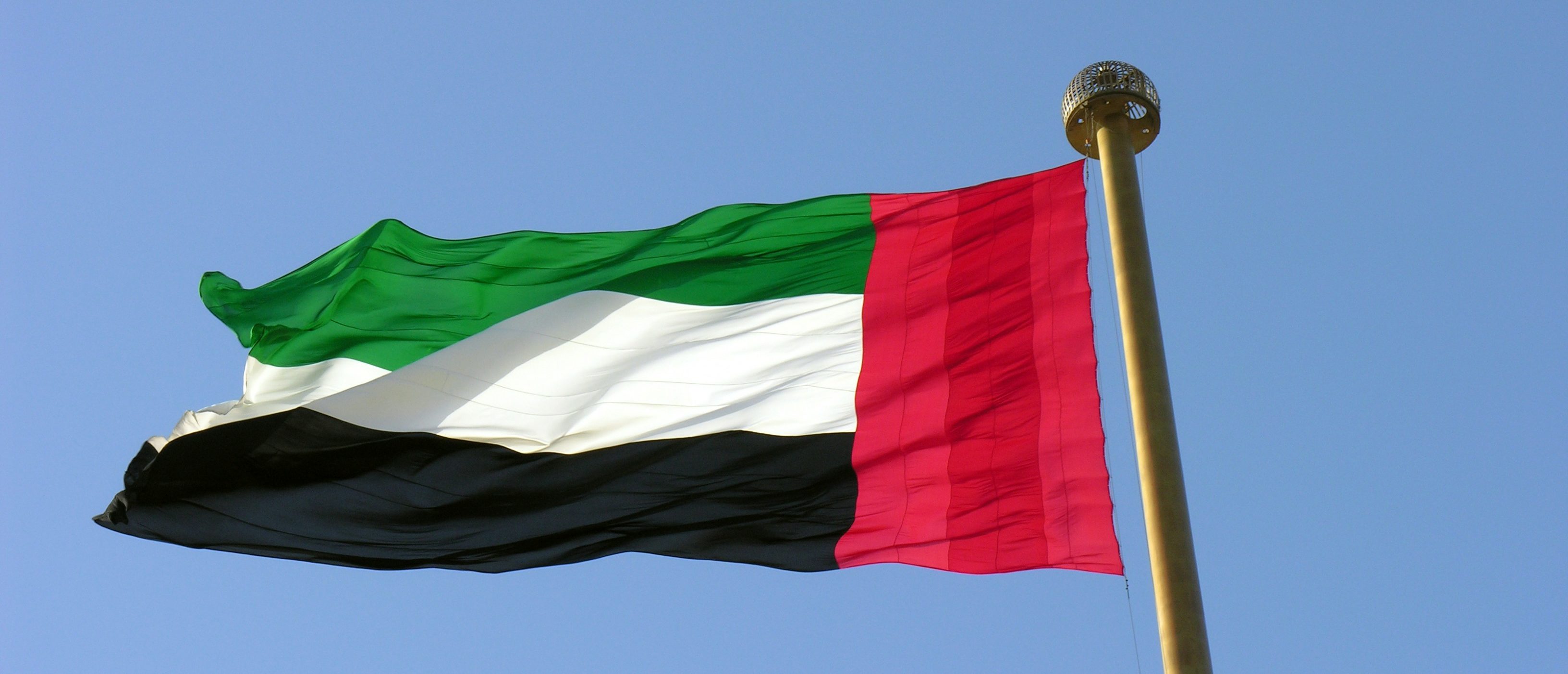
In a move that should surprise no one who’s been paying attention to the shifting realities of global energy, the United Arab Emirates announced Tuesday it is withdrawing from both OPEC and the broader OPEC+ alliance, effective May 1.
After more than five decades of membership — first through Abu Dhabi in 1967 and then as the UAE since 1971 — the federation is done sacrificing production flexibility on the altar of cartel-managed scarcity.
The official statement was straightforward: The UAE has “made significant contributions and even greater sacrifices” for the collective good of OPEC and OPEC+. Now, it’s time to prioritize “national interest” and its “commitment to our investors, customers, partners and global energy markets.” Going forward, Abu Dhabi will gradually ramp up output in line with actual demand and market conditions, while continuing to invest across the full energy spectrum.
This pragmatic energy policy decision is a rational move by a government acting in the national interests of its country. The UAE sits on some of the world’s lowest-cost, most efficient reserves. Why should this major producer tie its hands behind its back with artificial quotas when global demand keeps proving the prophets of imagined “peak oil” wrong?
The announcement points to near-term volatility in the Arabian Gulf and Strait of Hormuz alongside sustained long-term growth in energy needs. Translation: We’re not waiting around for cartel consensus while the world still desperately needs reliable hydrocarbons. This isn’t surprising in the wake of last month’s laughable OPEC+ announcement that it would plan to raise cartel production a meager 206,000 barrels per day amid a global market that is undersupplied by roughly 10 million bpd.
Geopolitically, the move comes at a fascinating moment. It aligns perfectly with the realist, sovereignty-first spirit animating the so-called Donroe Doctrine, President Donald Trump’s updated corollary to the Monroe Doctrine that asserts American primacy in the Western Hemisphere while pushing back against Chinese, Russian, and Iranian encroachment.
The Donroe Doctrine rejects multilateral handcuffs in favor of unapologetic national interest and strategic dominance. The UAE’s decision mirrors that same mindset, even from half a world away. Why subordinate your sovereign resources to a quota system increasingly dominated by Russia’s revenue needs and Iran’s survival strategy?
The influence of the OPEC+ alliance has been diminishing for years. The UAE has long chafed under production limits that prevented it from fully utilizing its spare capacity. Exiting now hands Abu Dhabi full control over its massive reserves and allows it to respond nimbly to market signals rather than Moscow’s political calculus.
In a Trump-led world where energy dominance is again viewed as a national security imperative, this kind of independent action by a key Gulf producer is bullish for supply security and price stability. It weakens the cartel’s grip at precisely the time when American leadership is reasserting itself against adversarial influence.
This exit from OPEC seems less a rejection of multipolarity than a reminder that rational acting governments prioritize national interest over ideological solidarity.
This is what China does — why shouldn’t the UAE do the same? Abu Dhabi isn’t abandoning hydrocarbons or global markets: It’s doubling down on them on its own terms.
If anything, the move exposes the limits of cartel cohesion when it comes to actual energy policy. Russia wants high prices to fund its war machine. The UAE wants the freedom to meet demand and maximize long-term value for its sovereign wealth funds and citizens.
More than anything else, UAE’s exit plays into the natural evolution of a world that still runs on oil and gas and will continue to do so for decades. The age of managed scarcity enforced by cartels is giving way to pragmatic, market-responsive production from the most efficient players. That’s good news for consumers, good news for energy security and a direct rebuke to the net-zero fantasists who’ve spent years pretending fossil fuels are yesterday’s news.
In January, Canadian Prime Minister Mark Carney spoke of the evolving “New World Order,” a reference to the view that the world is evolving into spheres of influence dominated by either the United States or China.
But that analysis is overly simplistic, and the UAE seems to be carving out a third path, one in which market factors reign and rational actors leverage their resource blessings to enhance their own national security.
David Blackmon is an energy writer and consultant based in Texas. He spent 40 years in the oil and gas business, where he specialized in public policy and communications.
The views and opinions expressed in this commentary are those of the author and do not reflect the official position of the Daily Caller News Foundation.
All content created by the Daily Caller News Foundation, an independent and nonpartisan newswire service, is available without charge to any legitimate news publisher that can provide a large audience. All republished articles must include our logo, our reporter’s byline and their DCNF affiliation. For any questions about our guidelines or partnering with us, please contact [email protected].