

Commentary: Big Tent Ideas
Iran War Reveals Big Weakness In America’s Energy Armor
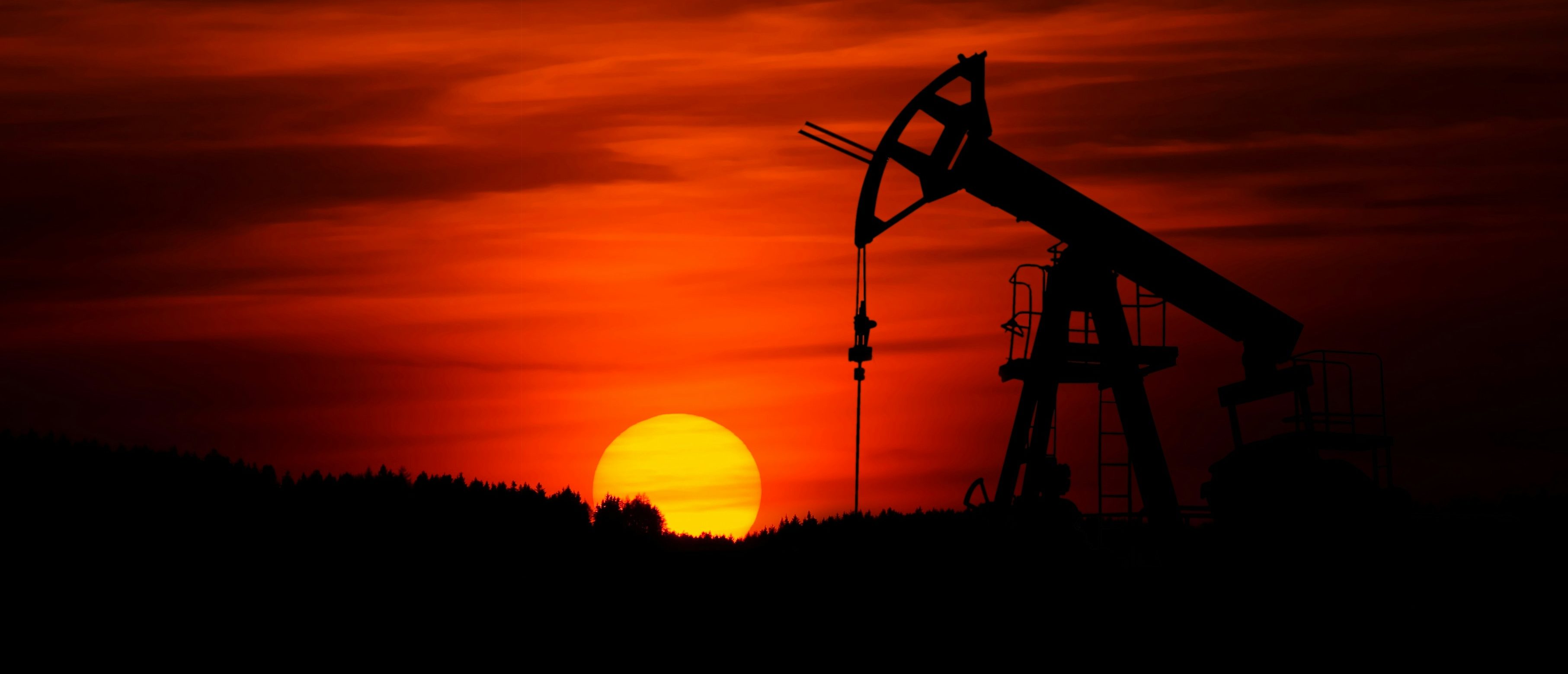
(Photo via Zbynek Burival / Unsplash)
President Trump announced a ceasefire with Iran — the world’s leading exporter of terrorism — to the praise of world leaders. Time will tell if Iran continues to cooperate or if the military operation will continue.
Regardless of how the situation evolves, the conflict has underscored a persistent vulnerability in U.S. energy security. When Iran closed the Strait of Hormuz, gas prices spiked from California to the Carolinas, making it clear that we’re still too dependent on foreign oil.What the U.S. needs is an all-of-the-above energy strategy that emphasizes domestic production. That means more fossil fuels, more nuclear power, and, yes, more renewable energy too.
That’s how we free ourselves from the whims of the Middle East and protect our nation.
Because of President Trump’s “drill baby drill” energy policy, the fracking revolution that began in the 2010s and a recent surge in domestic oil drilling, the U.S. today is the world’s largest producer of both natural gas and oil. About 25 percent of the world’s natural gas and 21 percent of its oil come from America.
This has helped stabilize global oil markets and made the U.S. less dependent on hostile petrostates like Iran and Venezuela. But that dependence has never completely gone away.
Economists often compare the global oil market to a bathtub: countries put in and countries take out. The United States is no different — we put a lot of oil into the tub, but we withdraw a lot too.
Hence why the Strait of Hormuz closure sent U.S. gas prices soaring — there’s less oil in the bathtub overall thanks to Iran choking the global supply.
This isn’t the first time other nations have exploited this dependence. In 1973, several Arab nations shut off oil shipments to the U.S. over our support for Israel.
In an increasingly dangerous world, even a lessened dependence is no longer acceptable. The U.S. needs to double down on its status as a petro-power. We need to expand our drilling, plus continue to remove impediments to fracking and natural gas liquefication.
But our efforts can’t stop there. A national security threat requires a comprehensive response, an all-of-the-above strategy that is welcoming to an abundance of different energy sources.
This includes nuclear power, which our country has lately neglected.
The U.S. generates about 19% of its electricity from nuclear, compared to 60% from fossil fuels. Yet experts agree nuclear energy is clean and safe. The odds of another Three Mile Island-style meltdown are virtually zero.
The U.S. should push for more nuclear power by slashing through the burdensome red tape that often paralyzes plant construction and educating the public about how safe the technology is. We can also provide financial incentives for new plants to help overcome high capital costs.
And, yes, Washington should embrace renewable energy too — because no foreign country has yet figured out how to shut off the sun.
Renewables might have a reputation for being expensive, but in 2026, the facts tell a different story. Utility-scale storage is often at least as cost-effective as most other energy sources translating into real savings for families and businesses. And thanks to battery storage, solar is becoming a lot more useful too, storing power when the sun is out and using it when demand is highest.
Solar projects are also far faster to build than most energy infrastructure, taking an average of only 18 months to come online as opposed to years.
Of the 22 states that generate more renewable power than the average — most of them red states — 17 had electricity costs below the national average. These states also often fare better during winter storms when pipelines can freeze and fail.
That doesn’t mean that solar makes sense in every case, but in many parts of the country, it’s the best option available. Reflexively writing it off because of outdated political connotations would be foolish for our energy security.
Too often, energy in the United States has been politicized. Democrats bad-mouth fossil fuels while relying on natural gas to heat their homes. Republicans vote against renewable energy even as their home states benefit from it.
Yet the Strait of Hormuz crisis shows the stakes are too high for partisan bickering. Energy security is a matter of American safety and prosperity, one that should transcend the left-versus-right divide.
It’s time for America to achieve true energy independence. That can only be done when we unleash the dynamism of a true all-of-the-above energy strategy.
Come the next Middle East crisis, we’ll be glad we did.
Fred Fleitz is a former Chief of Staff to President Trump’s National Security Council.
The views and opinions expressed in this commentary are those of the author and do not reflect the official position of the Daily Caller News Foundation.
All content created by the Daily Caller News Foundation, an independent and nonpartisan newswire service, is available without charge to any legitimate news publisher that can provide a large audience. All republished articles must include our logo, our reporter’s byline and their DCNF affiliation. For any questions about our guidelines or partnering with us, please contact [email protected].