

National Defense
Navy Sighs In Relief As Trump Floats $65,000,000,000 To Confront China’s Shipbuilding Empire
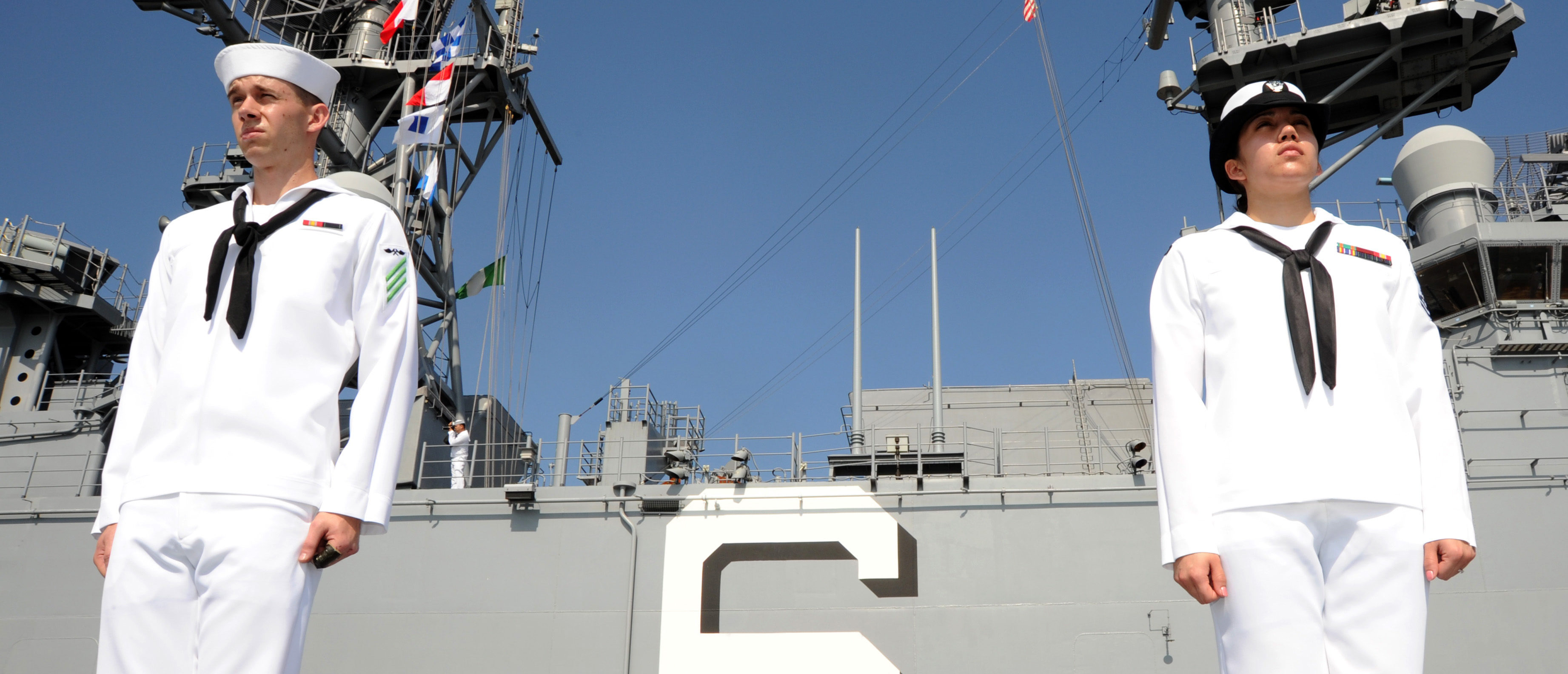
(DoD photo by Mass Communication Specialist 1st Class John Scorza, U.S. Navy/Released)
NATIONAL HARBOR, Maryland — President Donald Trump is pushing to revive America’s long-dormant shipbuilding capabilities, and senior Navy officials say the administration’s plan to pour billions into the effort marks a critical first step to bridging the gap with Beijing.
The president’s defense budget for 2027 seeks to increase overall defense spending to $1.5 trillion, a 40% to 44% increase, with $65.8 billion going toward America’s hollowed-out shipbuilding industrial base. It’s a much-needed lifeline for U.S. shipbuilding and marks the biggest increase in decades, experts say, as China has risen to become the world’s global leader in ship production.
“China’s shipbuilding capacity outstrips the United States 236-to-1,” former U.S. Navy Capt. and current Senate candidate Morgan Murphy, told the Daily Caller News Foundation. “That is a national security emergency.”
“It helps narrow the gap,” Secretary of the Navy John C. Phelan told the DCNF at the Sea Air Space 2026 expo Monday, noting that Chinese ship quality is inferior to vessels made in U.S. shipyards.
“China has basically subsidized their shipbuilding industry and has a massive share on the commercial side, which they are using to subsidize their military side,” Phelan said. “I think that it’s a start, certainly a start to help that gap.”
A particular weak point is America’s shipbuilding infrastructure, Phelan said, declaring it to be a “real problem” that needs to be fixed.
“One, you know, pier. I won’t say where, where half of it is structurally unstable,” Phelan told the DCNF. “Now, the Navy, being innovative like they are, has figured out how to make the other half of the pier work. But guess what? It takes three times as long to do work.”
He explained that the return on investment from fixing the pier would take about 14 months to mature. He said the U.S. won’t spend the money because “no one’s really done the math.”
“Let us sink in a historic budget request like we have not seen in decades,” Christopher Miller, portfolio acquisition executive for PAE Maritime, said during a panel on advancing Navy and Coast Guard shipbuilding on Monday. “It’s not just about the battle force. It’s also about our support ships, our auxiliaries, our logistics force and the industrial base.”
“The whole of government, whole of nation shipbuilding order of 41 ships alone represents the largest demand signal to the maritime industrial base since the administration of Franklin D. Roosevelt,” a White House fact sheet announcing the budget says.
‘Can Build 200 Times Our Rate’
China has the largest shipbuilding industry in the world, using its shipyards to produce both military and commercial vessels. The country produces roughly 50% of all commercial ships globally, while the U.S. makes up less than 1%, according to RAND.
The new budget allocates funding for “President Trump’s Golden Fleet,” including the Trump-class battleship, which will be a nuclear-armed warship based on a statement provided by Navy Secretary John Phelan during a press conference on Dec. 22.
Navy’s new class of Large Surface Combatants: THE BATTLESHIP.
The most lethal surface combatant ever constructed. 🇺🇸 pic.twitter.com/7AH5G4IJj5
— The White House (@WhiteHouse) December 22, 2025
“Trump is the first leader in my lifetime who is working to bring American industrial jobs back home, which is not only critical to our economy, but also our national security,” Murphy told DCNF. “U.S. policymakers spent 50 years telling Americans that everyone needed to go to college and that a programmer in the information workspace was more important than a welder.”
“Since the 1960s, 14 U.S. shipyards that construct ships for the Navy have closed, and three have left the defense industry,” according to a Jan. 16, 2025, report from the Office of the U.S. Trade Representative (USTR).
Fewer shipyards contribute to less competition in the industry, according to the USTR report, leading to higher prices and growing costs.
“They [China] can build 200 times our rate,” Adm. James Kilby said during a Center for Strategic and International Studies panel on May 13. “So we should all take pause on that and understand that.”
“We made a decision as a nation to emphasize other areas,” Adm. Kilby said. “So now there’s an opportunity to rebalance.”
The 40%-44% bump in overall defense spending marks an increase not seen since the Korean War era, and would maintain or increase the procurement of existing battle force platforms, including amphibious vessels, Columbia-class and Virginia-class submarines.
“The shipbuilding industrial base has not met the Navy’s goals in recent history,” according to a U.S. Government Accountability Office report published in February 2025.
“What can we do to cut costs?” Phelan said. “What can we do to make this more efficient? What can we do to make the design more simple? What are the areas where we think we can save or not save?”
But money is not the only thing needed to revitalize American shipbuilding. Labor is just as key to the equation.
“So there’s a human capital piece of this too,” Adm. Kilby said when discussing the requirements to bring this shipbuilding initiative off paper and into the real world.
The admiral referenced specialized training facilities that help bring workers to the shipyards, where they are sorely needed. Specifically, he mentioned the Accelerated Training in Defense Manufacturing program located in Danville, Virginia.
“We’ll have 900 graduates a year at a 90 percent placement in our defense industrial base,” Adm. Kilby said. The school provides training for multiple disciplines necessary for shipbuilding, including additive manufacturing, welding, quality assurance and CNC machining.
This much-needed labor will significantly contribute to the new shipbuilding initiatives outlined in the Trump administration’s “Rebuilding Our Military” fact sheet. It remains unclear whether this push will be enough to match China’s shipbuilding capabilities.
“Quantity does have a quality of its own, and I think the president has correctly identified the fact that we need to get our maritime industrial base back up,” Phelan told the DCNF.
All content created by the Daily Caller News Foundation, an independent and nonpartisan newswire service, is available without charge to any legitimate news publisher that can provide a large audience. All republished articles must include our logo, our reporter’s byline and their DCNF affiliation. For any questions about our guidelines or partnering with us, please contact [email protected].