

National Defense
Even $1.5 Trillion Might Not Be Enough To Fuel Trump’s Pentagon Dreams
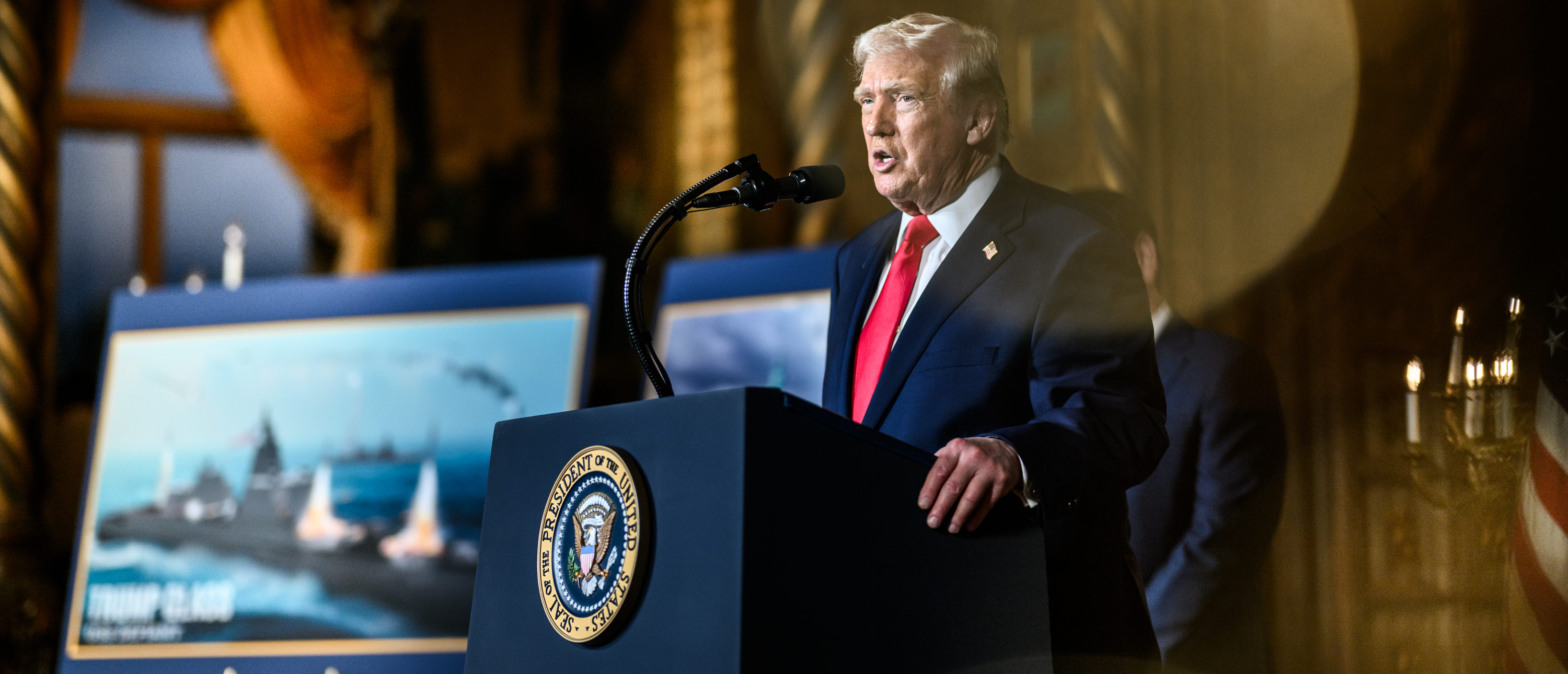
(Official White House Photo by Daniel Torok)
President Donald Trump is seeking the biggest defense budget increase in decades, though it remains to be seen if the infusion will be enough to meet the needs of a military-industrial complex engaged in geopolitical conflicts across the globe.
The proposed budget seeks to increase defense spending to $1.5 trillion, a 40%-44% increase, sending additional funds to military barracks improvements, shipbuilding and new critical defense systems.
For its part, the White House is proposing a 10% cut in non-defense spending as part of its wider budget for fiscal year 2027, shutting off the lights for 11 “woke” federal programs, including the Environmental Protection Agency’s Environmental Justice Program, the Minority Business Development Agency and Community Services Block Grants, according to a White House statement.
At least $350 billion in the proposed budget would need to be obtained through congressional reconciliation, while the remainder would come through the standard appropriations process.
The administration is pushing the budget increase as it works to maintain and reassert the U.S.’ global footprint, but conflicts in Ukraine and Iran, and a race against China, appear to be testing its capacity to pursue high-cost strategic goals.
“Even this massive budget will be inadequate to address all of America’s military commitments,” Benjamin Giltner, CATO Institute Policy Analyst, told the Daily Caller News Foundation. “The United States’ defense industrial base is unable to produce and deliver munitions at the rate it uses them.”
‘Historic’
The U.S. has rapidly expended its advanced munitions stockpile in offensive and defensive actions since the start of the Iran War, which has temporarily paused following an agreed-upon ceasefire late Tuesday that has remained shaky.
In the first 16 days, the U.S. fired 320 Army Tactical Missile System (ATACMS) and Precision Strike Missile (PrSM) munitions, accounting for roughly 46% of its inventory, according to estimates from the Payne Institute for Public Policy. ATACMS can cost anywhere from $1 million to $1.5 million per missile.
Since the start of the Iran War, U.S. military resources around the world have reportedly been shifted to the Middle East theater, including Terminal High Altitude Area Defense (THAAD) systems from South Korea and potential Ukraine aid relocation is also being considered.
When the DCNF asked about the potential asset reallocation, the Department of War (DOW) declined to comment.
In March, Trump invited defense executives to the White House to discuss replenishment plans for munitions and weapons amid the war with Iran.
Replenishment of weapons and munitions is not a quick turnaround. Tomahawk missiles could take two to three years from purchase to delivery, according to U.S Navy documents. While PrSM and ATACMS could expect a similar turnaround as well.
The stark contrast between expensive weapons systems with slow production times and cheaper alternatives have become apparent in the Iran conflict.
Tehran is able to mass-produce drones costing as little as $20,000 while the U.S. is largely reliant on using pricey interceptors that can cost millions per launch. The U.S. is currently working with startups and behemoth defense contractors to develop cheaper missiles capable of intercepting drones, according to the WSJ.
At least $17.5 billion will go to the Golden Dome missile shield development, a defense system introduced under President Trump to defend the U.S. against advanced aerial threats, similar to Israel’s “Iron Dome.”
Another $65.8 billion would be kicked toward rebuilding America’s crumbling shipbuilding capabilities, an issue President Trump has been focused on since his December 2025 announcement to spur new battleship production.
China’s rapid shipbuilding has drawn concern from military strategists for years. For every one U.S. ship built, China builds 200, according to Nick Childs, a maritime expert with the London-based International Institute for Strategic Studies.
The budget is expected to allocate funds for an additional 85 F-35 aircraft to be added to the fleet, 53 of them would be via the reconciliation process. China has rapidly expanded its fighter jet production, adding more than 8 million square feet of manufacturing capacity, which makes it larger than the Texas F-35 production facility, according to Forbes.
Notably, as the National Aeronautics and Space Administration (NASA) is conducting its first trip to the moon since 1972, it could face a 23% funding reduction, cutting around 40 programs, according to RNZ.
NASA Administrator Jared Isaacman supported the NASA budget cuts, telling “Face the Nation” this Sunday, “I certainly support President Trump and his 2027 budget request.”
As the Iran war enters a ceasefire, Trump previously did not rule out the potential for ground troops, and the need for more war funding has been pushed by the administration, with the Pentagon requesting an additional $200 billion for the conflict.
The proposed budget increase would allocate an additional $29.1 billion for the military construction and family housing, which includes barracks alongside broader base infrastructure. In 2023, significant safety risks were noted in a U.S. Government Accountability Office (GAO) report, including sewage overflows and improper fire systems, and it was found that these systems do not meet Department of War requirements.
The current state of military barracks has been a topic of discussion for a long time. Marine Commanders were previously authorized to relocate Marines if inspections revealed general safety issues.
“Facilities’ upkeep and modernization are important as the bases and places where troops work and live are generally rundown.” Mackenzie Eaglen of the American Enterprise Institute told the Daily Caller News Foundation, “This has a longer-term impact on recruiting and especially retention of servicemembers and their families.”
Eaglen pointed out the backlog that has grown over the years and is now at the point of over $200 billion in deferred maintenance.
The budget would also add about $3.1 billion in funding to the basic housing allowance and provide a 7% pay raise for military personnel E5 and lower, 6% for E-6 to O3 and 5% for O4 and above, according to the White House. A jump compared to the flat 5.2% raise signed under Biden.
The funds would push the military budget toward the benchmark of 5% of the U.S. GDP, Chairman Roger Wicker said in a statement, meeting “a benchmark we have long supported as necessary to maintain our national defense.”
This budget increase is the largest year-over-year increase for defense spending since the Korean War era.
“President Trump’s budget release marks a historic $1.5 trillion defense budget proposal, fulfilling his promise to the American people to deliver peace through strength and restore the United States as a manufacturing power,” Wicker said.
All content created by the Daily Caller News Foundation, an independent and nonpartisan newswire service, is available without charge to any legitimate news publisher that can provide a large audience. All republished articles must include our logo, our reporter’s byline and their DCNF affiliation. For any questions about our guidelines or partnering with us, please contact [email protected].