

Commentary: Big Tent Ideas
JAMES CARTER And SEVASTIAN HORTON: The Critical Minerals Tax Fix Congress Can’t Afford To Ignore
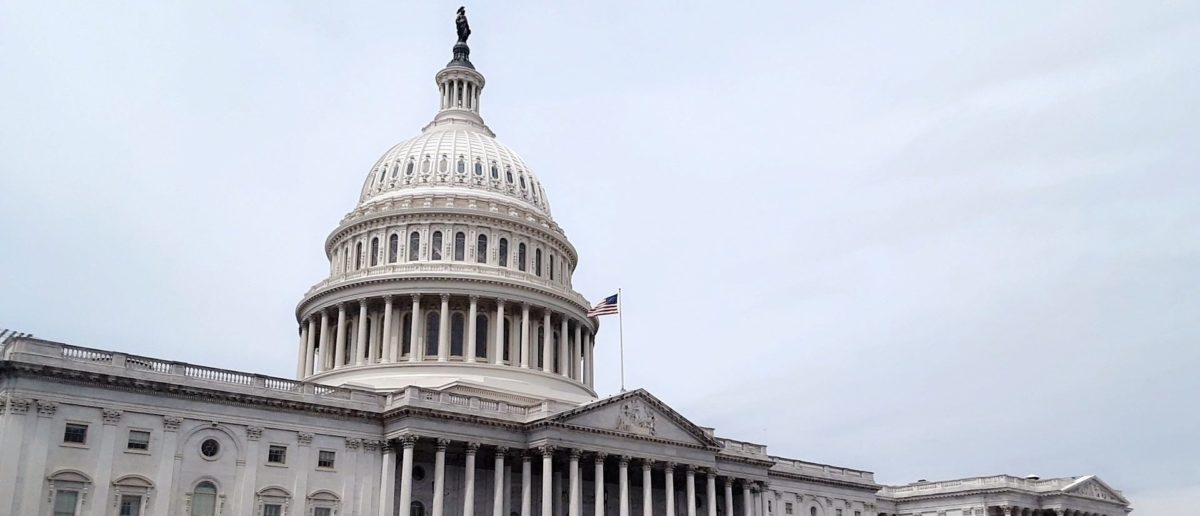
JessicaRodriguezRivas/Wikimedia Commons
In April 2025, Beijing imposed export controls on seven heavy rare earth elements. As a new licensing system took effect, exports to the U.S. and other key markets fell sharply, forcing automakers to scramble and prompting Pentagon warnings about risks to military readiness.
This was not an anomaly; it was a signal. China treats critical minerals as instruments of statecraft, and U.S. dependence is a vulnerability it is prepared to exploit.
Experts across the policy community sound the alarm. Brigham McCown, Senior Fellow and Director of the Initiative on American Energy Security at Hudson Institute, warns the U.S. must chart “a stable, forward-looking course” or risk undercutting national security and economic resilience.
Congress has a chance to respond. Nebraska Republican Rep. Adrian Smith has introduced the bipartisan Critical Minerals Investment Tax Modernization Act, co-led by California Democratic Rep. Jimmy Panetta and Pennsylvania Republican Rep. Guy Reschenthaler, with companion legislation from Ohio Republican Sen. Jon Husted.
The bill makes a targeted fix within the existing tax code: raising the percentage depletion allowance for domestically mined rare earth elements and scandium from 14% to 22%, bringing them closer to parity with other strategic minerals.
In capital-intensive mining projects, after-tax returns often determine whether investment proceeds at all. By improving those returns, the bill is designed to accelerate domestic production and reduce reliance on foreign supply chains.
The case for action is strong. China is expanding export controls and tightening oversight of processing technology. It continues to dominate refining and now controls much of the global scandium supply chain. The United States, by contrast, has not mined scandium commercially in decades and remains heavily reliant on imports for key rare earth inputs.
These vulnerabilities go beyond commercial supply chains and directly threaten defense production. Rare-earth magnets are essential for precision-guided munitions, advanced aircraft, and naval systems; when supplies are disrupted, production slows, maintenance is delayed, and military readiness is degraded.
Scandium, though less visible, is increasingly important: its alloys offer superior strength-to-weight ratios prized in aerospace and next‑generation platforms. As demand rises, reliable access matters more, yet U.S. supply remains limited and largely dependent on foreign sources — a disparity made sharper by scandium’s expanding use in next‑generation fighter aircraft, hypersonic components, and advanced 3-D printed defense parts.
While these materials have been embedded in foreign military platforms for decades, the United States is only now moving to secure reliable domestic capacity — backed by Pentagon support for the Elk Creek Project in Nebraska and partnerships with Lockheed Martin to scale integration across U.S. defense systems.
The constraint is not geology but economics. Mining projects depend on after-tax returns, and policies like the depletion allowance shape whether capital flows and projects move forward.
Critics may dismiss tax policy as peripheral. In extractive industries, it is decisive—small changes can determine whether projects attract financing or stall.
The Trump administration has taken steps to boost domestic mineral production. These include faster permitting, use of the Defense Production Act, and greater federal support for critical projects. Those efforts move in the right direction. They will fall short, however, if the underlying economics remain misaligned.
Congress faces a clear choice. China’s grip on critical minerals is tightening, and the window to respond is narrowing. This bill offers a practical step to reduce dependence and strengthen U.S. industrial and military resilience.
James Carter is a Principal with Navigators Global. He previously headed President-elect Donald Trump’s tax team during the 2016-17 transition and served as a Deputy Undersecretary for International Affairs at the U.S. Department of Labor (2006-07). Sevastian Horton is Navigators Global’s Director of Legislative Affairs.
The views and opinions expressed in this commentary are those of the author and do not reflect the official position of the Daily Caller News Foundation.
(Featured Image Media Credit: JessicaRodriguezRivas/Wikimedia Commons)
All content created by the Daily Caller News Foundation, an independent and nonpartisan newswire service, is available without charge to any legitimate news publisher that can provide a large audience. All republished articles must include our logo, our reporter’s byline and their DCNF affiliation. For any questions about our guidelines or partnering with us, please contact [email protected].