

Politics
American Small Business Owners, Manufacturers Still Feeling The Squeeze From Trump’s Tariffs
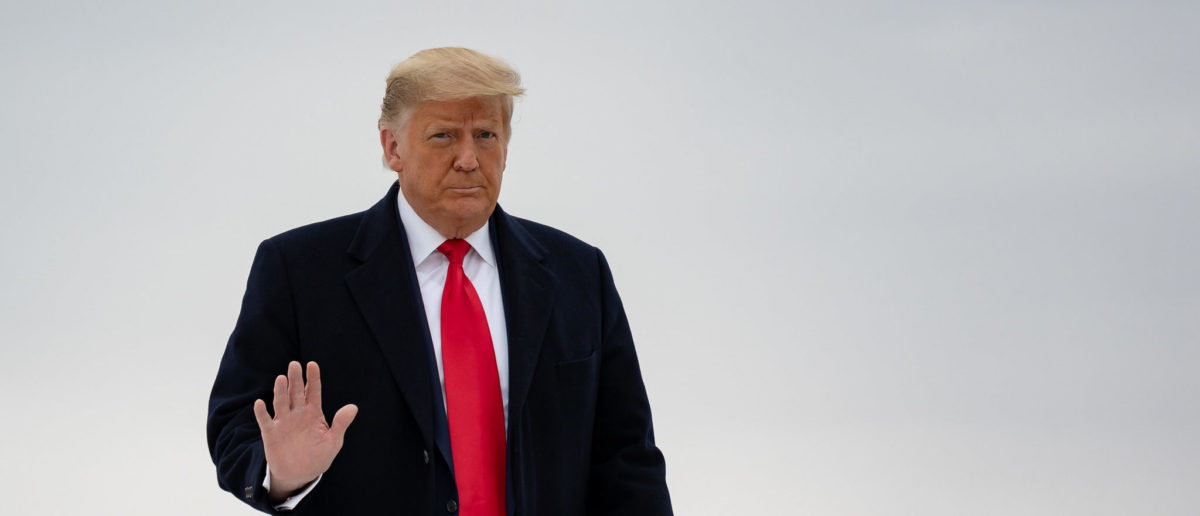
Trump White House Archives/Creative Commons/Flickr
President Donald Trump’s tariffs are still causing some American small businesses major headaches.
Trump introduced a new 10% global tariff in February after the U.S. Supreme Court struck down his use of the International Emergency Economic Powers Act to levy certain global duties. Several small business owners told the Daily Caller News Foundation they have been grappling with cost increases, heightened uncertainty, and a lack of domestically-produced alternatives for some affected items amid Trump’s new tariffs.
Some sectors do not have the domestic supply chains required to avoid Trump’s tariffs, according to Justin Hartenstein, founder and chief innovation officer at ORACLE Lighting.
“From the perspective of a small American manufacturer, tariffs are a powerful policy tool, but they’re also a blunt instrument,” Hartenstein told the DCNF. “The positive side is that tariffs can help level the playing field when foreign manufacturers benefit from government subsidies or regulatory environments that make it difficult for U.S. companies to compete. When used correctly, tariffs can encourage companies to consider moving production home and investing in American facilities and workers.”
“However, the challenge many small manufacturers are facing right now is that the supply chains required to fully manufacture products in the U.S. simply don’t exist yet for many industries,” he continued. “In the automotive lighting sector, for example, critical components like printed circuit boards, semiconductors and other electronic sub-assemblies are extremely difficult to source domestically at scale due to environmental and regulatory constraints.”
Hartenstein also explained that small manufacturing companies like his “often have no choice but to import those components while performing design, engineering, testing, assembly, and product development here in the U.S.,” which can result in the businesses having to pay “significantly higher costs just to continue operating.”
Bryan Wilson, president and CEO of automotive parts manufacturer Centerforce Clutches, similarly told the DCNF his company does not always have domestic alternatives to “shift to,” adding that Trump’s tariffs have significantly driven up costs.
“As a manufacturer with 25 employees, a true micro‑business, the gap between our costs and our selling prices continues to narrow,” Wilson said. “Tariffs have amplified that pressure. Many of the components we rely on, such as clutch assemblies and components, have not been manufactured in the U.S. for nearly two decades. That means there is no domestic alternative for us to shift to, even if we wanted to.”
“We do purchase U.S. sourced steel, but we’ve seen domestic suppliers raise prices at nearly the same rate as the tariffs themselves,” he added. “When domestic suppliers mirror tariff-driven increases, the policy no longer protects small manufacturers, it simply raises our costs across the board.”
Wilson also emphasized that while understands “the strategic need for tariffs,” he believes the duties are mainly successful when they are imposed on goods that can be fully produced in the U.S.
“I fully understand and support the strategic need for tariffs, especially when they prevent U.S. companies from offshoring production,” Wilson said. “But tariffs are most effective when applied to products that can be produced domestically. Before imposing broad tariffs, it would be beneficial to evaluate whether U.S. manufacturing capacity actually exists for those components. When it doesn’t, U.S. small businesses end up absorbing the cost without gaining any competitive advantage.”
“In the long term, I believe the situation will stabilize,” he added. “But over the next year, I expect significant volatility.”
White House Spokeswoman Taylor Rogers told the DCNF in a statement on Monday that Trump has “promised to bring prosperity back to Main Street with an America First agenda that benefits every small business, just as he did in his first term.”
“In addition to slashing regulations and lowering energy costs, the Trump administration signed the largest Working Families Tax Cut in history to unleash unprecedented growth for small businesses with a permanent 20% tax deduction and full expensing of equipment investments,” Rogers added.
American small business owners have also been facing climbing uncertainty and increased shipping costs due to tariffs, according to Renard Beaty, owner of Kick Start Martial Arts in Atlanta.
“The biggest tool any [small business owner] has is certainty,” Beaty stated. “I can’t plan [around tariffs] because I don’t know what to expect, because … in the short run, it seemed like every other week there was something new, you know … You can’t plan around that. You can’t think around that.”
“Other countries are not paying for it,” he added. “Just like when I purchase something I pass it on to my people. Businesses who have to buy overseas or have factories and have to get their goods home, they’re paying the taxes, not the [other] countries. And, you know, it’s just a bad format. It just baffles small businesses. One more thing I forgot to mention is shipping costs. Typically, my shipping cost was around $12. Now it’s like $30. So again, it passes [costs] on to the consumer. I think most people understand that. I think those who want to [claim that other countries] are paying for [tariffs] are being intellectually dishonest.”
Numerous changes in tariff policy notably make it more difficult for business owners to plan ahead, make investments and create new job opportunities, according to a February analysis from the University of California San Diego’s School of Global Policy and Strategy.
A fall 2025 Specialty Equipment Marketing Association (SEMA) report obtained by the DCNF found that 32% of U.S. manufacturers view tariffs and trade policies as the greatest threat to the industry, while 21% said the same about economic decline. Meanwhile, 17% named government vehicle regulations as the largest industry threat, 17% said inflation and interest rates, 7% said artificial intelligence, 4% said electric vehicles and 3% said advanced driver assist systems, SEMA’s report shows.
SEMA State of the Industry report Fall 2025 by irelandowens.dcnf
Still, the White House claimed in a Feb. 20 fact sheet that “as a result of the president’s tariffs, major U.S. trading partners covering more than half of global [gross domestic product] have agreed to historic trade and investment deals to open new markets for U.S. exports, promote manufacturing reshoring, and bring reciprocity and balance to our trade relations.”
Additionally, U.S. Customs and Border Protection said on March 12 that it is making progress on a tariff refund portal for affected companies, Reuters reported, citing a court filing.
Job Creators Network CEO Alfredo Ortiz told the DCNF he believes Trump’s tariffs have “achieved what they intended to do.”
“They have generated trillions of dollars of investment in America and opened new markets through more beneficial trade agreements, giving domestic small businesses greater sales and growth opportunities,” Ortiz said. “The Supreme Court has given small businesses tariff certainty — something all small businesses desperately crave. Although Trump responded to the decision by imposing a temporary 10% across the board tariff under a different authority, this uniform and relatively low rate is much easier for small businesses to deal with.”
All content created by the Daily Caller News Foundation, an independent and nonpartisan newswire service, is available without charge to any legitimate news publisher that can provide a large audience. All republished articles must include our logo, our reporter’s byline and their DCNF affiliation. For any questions about our guidelines or partnering with us, please contact [email protected].