

Foreign Affairs
Iran Nearly Crippled Global Energy, But Trump Found A New Weapon
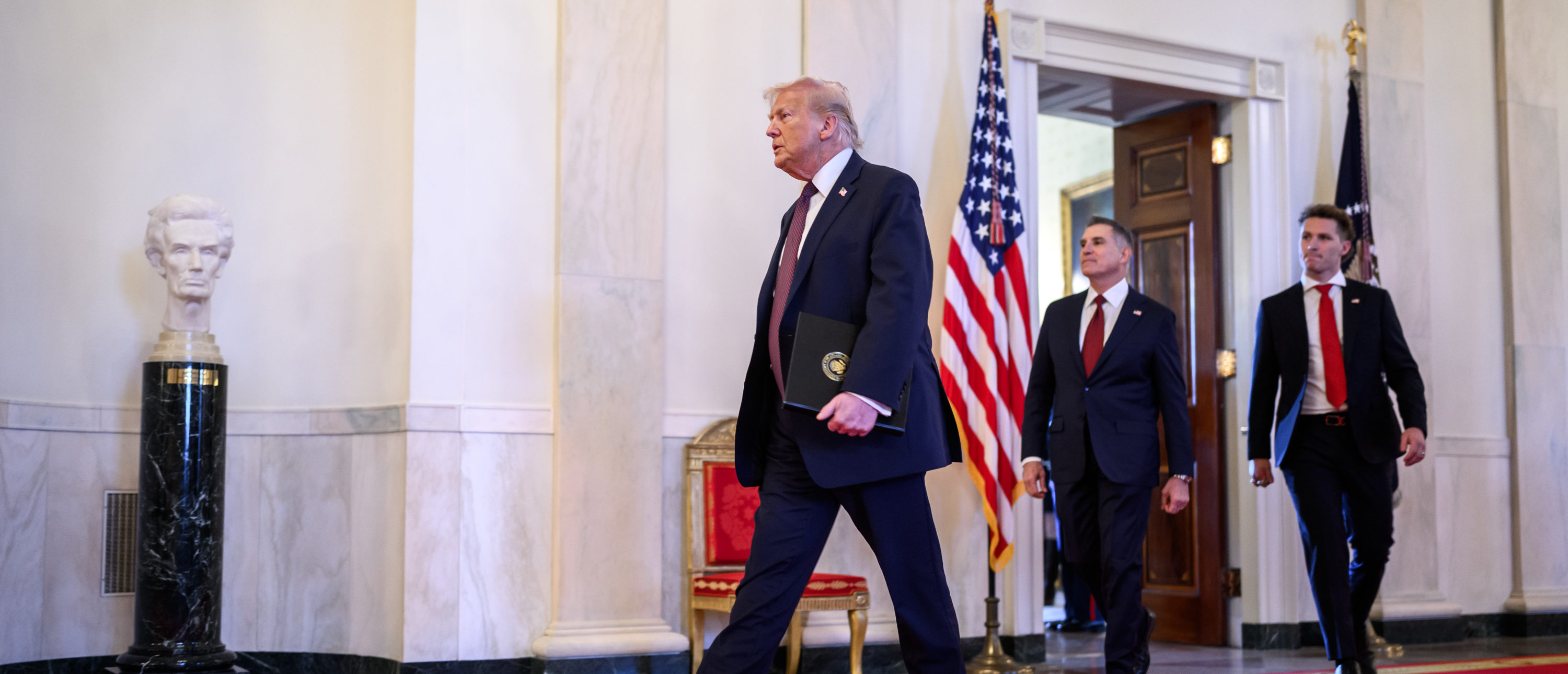
(Official White House Photo by Molly Riley)
As energy markets reel from the U.S.’ war with Iran, the Trump administration is racing against time to insulate Americans from any more pain at the pump.
The war began early Saturday when U.S. and Israeli forces launched a massive wave of air strikes that killed Supreme Leader Ayatollah Khomeini and struck over 1,000 military installations. Iran retaliated with both conventional missile attacks and drone strikes, taking major energy facilities offline in the Arab Gulf. Brent crude, the oil blend used as an international benchmark for pricing, has risen to over $80/barrel, raising U.S. gas prices by roughly 20 cents/gallon.
“The price for crude oil is set on a global commodity trading market that is reflected mainly in the Brent crude price. All contracts for sale of crude globally work back from that index price,” industry veteran David Blackmon told the Daily Caller News Foundation.
Every $10 increase in Brent crude translates to a roughly 24-cent spike in U.S. gas prices, according to S&P Global. If Brent hits $100/barrel, consumers could fork over nearly $4/gallon at the gas station.
The White House did not respond to the DCNF’s request for comment.
Iran Lashes Out
The Iranian military took Saudi Aramco oil refineries and Qatar’s largest liquefied natural gas (LNG) facility offline with drone attacks after Operation Epic Fury, multiple outlets reported. In an attempt to disrupt shipping lanes in the Strait of Hormuz, Iran also conducted drone attacks on oil tankers. Global markets and American prices reacted instantly.
Iranian strikes punished the U.S.’s Gulf Cooperation Council (GCC) allies, crippling energy production and disrupting exports. The GCC is responsible for nearly 30% of global oil exports.
Saudi Arabia’s Ras Tanura Refinery partially suspended its operations after an Iranian drone attack on Monday, and the Gulf’s premier LNG producer QatarEnergy was also shut down. The United Arab Emirate’s Fujairah Oil Industry Zone caught fire after Iranian strikes on Tuesday, delaying tanker refueling and introducing further uncertainty.
Additionally, maritime traffic in the Strait of Hormuz fell to almost zero after a number of Iranian attacks on civilian vessels, according to Joint Maritime Information Center transit advisories.
Initial effects on the U.S. energy market from Iranian strikes and subsequent GCC refinery closures were minimal, but continue to worsen.
Since Operation Epic Fury began, U.S. gas prices have risen from $2.98 to $3.19/gallon, according to AAA. Though a swell for President Trump’s second term, it remains substantially lower than Biden-era highs of over $5.
That prices have only risen modestly so far is partially attributable to the U.S.’ reduced reliance on foreign oil. U.S.’ domestic crude production rose by 50%, net imports declined by 65%, and the GCC’s share of U.S. imports even fell to less than 8% since 2014, the American Petroleum Institute found. But global markets still determine American pricing.
The Strait-Jacket Of Hormuz
Prices could climb higher if the Strait of Hormuz isn’t freely navigable, and maritime insurers’ risk-aversion is keeping ships at port.
“Right now, the stoppage in tanker movements through the Strait of Hormuz is strictly an insurance issue. Insurers are demanding higher war risk premiums from the shipping companies, and those will be negotiated in the coming days,” Blackmon said.
Approximately 25% of the “global seaborne oil trade” transits through the Strait of Hormuz, according to the Energy Information Administration (EIA).
If negotiations between war risk insurers and shipping companies are resolved within “7-10 days, then the rise in gas prices at the pump will likely remain modest,” according to Blackmon. The industry veteran sees continued insurance withdrawal and Iranian destruction of “significant critical infrastructure in Saudi Arabia, the UAE, and Qatar” as “a combination that would send oil prices – and thus, gasoline prices – soaring.”
On Tuesday, President Trump announced on Truth Social that the U.S. International Development Finance Corporation (DFC) would provide political risk insurance and even U.S. Navy escorts for merchant vessels in the Strait of Hormuz.
The DFC offer “will not resolve the insurance issue for the shippers on a permanent basis – they will still need to work out long-term coverage for their cargoes with major insurance carriers like Lloyd’s of London,” according to Blackmon.
That being said, as a stop-gap measure, the “combination of U.S. DFC coverage and even escort by U.S. Naval vessels through the Strait could provide enough comfort to shippers to get tanker traffic moving through the Strait again,” Blackmon continued.
If the Strait “is effectively closed short term, meaning days or weeks, then I would expect a minimal disruption to the price of oil,” Republican Alabama Senate Candidate and U.S. Naval Reserve Officer Morgan Murphy told the Daily Caller News Foundation. “Should it be closed on a protracted basis, weeks or months, then oil prices would potentially climb to levels unseen in years.”
Activity in the Strait is still down 90% since Iran began its campaign to close the shipping route. Murphy noted that the U.S. Navy “has a long and glorious history of keeping sea lanes open.”
All content created by the Daily Caller News Foundation, an independent and nonpartisan newswire service, is available without charge to any legitimate news publisher that can provide a large audience. All republished articles must include our logo, our reporter’s byline and their DCNF affiliation. For any questions about our guidelines or partnering with us, please contact [email protected].