

US
Supreme Court Says California’s Secret Gender Transition Policies Likely Violate Parental Rights
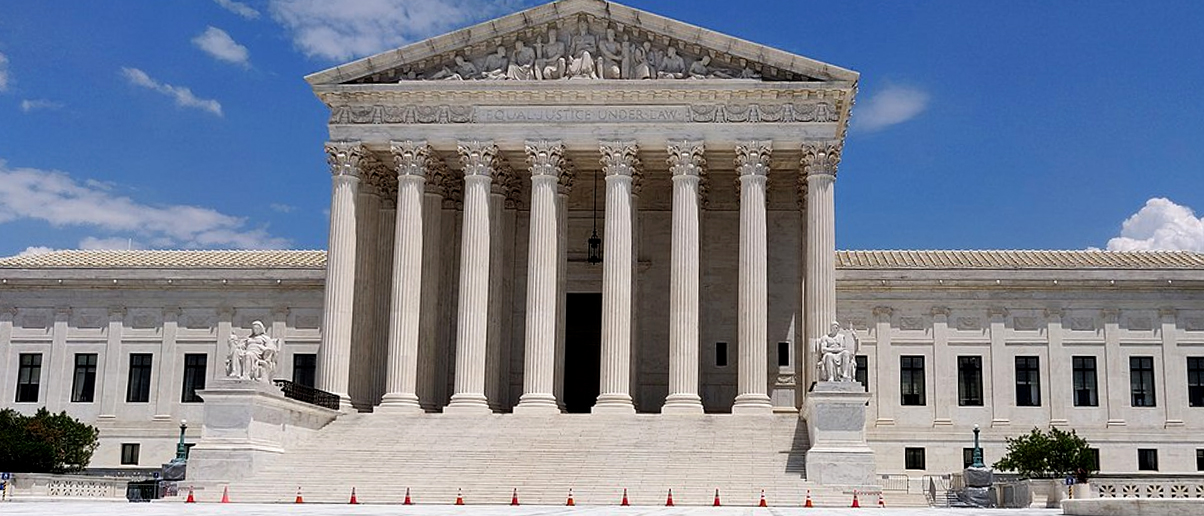
Wikimedia Commons
Policies that allow California schools to secretly facilitate a child’s gender transition likely violate parental rights, the Supreme Court found Monday.
The majority blocked enforcement of the policies, which “cut out the primary protectors of children’s best interests: their parents.”
“Gender dysphoria is a condition that has an important bearing on a child’s mental health, but when a child exhibits symptoms of gender dysphoria at school, California’s policies conceal that information from parents and facilitate a degree of gender transitioning during school hours,” the court wrote. “These policies likely violate parents’ rights to direct the upbringing and education of their children.”
A district court judge halted California’s policies in December. Parents and teachers filed an emergency request with the Supreme Court in January after a federal appeals court reinstated them.
“No more can bureaucrats secretly facilitate a child’s gender transition while shutting out parents,” Thomas More Society Executive Vice President and Head of Litigation Peter Breen wrote in a statement.
“California built a wall of secrecy between parents and their own children, and the Supreme Court just tore it down,” he continued. “This groundbreaking ruling will protect parents’ rights to raise their children as they see fit for years to come.”
The majority pointed to the Supreme Court’s 2025 decision in Mahmoud v. Taylor, where they sided with religious parents seeking to opt their children out of required LGBTQ storybook lessons.
“Indeed, the intrusion on parents’ free exercise rights here unconsented facilitation of a child’s gender transition — is greater than the introduction of LGBTQ storybooks we considered sufficient to trigger strict scrutiny in Mahmoud,” the justices wrote.
Justices Sonia Sotomayor, Elena Kagan and Ketanji Brown Jackson dissented.
“The Court resolves the issues raised through shortcut procedures on the emergency docket even though it has had—for months now the option of doing so the regular way, on our merits docket,” Kagan wrote in a dissent joined by Jackson. “Since November of last year, a petition for certiorari has been pending in a case that, in critical respects, is a carbon copy of this one.”
Kagan noted that “almost 40 cases raising due process and/or free exercise objections to similar school policies are currently in the judicial system.”
“A mere decade ago, this Court would never have granted relief in this posture,” she wrote.
All content created by the Daily Caller News Foundation, an independent and nonpartisan newswire service, is available without charge to any legitimate news publisher that can provide a large audience. All republished articles must include our logo, our reporter’s byline and their DCNF affiliation. For any questions about our guidelines or partnering with us, please contact [email protected].