

Commentary: Big Tent Ideas
KEVIN DAYARATNA: Reconsidering EPA’s Climate Endangerment Finding
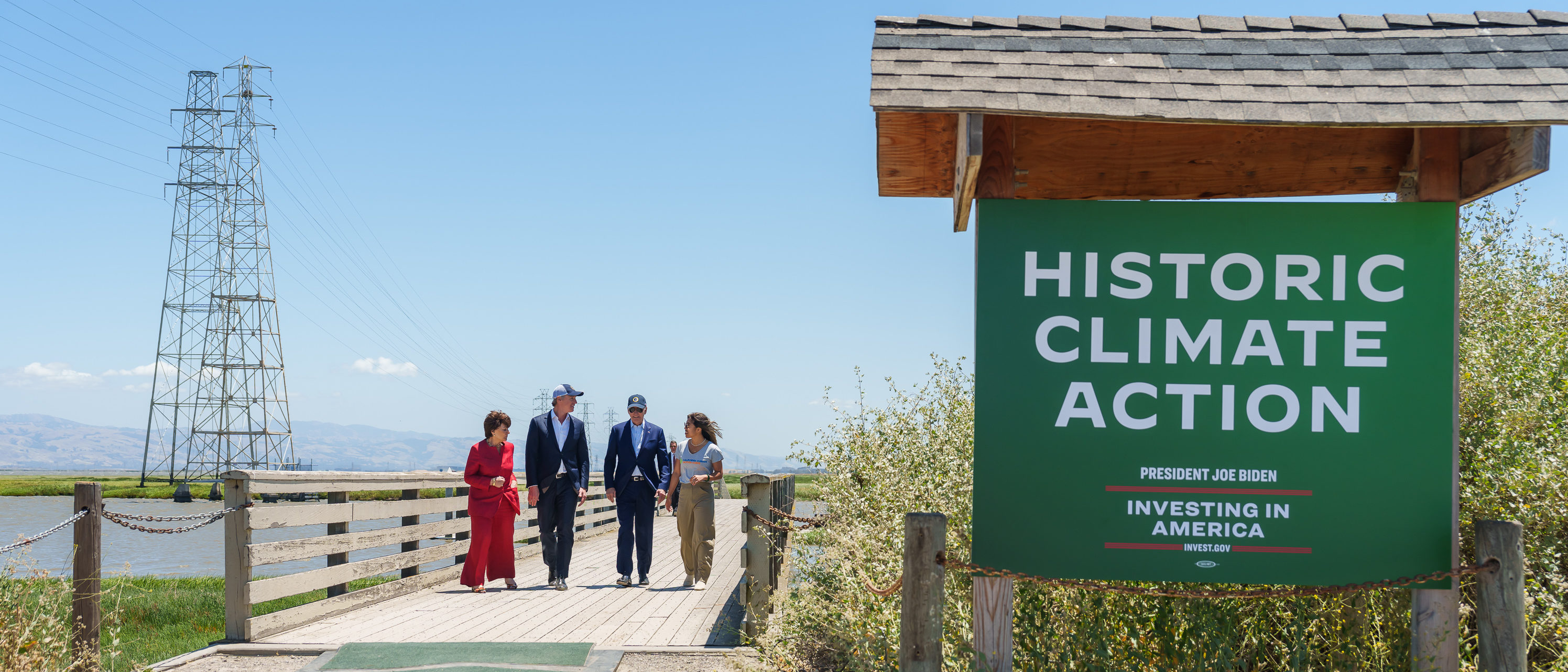
Flickr/Official White House Photo by Adam Schultz
The Environmental Protection Agency’s 2009 Endangerment Finding has quietly shaped more than a decade of federal climate regulation. That determination—that greenhouse gases endanger public health and welfare—served as the legal trigger for regulating carbon dioxide emissions from new motor vehicles under the Clean Air Act.
The Trump Administration has now moved to reconsider and rescind that finding as it applies to vehicles. This is not a symbolic change. It goes to the foundation of federal climate rules affecting cars, trucks, and freight across the United States.
At issue is a basic question – Does the scientific case underpinning the original finding still justify the sweeping regulatory authority it unlocked?
Supporters of aggressive climate policy often point to a supposed “97 percent scientific consensus” that climate change is real, dangerous, and driven by human CO₂ emissions. That claim, frequently repeated in public discourse, traces back to a 2013 paper that reviewed abstracts of roughly 12,000 climate-related articles. What the study actually found is more limited and more nuanced. About two-thirds of the reviewed papers expressed no position on whether global warming was human-caused. Of the third that did express a view, most agreed that humans contribute to warming. The study did not evaluate whether warming is catastrophic, whether it poses imminent danger, or what policy responses are warranted.
Yet this statistic has often been used to imply agreement on far broader claims about severity, urgency, and regulatory necessity. That leap—from “human contribution” to “dangerous endangerment requiring extensive federal intervention”—deserves scrutiny.
Over the past 15 years, new research has also called into question several empirical claims that informed the original finding. These concerns have been echoed by a number of major scientists, including Steve Koonin, former Under Secretary for Science during the Obama Administration.
Climate models, for example, have frequently projected warming patterns and magnitudes that exceed observed trends. Certain expected atmospheric signatures of greenhouse warming have proven difficult to detect in real-world data. Long-run U.S. records show no clear increase in hurricane frequency or severity, and the number of strong tornadoes has declined since the mid-20th century. Upward inflation-adjusted storm-damage trends often reflect population growth and economic growth patterns rather than worsening weather, indicating that more is in harms’ way over time, not that there are more storms.
Health claims tied to climate policy also merit caution. A large multi-country mortality analysis shows that cold temperatures, not heat, have accounted for the overwhelming majority of temperature-related deaths. Meanwhile, broader public-health literature used in environmental rulemaking has faced increasing criticism over reproducibility, multiple-testing bias, and weak causal identification.
None of this work implies that greenhouse gases have no effect on climate. It does, however, raise legitimate questions about whether the threshold for a formal federal “endangerment” declaration—one that carries major regulatory consequences—was ever scientifically well-grounded.
There is also a practical dimension. Even using the same climate models relied upon by the IPCC, eliminating all U.S. emissions from internal combustion vehicles would produce less than 0.07 degrees Celsius reduction in projected global temperatures by the end of the century. Even eliminating all U.S. carbon dioxide emissions entirely would have a modest projected temperature impact relative to global totals. Whatever one believes about climate risks, the scale of U.S. vehicle regulations must be weighed against their actual influence on global climate outcomes.
The question before policymakers is not whether climate change exists. It is whether the specific scientific claims used to justify a sweeping regulatory regime for vehicles meets the standard required for an endangerment determination under the law.
Reconsidering the Endangerment Finding for motor vehicles should be more about scientific accountability and less about politics. Regulations of this magnitude should rest on evidence that is clear, reproducible, and proportional to the claimed risk. If the foundation has weakened, policymakers have an obligation to revisit it.
A careful reassessment offers an opportunity to align environmental policy with empirical reality—while ensuring that federal authority is exercised only where the scientific case is robust enough to warrant it.
This serious review of existing policy should also confront a broader structural issue. The 2009 Endangerment Finding effectively transformed a statute designed to regulate localized air pollutants into a vehicle for nationwide carbon policy. If the evidentiary basis for “endangerment” no longer satisfies rigorous scientific standards, then we must also reconsider the regulation of stationary sources and the wider economy. Sound policy requires coherence, not selective application.
Dr. Kevin Dayaratna is the Vice President of the Center for Statistical Modeling and Scientific Analysis at Advancing American Freedom.
The views and opinions expressed in this commentary are those of the author and do not reflect the official position of the Daily Caller News Foundation.
(Featured Image Media Credit: Flickr/Official White House Photo by Adam Schultz)
All content created by the Daily Caller News Foundation, an independent and nonpartisan newswire service, is available without charge to any legitimate news publisher that can provide a large audience. All republished articles must include our logo, our reporter’s byline and their DCNF affiliation. For any questions about our guidelines or partnering with us, please contact [email protected].