

Legal/Law/Criminal Justice and Reform
Supreme Court Takes High Stakes Case That Could Cost Energy Companies Billions
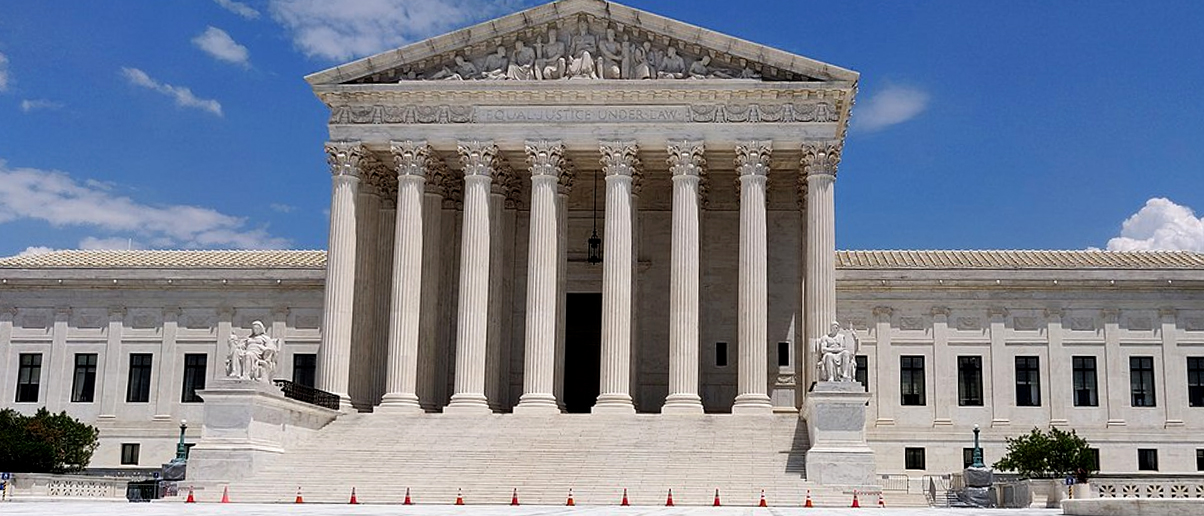
Wikimedia Commons
The Supreme Court agreed Monday to consider whether energy companies can be sued in state court over the alleged impacts of climate change.
Federal law prevents local governments from using state law to seek damages for climate change, the energy companies argue, noting one city like Boulder, Colorado should not be able to “make energy policy for the entire country.”
“Energy companies that produce and sell fossil fuels are facing numerous lawsuits in state courts across the Nation seeking billions of dollars in damages for injuries allegedly caused by the contribution of greenhouse-gas emissions to global climate change,” Suncor Energy and Exxon Mobil wrote in their petition. “But as the Court has recognized for over a century, the structure of our constitutional system does not permit a State to provide relief under state law for injuries allegedly caused by pollution emanating from outside the State.”
The justices directed the parties to also present arguments on whether the Supreme Court “has statutory and Article III jurisdiction to hear this case,” according to the court’s Monday order.
The case, which is one of nearly three dozen climate lawsuits nationwide, began when Boulder County and the City of Boulder sued in 2018. Their lawsuit claimed the companies’ sale of fossil fuels contributed to global climate change that caused harm to Colorado.
The Colorado Supreme Court allowed the case to move forward in 2024.
The Trump Department of Justice (DOJ) backed the energy companies petition in September, arguing “every locality in the country could sue essentially anyone in the world for contributing to global climate change” under Colorado’s theory.
“The Supreme Court’s decision to review Boulder’s climate lawsuit is a decisive step toward resolving conflicting rulings nationwide and reaffirming that climate policy belongs with elected policymakers – not the courts,” Manufacturers’ Accountability Project (MAP) Special Counsel Phil Goldberg said in a statement.
“Courts across the country have responded to these cases in divergent ways, with many dismissing them for lack of legal and practical foundation,” Goldberg continued. “Supreme Court review will bring much-needed clarity and uniformity to this issue and help ensure that fundamental policy decisions about energy and climate are made by the appropriate branches of government. We look forward to the Court’s consideration of these critical questions.”
All content created by the Daily Caller News Foundation, an independent and nonpartisan newswire service, is available without charge to any legitimate news publisher that can provide a large audience. All republished articles must include our logo, our reporter’s byline and their DCNF affiliation. For any questions about our guidelines or partnering with us, please contact [email protected].