

Commentary: Big Tent Ideas
BOB BARR: In Another Win For Consumers, Trump Ending Biden’s War On Bulk Pricing
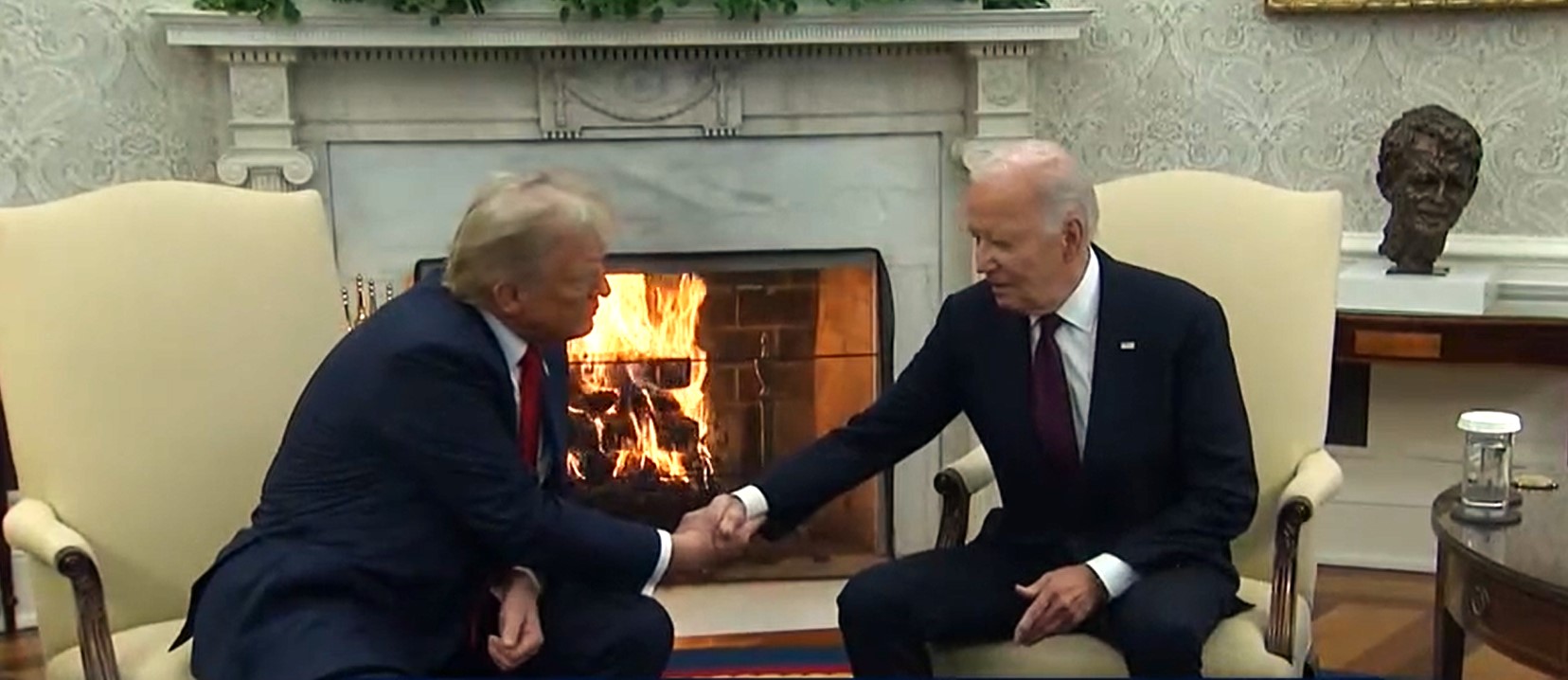
(Screen Capture/CSPAN)
The one remarkably consistent concern on the minds of American consumers can be summed up in one word: prices. It is even driving congressional debates this year, as lawmakers face mounting pressure to show that they understand what constituents’ families face every time they swipe a card at the checkout counter.
One of the least discussed aspects of this multi-faceted, supply-and-demand problem — more than charges of “corporate greed” — is regulation. Most specifically, anger at the Biden administration’s policies that targeted the very market efficiencies that tend to keep prices down.
Perhaps nowhere was this phenomenon more evident than in former President Joe Biden’s antitrust policy.
Under the previous administration, federal regulators increasingly treated scale and efficiency not as consumer benefits (which they are), but as suspect behavior requiring government intervention. Thus, discounts realized from buying in bulk were reframed as “unfair.” The result of this mindset was an antitrust agenda that, if fully realized, would have pushed everyday costs even higher.
For decades, Republican and Democratic administrations shared a basic antitrust principle: enforcement should protect competition, not individual competitors. The metric was simple — do consumers benefit through lower prices, greater choice, and innovation? This consumer-focused barometer helped keep antitrust focused on real harms rather than political preferences.
That consensus fractured under Biden’s Federal Trade Commission (FTC). Led by its uber-liberal Chair, Lina Khan, the agency revived a long-dormant New Deal statute, the “Robinson-Patman Act,” and weaponized it to attack routine volume discounts.
The law, written in the 1930s, was dusted off not to stop collusion or monopoly pricing (which was its original purpose), but to challenge price differences that often reflect ordinary cost savings. This marked a significant expansion of the Act, not simply its revival.
Economic history here is clear: In a market-driven economy, if discounts tied to scale and efficiency become legally risky, businesses stop offering them. And when discounts disappear, prices rise.
Take the current lawsuit against Southern Glazer’s Wine and Spirits, which, as Trump administration-aligned legal analyst John Pierce noted last week, might soon be coming to an end.
Filed in the closing months of the Biden administration, the case alleges that the distributor unlawfully offered better pricing and promotional terms to large national chains than it did to smaller independent retailers. The prior administration’s legal challenge ignores the fact that the pricing policy at issue was not inappropriate “special treatment.” The company would have offered discount pricing to any retailer willing to purchase larger quantities – a common business practice that is hardly illegal.
Predictably, the Biden administration’s legal challenge showed no evidence that consumers were harmed. That’s because they weren’t. Consumers were, in fact, the beneficiaries.
Consumers choose large retailers for many reasons — price, convenience, selection, and the ability to buy everything in one trip. None of that constitutes illegal conduct.
Such concerns were raised within the FTC. In fact, when the Biden administration filed the suit in 2024, then-Commissioner (now Chair) Andrew Ferguson warned that the case was likely to fail because the law explicitly allows cost-justified pricing differences. Commissioner Melissa Holyoak similarly cautioned that the complaint failed to identify harm to competition or consumers, but rather risked raising prices by chilling legitimate price competition.
Importantly, the Southern Glazer’s case is not an isolated dispute. It is, rather, a holdover from a broader Biden-era effort to reshape antitrust around ideology rather than actual consumer benefits.
Thankfully, the Trump administration has already begun reversing course.
One of its first moves was to drop a similar Robinson-Patman case against PepsiCo, signaling a return to enforcement grounded in economic reality rather than political theory. Whether the Southern Glazer’s case is ultimately resolved or allowed to fade will be an important marker of that reset.
Congress should take note. If lowering the cost of living is truly a top priority, lawmakers must look beyond rhetoric and examine how regulatory agendas affect prices in the marketplace. Antitrust enforcement should focus on collusion, exclusionary conduct, and other genuine abuses of market power, not used as a weapon with which to attack efficiency, scale, or discounts that help families stretch their budgets.
Market discounts are not a “loophole.” They are how competition works, yet the Biden administration tried to regulate them away. Cleaning up that mess, and restoring a pro-consumer, pro-growth approach to antitrust, should now be a major part of the affordability agenda Americans are demanding and to which they are entitled.
Bob Barr represented Georgia’s Seventh District in the U.S. House of Representatives from 1995 to 2003. He served previously as the United States Attorney in Atlanta from 1986 to 1990 and was an official with the CIA in the 1970s. He now practices law in Atlanta, Ga., serves as head of Liberty Guard, and is the immediate past president of the National Rifle Association of America.
The views and opinions expressed in this commentary are those of the author and do not reflect the official position of the Daily Caller News Foundation.
(Featured Image Media Credit: Screen Capture/CSPAN)
All content created by the Daily Caller News Foundation, an independent and nonpartisan newswire service, is available without charge to any legitimate news publisher that can provide a large audience. All republished articles must include our logo, our reporter’s byline and their DCNF affiliation. For any questions about our guidelines or partnering with us, please contact [email protected].