

Video News Clips: In Their Own Words
Alan Dershowitz Explains What Makes Prior Congressional Approval Of Military Action A Terrible Idea
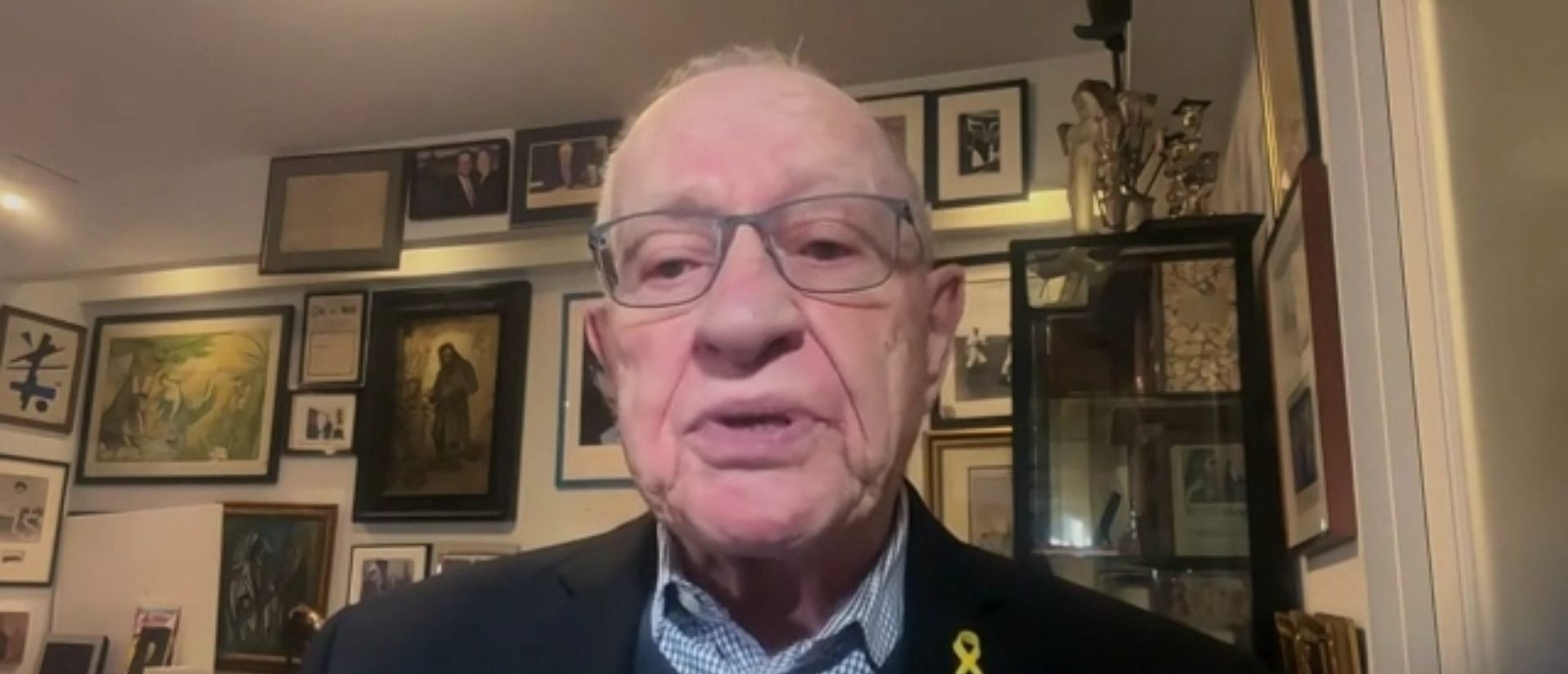
Alan Dershowitz Explains Why Prior Congressional Approval Of Military Action Is A Terrible Idea (Screenshot/Newsmax)
Harvard Law professor emeritus Alan Dershowitz on Friday made a constitutional case against requiring congressional approval before limited U.S. military actions.
The comments followed a U.S. operation that captured and arrested Venezuelan dictator Nicolás Maduro. Appearing on “The Record with Greta Van Susteren,” Dershowitz said the Constitution places no obligation on a president to seek permission or provide prior notice before carrying out discrete, time-sensitive missions.
“There’s nothing in the Constitution that requires prior notice or anything that would limit executive action. Prior notice is a terrible idea in a Congress that’s leaking like a sieve. I don’t think this military action could have been taken as successfully or the successful action against Osama bin Laden could have been taken successfully if there was prior notice,” Dershowitz told Greta Van Susteren. “Now, that’s very different from ‘We’re running Venezuela now and a kind of claim of military occupation, a continuing military occupation of a country.’ That would be very, very different. But we don’t know what’s going on.”
Dershowitz said President Donald Trump has not crossed any legal or constitutional lines.
WATCH:
“We don’t know whether or not the president is doing any more than threatening at this point. And threatening is certainly within the prerogative of Article II power of the president. So at the moment, the president has done nothing to violate either the Constitution or the War Powers Act, even if the War Powers Act is constitutional. And the War Powers Act, to the extent that it constrains the President’s Article II authority, has some very serious constitutional limitations.”
Dershowitz said the operation mirrored past one-off missions such as former President Barack Obama’s unilateral decision to send U.S. forces into Pakistan to kill Osama Bin Laden.
“The best precedent would be President Obama sending in special forces to kill, not capture, Osama Bin Laden. And he didn’t seek any prior authorization for that,” Dershowitz added. “He was invading a foreign country without the approval of the foreign country, Pakistan. And that was a one-off. And the capture the other day in Venezuela was also a one-off. So as to that issue, there’s no dispute.”
Earlier today, Trump said he scrapped a previously anticipated second wave of strikes on Venezuela, pointing to improved cooperation with the country’s interim government. The decision came just days after Trump warned another attack remained possible. He said in a Truth Social post that the new government is now working with the U.S. on rebuilding oil and gas infrastructure and releasing large numbers of political prisoners.
Trump has said the United States will retain control over Venezuela for an open-ended period until the country achieves full stability.
(Featured Image Media Credit: Screenshot/Newsmax)
All content created by the Daily Caller News Foundation, an independent and nonpartisan newswire service, is available without charge to any legitimate news publisher that can provide a large audience. All republished articles must include our logo, our reporter’s byline and their DCNF affiliation. For any questions about our guidelines or partnering with us, please contact [email protected].