

Commentary: Big Tent Ideas
DAVID BLACKMON: Supremes Have Chance To End Climate Lawfare
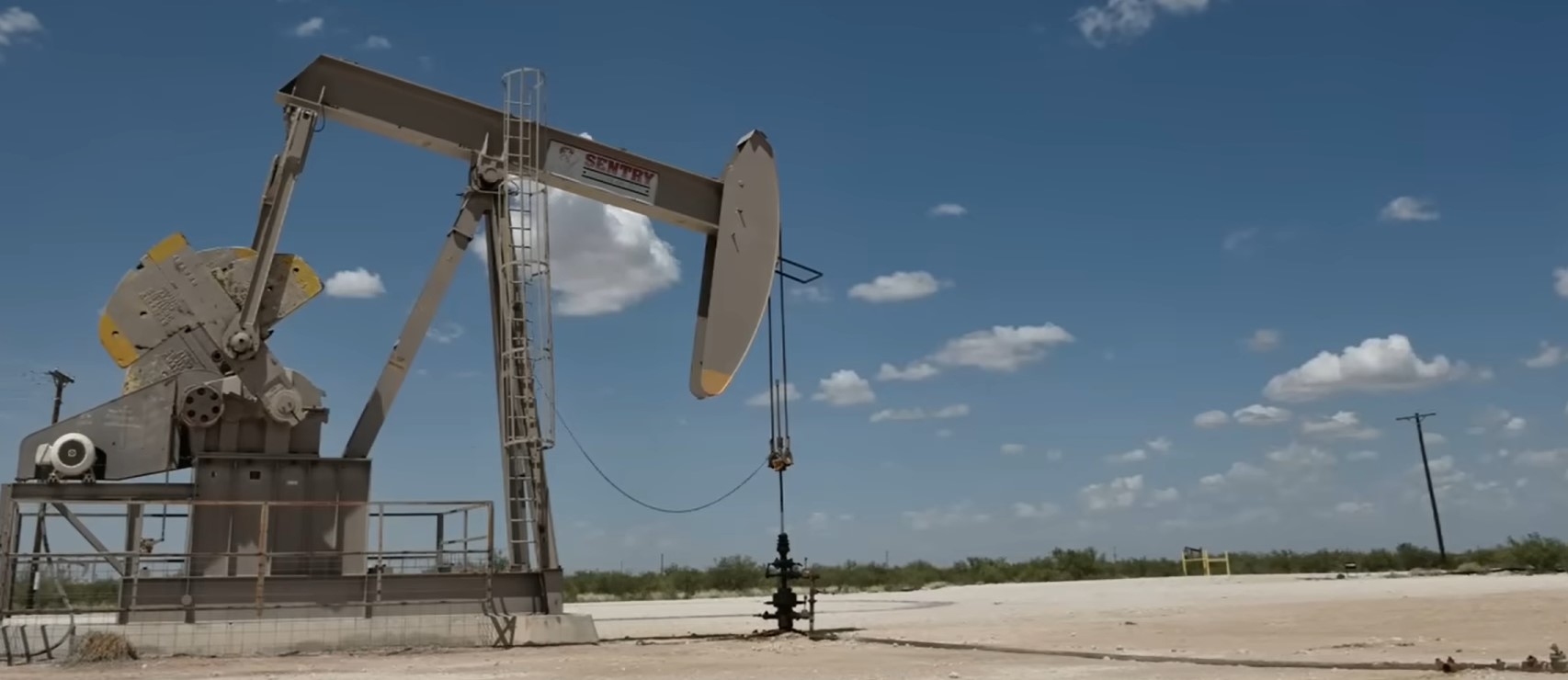
A crude oil pump. (Screen Capture/PBS NewsHour)
All eyes will be on the Supreme Court later this week when the justices conference on Friday to decide whether to grant a petition for writ of certiorari on a high-stakes climate lawsuit out of Colorado. The case is a part of the long-running lawfare campaign seeking to extract billions of dollars in jury awards from oil companies on claims of nebulous damages caused by carbon emissions.
In Suncor Energy (U.S.A.) Inc., et al. v. County Commissioners of Boulder County, major American energy companies are asking the Supreme Court to decide whether federal law precludes state law nuisance claims targeting interstate and global emissions. This comes as the City and County of Boulder, Colo. sued a long list of energy companies under Colorado state nuisance law for alleged impacts from global climate change.
The Colorado Supreme Court allowed a lower state trial court decision to go through, improbably finding that federal law did not preempt state law claims. The central question hangs on whether the federal Clean Air Act (CAA) preempts state common law public nuisance claims related to the regulation of carbon emissions. In this case, as in at least 10 other cases that have been decided in favor of the defendant companies, the CAA clearly does preempt Colorado law. It seems inevitable that the Supreme Court, if it grants the cert petition, would make the same ruling.
Such a finding by the Supreme Court would reinforce a 2021 ruling by the Second Circuit Appeals Court that also upheld this longstanding principle of federal law. In City of New York v. Chevron Corp. (2021), the Second Circuit ruled that municipalities may not use state tort law to hold multinational companies liable for climate damages, since global warming is a uniquely international concern that touches upon issues of federalism and foreign policy. Consequently, the court called for the explicit application of federal common law, with the CAA granting the Environmental Protection Agency – not federal courts – the authority to regulate domestic greenhouse gas emissions. This Supreme Court, with its 6-3 conservative majority, should weigh in here and find in the same way.
Boulder-associated attorneys have become increasingly open to acknowledging the judicial lawfare inherent in their case, as they try to supplant federal regulatory jurisdiction with litigation meant to force higher energy prices rise for consumers. David Bookbinder, an environmental lawyer associated with the Boulder legal team, said the quiet part out loud in a recent Federalist Society webinar titled “Can State Courts Set Global Climate Policy. “Tort liability is an indirect carbon tax,” Bookbinder stated plainly. “You sue an oil company, an oil company is liable. The oil company then passes that liability on to the people who are buying its products … The people who buy those products are now going to be paying for the cost imposed by those products.”
Oh.
While Bookbinder recently distanced himself from the case, no notice of withdrawal had appeared in the court’s records as of this writing. Bookbinder also writes that “Gas prices and climate change policy have become political footballs because neither party in Congress has had the courage to stand up to the oil and gas lobby. Both sides fear the spin machine, so consumers get stuck paying the bill.”
Let’s be honest: The “spin machine” works in all directions. Make no mistake about it, consumers are already getting stuck paying the bill related to this long running lawfare campaign even though the defendants have repeatedly been found not to be liable in case after case. The many millions of dollars in needless legal costs sustained by the dozens of defendants named in these cases ultimately get passed to consumers via higher energy costs. This isn’t some evil conspiracy by the oil companies: It is Business Management 101.
Because the climate alarm lobby hasn’t been able to force its long-sought national carbon tax through the legislative process, sympathetic activists and plaintiff firms now pursue this backdoor effort in the nation’s courts. But their problem is that the law on this is crystal clear, and it is long past time for the Supreme Court to step in and put a stop to this serial abuse of the system.
David Blackmon is an energy writer and consultant based in Texas. He spent 40 years in the oil and gas business, where he specialized in public policy and communications.
The views and opinions expressed in this commentary are those of the author and do not reflect the official position of the Daily Caller News Foundation.
(Featured Image Media Credit: Screen Capture/PBS NewsHour)
All content created by the Daily Caller News Foundation, an independent and nonpartisan newswire service, is available without charge to any legitimate news publisher that can provide a large audience. All republished articles must include our logo, our reporter’s byline and their DCNF affiliation. For any questions about our guidelines or partnering with us, please contact [email protected].