

Legal/Law/Criminal Justice and Reform
SCOTUS Weighs Republican Challenge To Coordinated Party Spending Limits
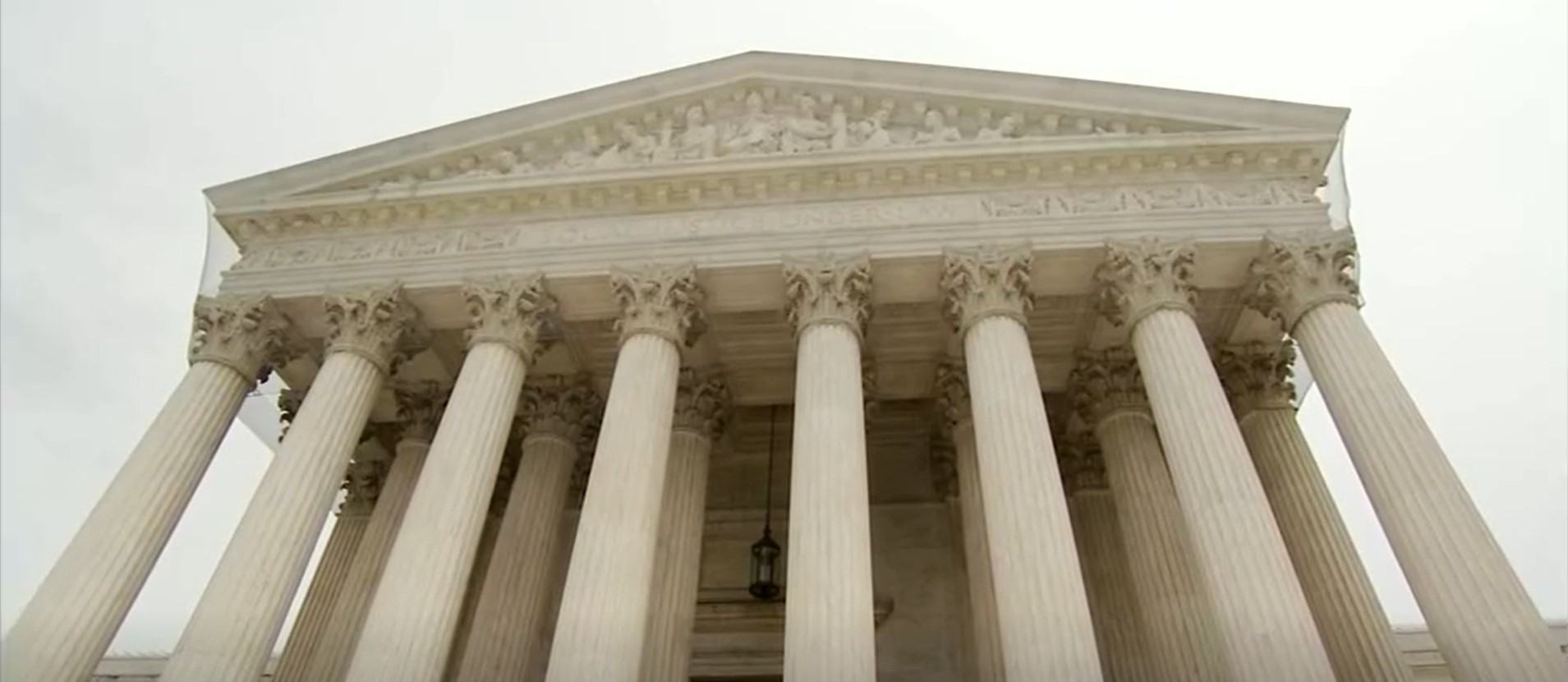
(Screen Capture/CSPAN)
The Supreme Court considered rolling back limits for coordinated spending between parties and candidates on Monday, a move that some believe could give Republicans a boost for the midterms.
Republicans challenging the limits say they are a speech restriction that violates the First Amendment, while Democrats argue the limits help protect against “quid pro quo” corruption.
“I am concerned, as you said, that the combination of campaign finance laws and this Court’s decisions over the years have together reduced the power of political parties, as compared to outside groups, with negative effects on our constitutional democracy,” Justice Brett Kavanaugh told Noel Francisco, who represented the National Republican Senatorial Committee (NRSC). “I start from that, and I’m trying to figure out how this case fits into that.”
Yet Kavanaugh also expressed concern about “quid pro quo” corruption, pushing Francisco to explain whether other related limits are constitutional.
Though the Department of Justice (DOJ) normally defends federal statutes, the government argued against the limits in this case on First Amendment grounds.
“Limits on party coordinated expenditures unconstitutionally restrict core election speech,” Principal Deputy Solicitor General Sarah Harris argued on the government’s behalf. “These limits do not serve the only valid interest of preventing ‘quid pro quo’ corruption or its appearance. Parties can’t corrupt candidates, and no evidence suggests donors launder bribes by co-oping parties’ coordinated spending with candidates.”
Justice Sotomayor seems to imply Elon Musk’s job in the Trump administration was a quid pro quo. pic.twitter.com/3AaC11uM45
— Katelynn Richardson (@katesrichardson) December 9, 2025
Bribery Schemes
Justice Sonia Sotomayor, whose questions dominated, raised the most objections to the NRSC’s position. She suggested at one point that Elon Musk’s employment in the Trump administration was a “quid pro quo” resulting from his financial support of the president’s 2024 campaign, though she did not reference the tech billionaire by name.
“Once we take off this coordinated expenditure limit, then, what’s left?” Sotomayor asked. “What’s left is nothing. No control whatsoever.”
Francisco argued the limits really don’t do what his opponents claim. Other factors, like a $44,300 individual limit on party contributions, disclosure requirements, bribery laws and earmarking requirement, already exist to prevent this kind of corruption.
Justice Samuel Alito pressed Marc Elias, representing the Democratic National Committee, on how his client would be hurt by finding the provision unconstitutional.
“What this will do is create a collective action problem that will drive the parties inevitably to just being bill payers,” Elias explained. “They will not be able to support long-term in nature because there will be an ‘arms race’ that right now doesn’t exist. The coordinated party spending limits act as a buffer on how much money you can pump into directly paying the bills of a House or Senate campaign, or a presidential campaign, so that you have funds to do these other party-building functions.”
Limits on coordinated party expenditures for 2025 Senate general election nominees currently range from $127,200 to $3,946,100, depending on the state, according to the FEC. For House nominees, the limit is $127,200 in states with one representative and $63,600 in all others.
Vance 2028?
Vice President JD Vance is one of the original plaintiffs, along with former Representative Steven Joseph Chabot, the NRSC and the National Republican Congressional Committee (NRCC). They initially sued in 2022.
Opponents argued the case is moot because Vance has not declared plans to run in 2028, leaving the door open but declining to make a decision now. Even if he does run, Vance would not face the threat of enforcement from this administration, attorney Roman Martinez argued.
“Isn’t that what potential candidates always say until the day they make the announcement?” Justice Samuel Alito questioned.
Justices Amy Coney Barrett and Neil Gorsuch said little during more than two hours of arguments.
All content created by the Daily Caller News Foundation, an independent and nonpartisan newswire service, is available without charge to any legitimate news publisher that can provide a large audience. All republished articles must include our logo, our reporter’s byline and their DCNF affiliation. For any questions about our guidelines or partnering with us, please contact [email protected].